
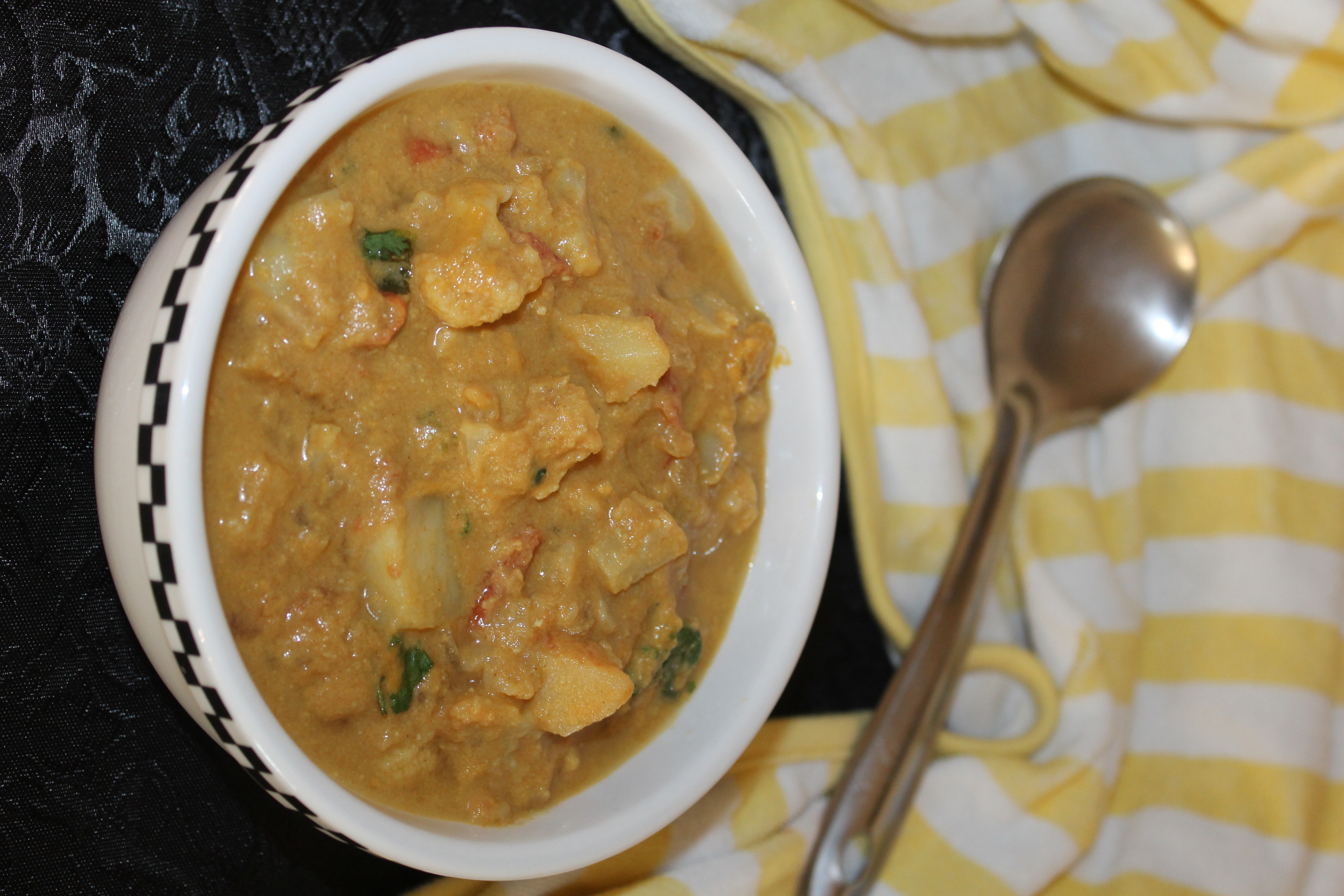
On 14 January 2026 the lifestyle desk of the Bangladeshi news site Jagonews24 published a home recipe for cauliflower korma (fulkopir korma): florets of cauliflower cooked in a spiced onion, ginger, garlic and tomato base and finished with yoghurt and coconut. The publisher described the dish as soft, mild and tasty, and suggested eating it with rice or roti, saying that people of all ages would like it.
The recipe appeared in January, in the rabi (winter) season in which Bangladesh grows its cauliflower. This report sets out the recipe as Jagonews24 gave it, with its quantities and method, and then explains what a korma is, where the cauliflower came from, how and when it is grown in Bangladesh, how much of it the country produces, and what official food composition tables and the World Health Organization say about the ingredients and about healthy, safe cooking.
The ingredients
Jagonews24 listed the following ingredients. It did not say how many people the dish serves.
- Cauliflower: 1 medium head, cut into pieces
- Onions: 2 medium, chopped
- Garlic: 4-5 cloves, made into a paste
- Ginger: 1 teaspoon
- Tomato paste: 1 cup
- Grated coconut or coconut cream: 3 tablespoons
- Yoghurt (doi): 2 tablespoons
- Ground coriander: 1 teaspoon
- Ground cumin: half a teaspoon
- Salt: to taste
- Oil: 2-3 tablespoons
- Water: as needed
- Coriander leaves: to garnish
The list leaves a choice of coconut: freshly grated coconut or coconut cream, three tablespoons of either. The publisher's introduction speaks of the flavours of spices, coconut and cream coming together, but cream as such is not a separate item in the list; the creaminess comes from the yoghurt and the coconut. The recipe does not name the type of oil. Two small differences between the list and the method are worth noting: the list gives one cup of tomato paste, while the method simply says tomato; and the list gives ginger as one teaspoon without saying whether it is paste or chopped. The recipe uses no turmeric, no chilli and no garam masala; the publisher calls the result light.
How the dish is cooked
The method has four stages: frying the onion base, cooking the spices with tomato, frying the cauliflower, and simmering it covered with yoghurt and coconut until soft. Step by step, as Jagonews24 gave it:
- Cut the cauliflower into pieces and wash them.
- Heat the oil in a pan, add the chopped onion and fry until golden.
- Add the ginger and garlic and fry for 1-2 minutes, until the raw smell goes.
- Add the tomato, ground coriander and ground cumin and cook the mixture down well (koshano).
- Add the cauliflower and fry it for 5 minutes.
- Once it is fried, add the yoghurt and the coconut.
- Add a little water if needed, cover and cook for 10 minutes so that the cauliflower turns soft.
- Finally add salt to taste and stir gently.
- When the korma is done, sprinkle with coriander leaves and serve hot.
The cauliflower goes in only after the onion, ginger, garlic, tomato and ground spices have been cooked down, is fried for five minutes, and then simmers covered for about ten minutes with the yoghurt, coconut and only as much water as it needs. Salt is added at the very end. The whole cooking time the recipe gives for the cauliflower is therefore short, and the publisher's own description of the finished dish is a soft, light korma to be served hot with rice or roti.
What a korma is
Korma, also written kurma, qorma or qurma, is described by the English-language Wikipedia as a curry dish that originated in the Indian subcontinent and was influenced by Mughlai cuisine. It consists of meat or vegetables braised with yoghurt, water or stock and spices to produce a thick sauce. Citing the cookery writer Pushpesh Pant, the article says the flavours of kormas are less intense than those of other non-vegetarian dishes and the fragrance more aromatic.
The English name is an anglicisation of the Hindi-Urdu qorma, meaning braising, the cooking technique used in the dish. According to the same article, the word and the names of dishes such as the Persian ghormeh and the Turkish kavurma all go back to a Turkic word for a fried thing, although korma and modern Turkish kavurma are quite different dishes. Banglapedia, the national encyclopedia of Bangladesh, lists korma (কোর্মা) among the words relating to food that came into Bengali from Persian, alongside kaliya, kopta, polao, biriyani and kabab.
Kormas were prepared in the Mughal court kitchens. Wikipedia cites the food historian Neha Vermani for the point that the dish is first mentioned in cookery books from the reign of the Mughal emperor Shah Alam, and says that during the 18th century cooks at the Mughal court enriched the Persian-style stew with almonds, garlic, spices and yoghurt. In the 19th century a quarama from Lucknow contained ghee, yoghurt, cream, crushed almonds, cloves, cardamom and saffron, whereas an Anglo-Indian korma of 1869 left out the cream, almonds and saffron and added the then-standard British curry spices: coriander, ginger and black peppercorns.
In the classic method, the article explains, the meat or vegetable is first cooked briskly over high heat, traditionally in ghee, and then cooked long and slowly in moist heat with a minimum of added liquid; the pot may be sealed with dough in the last stage, a technique called dum. Butter or cream is sometimes added at the end. In modern Bangladeshi cooking, it notes, some cooks use thick evaporated milk in place of yoghurt. There are also vegetable kormas: navratan korma, meaning nine gems, is made with vegetables and paneer or nuts, often nine different vegetables. In Indonesia, korma is traditionally cooked with coconut milk instead of yoghurt, and in British curry houses a typical korma is a mildly spiced dish with a thick sauce that often includes almonds, cashews or other nuts and coconut. The Jagonews24 recipe, with both yoghurt and coconut and no hot spices, sits between these styles.
In Bangladesh korma has long been a dish for good meals. Banglapedia's article on doi (dodhi) names korma, rezala and doi bora among the dishes in which sour doi is vital, and its article on dairy products says ghee is widely used in preparing polao, biriani, roast, korma and similar dishes. The encyclopedia's article on bakorkhani describes korma as a sweet-tasting meat or fish curry that people used to eat with bakorkhani bread for breakfast, and its article on festivals lists korma and polao among the foods served in mofussil and rural areas.
The cauliflower: what it is and where it came from
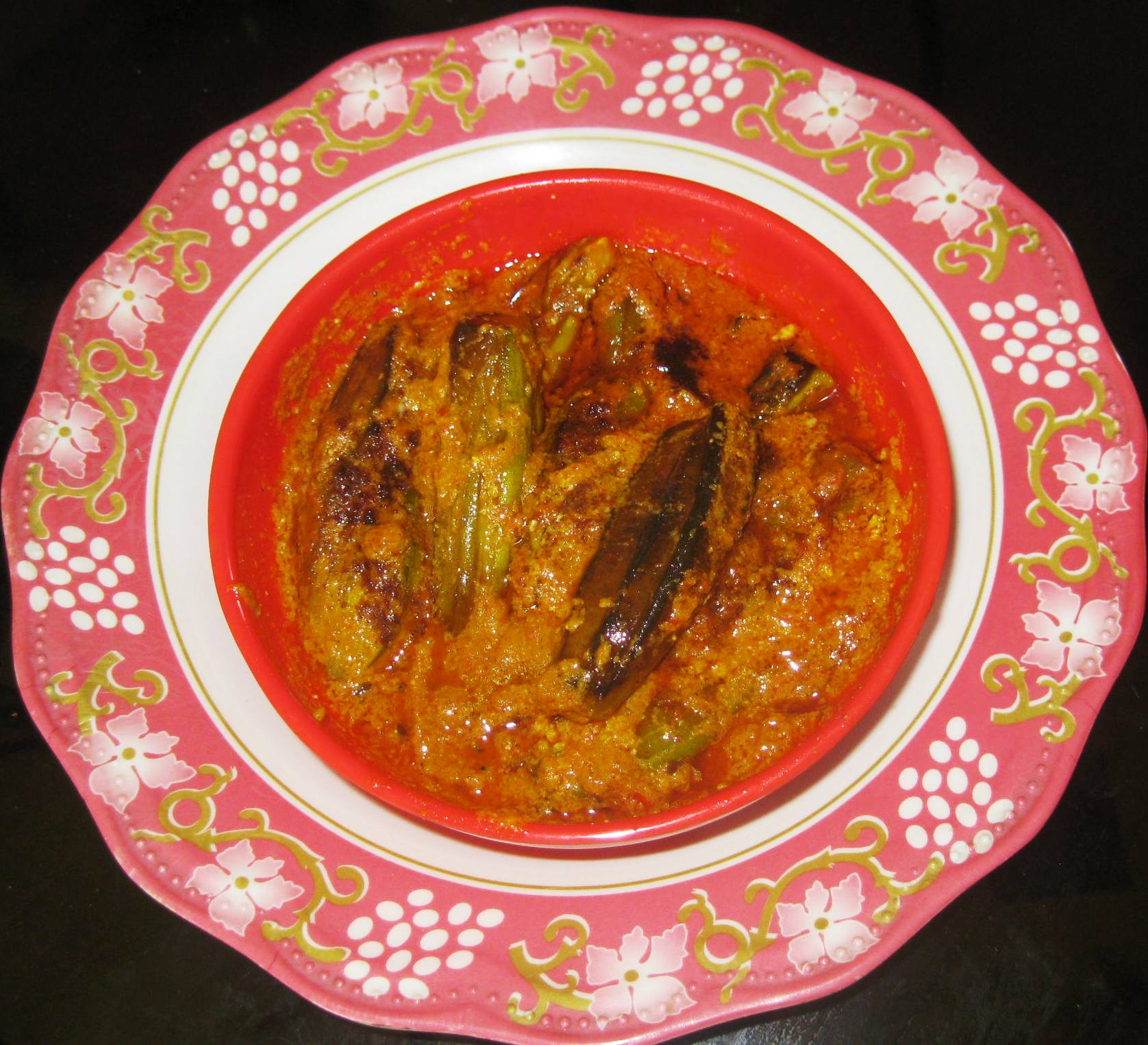
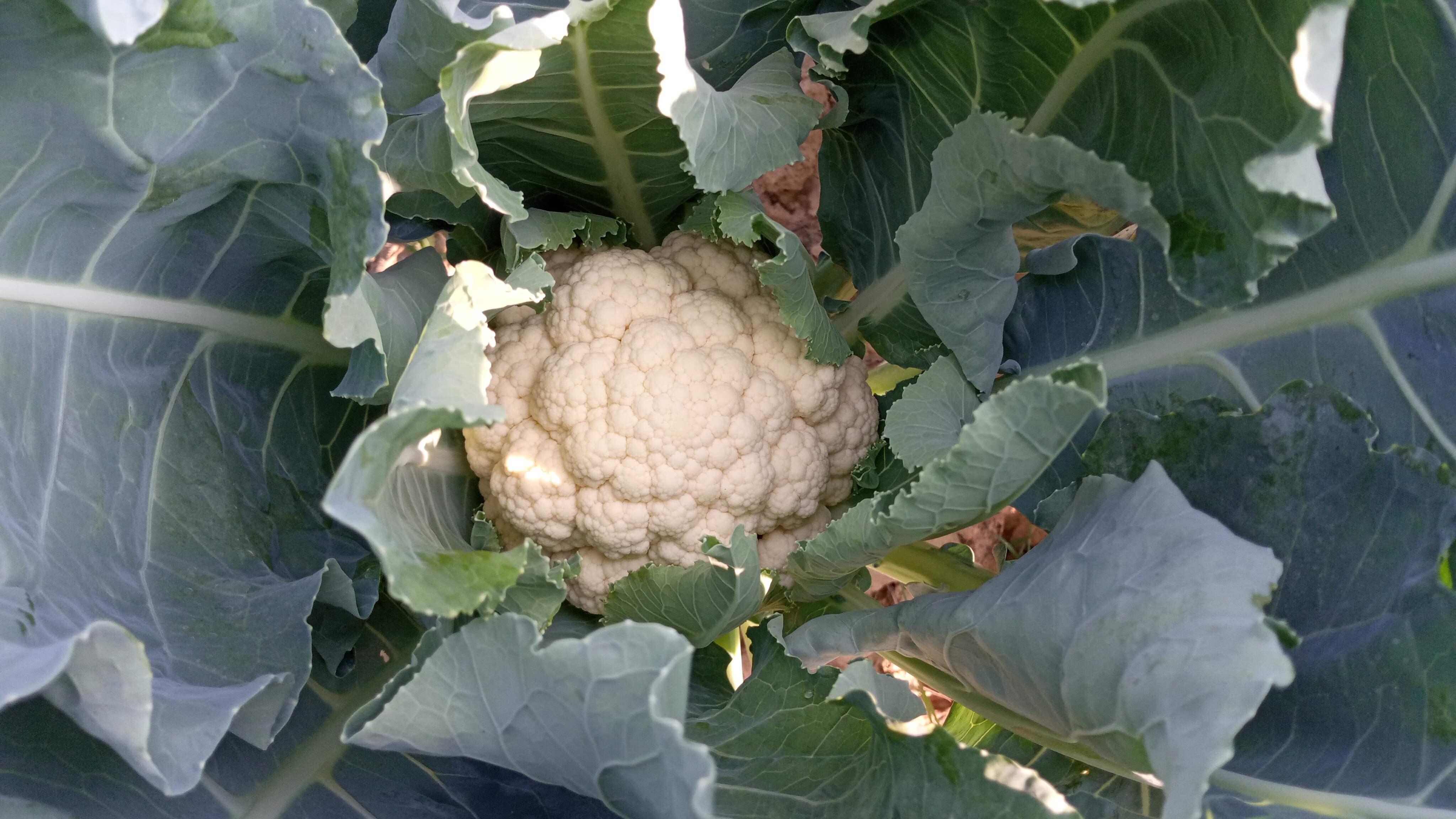
Cauliflower, fulkopi in Bengali, is a cultivated form of the species Brassica oleracea, variety botrytis, of the mustard or cabbage family (Cruciferae, also called Brassicaceae). Banglapedia describes it as a winter crop whose inflorescence forms a compact, fleshy head, used as a fresh or cooked vegetable and sometimes in pickles. The white head, called the curd, is made of tightly clustered, immature flower buds on one main stem, and usually only the head is eaten. The name comes from the Italian cavolfiore, meaning cabbage flower, from the Latin caulis (cabbage) and flos (flower).
According to the English Wikipedia, cauliflower arose by selective breeding, most likely in the Mediterranean region and possibly from broccoli, around 2,500 years ago. In the Middle Ages the 12th- and 13th-century Arab botanists Ibn al-Awwam and Ibn al-Baitar gave its origin as Cyprus, and Western Europe traded cauliflower seed from Cyprus until well into the 16th century. It is thought to have reached Italy from Cyprus or the eastern Mediterranean around 1490, spreading to other European countries in the following centuries. The Bengali edition of Banglapedia likewise says it probably first arose in Cyprus and later spread through the Mediterranean region, especially Italy. It was introduced to India by the British in 1822.
The same article divides cauliflowers into four major groups: Italian; Northern European annuals, which include the old cultivar Snowball; Northwest European biennials; and an Asian, tropical group developed in India in the 19th century, which includes the old varieties Early Benaras and Early Patna. Besides white, there are orange, green and purple cauliflowers. Citing FAOSTAT, it gives world production of cauliflower, which is reported together with broccoli, as 26.5 million tonnes in 2023, with China and India together producing 72 percent of it.
Growing cauliflower in Bangladesh
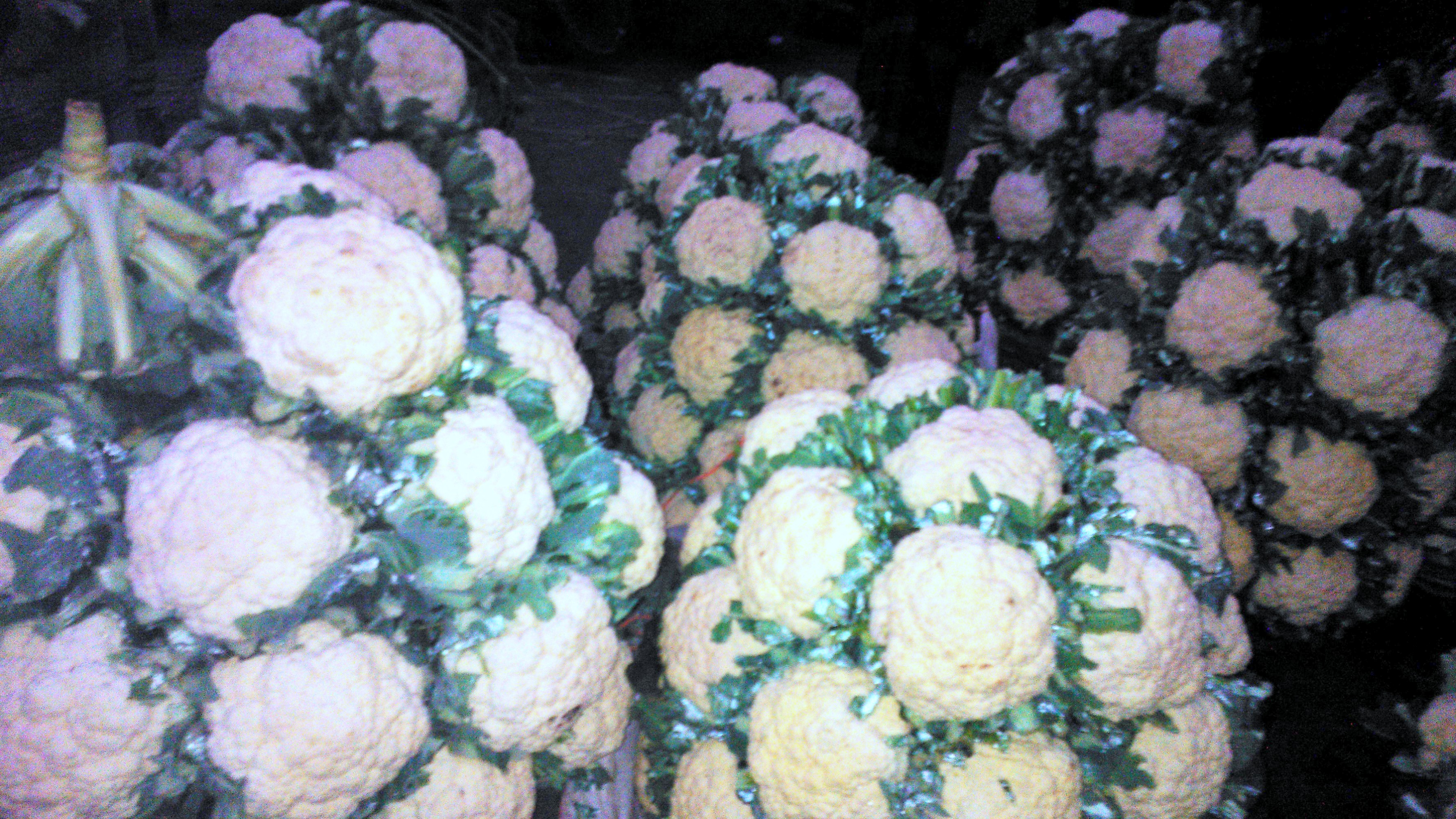
Banglapedia says three types of cauliflower are usually grown in Bangladesh. The early varieties include Kartika, Patnai and Tropical-55; mid-season varieties include Agrahani, Poushali and Snowball; and late varieties include White Mountain, Maghi and Rakhusi Late. The Bangladesh Agricultural Research Institute (BARI) released a high-yielding mid-season variety named Rupa in 1998. The encyclopedia gives yields of 25 to 30 tonnes per hectare, recommends 30-day-old seedlings for transplanting in October and November, and its Bengali edition adds that although cauliflower is grown all over the country, the largest heads are grown in Tangail district.
The Bangladesh Agro-Meteorological Information Service (BAMIS), a government advisory service, sets out BARI's two varieties from the institute's Krishi Projukti Hatboi (Handbook of Agricultural Technology), 6th edition, September 2017. BARI Fulkopi-1, popularly called Rupa, is an early high-yielding variety with a life of about 100 days; its heads weigh 850 to 1,000 grams and are partly covered by leaves, and it suits the whole country. BARI Fulkopi-2 is an early variety with a life of about 65 days and heads of 750 to 800 grams. Both are given yields of 25 to 28 tonnes per hectare, or 100 to 112 kilograms per decimal, on medium-high land with loam or clay-loam soil, in the rabi (winter) season.
For Rupa the handbook advises sowing seed in Bhadra and Ashwin (mid-August to mid-October) and transplanting seedlings to the field in Kartik and Agrahayan (mid-November to December); heads are harvested 60 to 75 days after transplanting. Seedlings are raised in seedbeds and moved out at about 30 days old, taking care that the roots are not twisted or bent, and shaded with paper or banana sheath for the first few days in strong sun. The BAMIS page says cauliflower gives good yields in a cool, moist climate, on fertile loam or clay soils that do not hold standing water, with irrigation and drainage. It advises watering every other day for the first four or five days after transplanting, then every eight to ten days or as needed, breaking the soil crust when it is workable, keeping the field free of weeds, and always irrigating after a top dressing of fertiliser.
The same handbook gives a fertiliser recommendation per hectare of 10 tonnes of compost, 200 kilograms of urea, 150 kilograms of TSP, 150 kilograms of potash (MoP), 100 kilograms of gypsum and 10 kilograms of zinc, applied in stages, with a foliar spray of boric powder if boron was not applied at first. It also says the doses should be raised or lowered according to the land's fertility, the soil type or a soil test, so growers should check their own field's needs with the upazila agriculture officer of the Department of Agricultural Extension (DAE).
How much cauliflower Bangladesh grows
The most recent official figures available in January 2026 were those of the Yearbook of Agricultural Statistics 2024 of the Bangladesh Bureau of Statistics (BBS), published in June 2025. The yearbook, the 36th in its series, gives annual estimates of area and production for 146 crops.
Its table of winter (rabi) vegetables puts the cauliflower area in 2023-24 at 58,129.33 acres and production at 429,670.10 tonnes. The year before, 2022-23, the figures were 56,446.94 acres and 343,758.71 tonnes, and in 2021-22 they were 56,426.61 acres and 342,306.03 tonnes. In the same 2023-24 table, tomato gave 491,487.79 tonnes, rabi brinjal 485,052.86 tonnes and cabbage 450,023.93 tonnes, and all the winter vegetables listed together gave 3,953,697.25 tonnes from 769,983.34 acres.
Banglapedia's article on cauliflower carries an older, undated estimate of about 9,400 hectares and about 73,000 tonnes a year.
What the food composition tables say
The Food Composition Table for Bangladesh, published in June 2013 by the Institute of Nutrition and Food Science (INFS) of the University of Dhaka with the support of the National Food Policy Capacity Strengthening Programme of the Ministry of Food, the Food and Agriculture Organization of the United Nations (FAO) and USAID, gives values per 100 grams of the edible part of each food.
For raw cauliflower (fulkopi) it gives an edible portion coefficient of 0.45, the table's measure of the share of the food as bought that is actually eaten; for cauliflower the leaves and thick stalk are usually discarded. Per 100 grams of the edible part it lists 27 kilocalories, 91.8 grams of water, 2.6 grams of protein, 0.3 grams of fat, 2.5 grams of available carbohydrate, 2.0 grams of dietary fibre, 33 milligrams of calcium, 0.8 milligrams of iron, 299 milligrams of potassium, 20 milligrams of sodium, 57 micrograms of folate and 72.7 milligrams of vitamin C. Banglapedia calls cauliflower rich in vitamins A and C and in calcium; the INFS table bears out the vitamin C, but its vitamin A value is only 1 microgram of retinol activity equivalents per 100 grams.
The table also gives boiled cauliflower, cooked without salt: 28 kilocalories, 2.7 grams of protein, 46.6 milligrams of vitamin C, 32 micrograms of folate and 214 milligrams of potassium per 100 grams. Those vitamin C, folate and potassium values are lower than the ones the table gives for raw cauliflower. The figures that BAMIS quotes from the Krishi Diary 2017 of the Agricultural Information Service differ (for example 41 kilocalories and 41 milligrams of calcium per 100 grams), a reminder that values vary between samples and sources.
The coconut in the recipe is far richer in energy. The INFS table gives mature coconut kernel 389 kilocalories and 36.7 grams of fat per 100 grams, and coconut milk 213 kilocalories and 21.7 grams of fat. The recipe uses three tablespoons of coconut for a whole medium head of cauliflower, along with two to three tablespoons of oil.
A healthy plate and a safe kitchen
The World Health Organization's fact sheet on a healthy diet, in the version online in January 2026, advised adults to eat at least 400 grams, or five portions, of fruit and vegetables a day, not counting potatoes, sweet potatoes, cassava and other starchy roots, and suggested always including vegetables in meals and eating fruit and vegetables that are in season. It advised keeping salt below 5 grams a day, about one teaspoon, and using iodized salt, and keeping total fat below 30 percent of energy intake. It named coconut oil, cream, butter and ghee among the sources of saturated fat, and said unsaturated fats, such as those in sunflower, soybean, canola and olive oils, are preferable.
The recipe leaves salt to taste and adds it at the end, which makes it easy to keep the amount small. People who have been given a special diet by a doctor, for example for high blood pressure, kidney disease or heart disease, should ask their doctor or a dietitian how a dish like this fits their diet.
WHO's Five Keys to Safer Food, published in 2006 and translated into more than 87 languages, sums up safe cooking in five messages: keep clean; separate raw and cooked; cook thoroughly; keep food at safe temperatures; and use safe water and raw materials. For this recipe that means washing the florets in clean water, as the recipe's first step says, and, as the recipe itself advises, serving the korma hot.
Photo: Nithyascorner / Wikimedia Commons (CC BY-SA 4.0)
Sources: Jagonews24, Bangladesh Bureau of Statistics (Yearbook of Agricultural Statistics 2024), Bangladesh Agricultural Research Institute (Krishi Projukti Hatboi, via the Bangladesh Agro-Meteorological Information Service), Institute of Nutrition and Food Science, University of Dhaka (Food Composition Table for Bangladesh, 2013), World Health Organization, Banglapedia, Wikipedia


Comments
(0)