
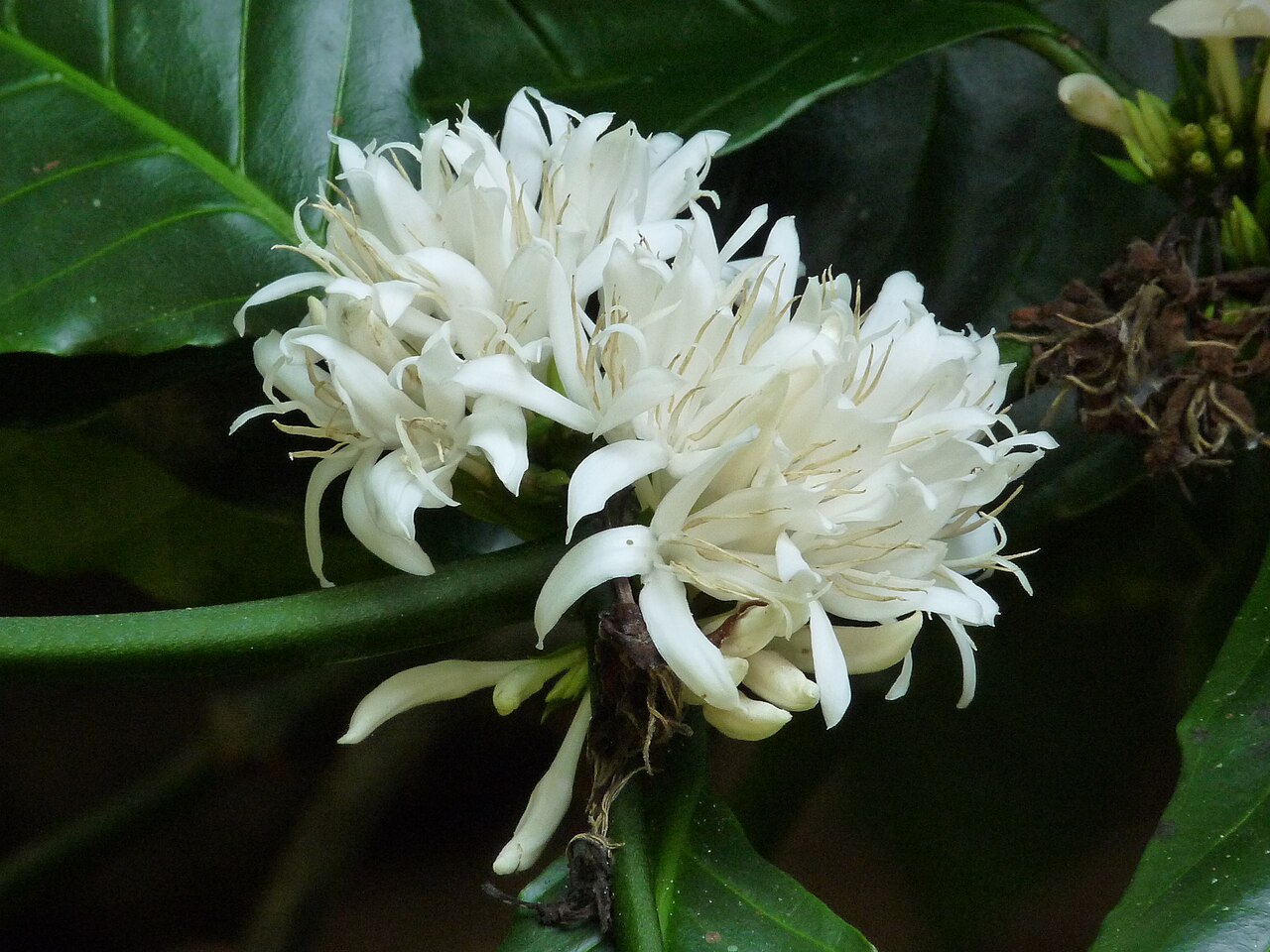
Walk onto a hillside in Bandarban on a winter morning and you may now see something new. On bushes of glossy green leaves hang clusters of bright red fruit, and hill farmers, women and men, are picking them into baskets. The fruit looks like cherries but is not for eating. The seeds inside are dried, roasted and ground to make coffee. A drink that not long ago was thought of in Bangladesh as something foreign is now being grown in the country's own hills.
Around the world, coffee is a major route out of poverty for farmers. It is not just a drink but one of the most sought-after commodities on the global market. In Bangladesh the crop is still new, but it is spreading fast. This feature looks at the economic, environmental, social and health case for coffee, where cultivation stands in the country today, and the opportunities and risks ahead.
The world's coffee map
Coffee's birthplace is Ethiopia. From there it spread to Arabia, then to Asia, Europe and Latin America. Today Brazil is the world's largest producer, Vietnam the second and Colombia the third. Indonesia, Ethiopia, India, Mexico, Guatemala, Costa Rica and Kenya are all well-known coffee countries, and in each of them hundreds of thousands of smallholders live on what their coffee earns. In neighbouring India, shade-grown coffee in the hills of Karnataka and Kerala in the south goes back a long way, and coffee is also grown in Mizoram and Tripura in the northeast. The climate and terrain of the Chittagong Hill Tracts have much in common with those neighbouring hill regions, which is one of the strongest arguments for coffee in Bangladesh.
The International Coffee Organization (ICO) put world production in the 2023-24 season at about 178 million bags of 60 kilograms each. Roughly 57 per cent of that was arabica and the rest robusta. Arabica generally does best at higher, cooler elevations; its flavour is milder and it sells for more. Robusta grows at lower, warmer altitudes, tastes stronger, carries more caffeine and resists disease better. Both are grown in Bangladesh's hills.
The economic case
High income: coffee is a high-value crop. Grown with proper care and good methods, it can return a healthy profit every year. World prices are competitive, and farmers can sell both at home and for export.
The price gap within the domestic market is striking. According to a report in The Daily Star in September 2026, raw coffee sells for Tk 350 to Tk 400 a kilogram, while processed coffee beans fetch Tk 1,200 to Tk 2,000 a kilogram. If farmers can do some of the processing themselves or through a cooperative, drying, hulling and roasting rather than selling only the fruit, the same harvest can earn much more.
Room to grow: coffee is among the most traded farm products in the world. High-quality coffee can build its own brand internationally; many coffees, like Ethiopia's Yirgacheffe or the coffees of Colombia, are known by the name of the place they come from. That process has begun at home too: several Bangladeshi roasters buy directly from farmers in the Chittagong Hill Tracts and sell blends named after the hills.
Jobs: coffee creates work for farm labourers. Raising seedlings in the nursery, planting, weeding, picking, drying, hulling, sorting, roasting and packing all employ people. Coffee cherries do not ripen all at once, so ripe fruit must be picked selectively over several rounds, and that takes many hands.
The environmental case
Protecting the soil: coffee is a perennial, bearing fruit for many years once planted. Because the land is not ploughed every year, hill soils are disturbed less. Coffee roots grip the soil and check erosion, while fallen leaves add organic matter and enrich the soil's life. In hill country, where rain washes the soil off slopes, that matters a great deal.
Helping against climate change: coffee is usually grown beneath taller shade trees. In such shade-grown systems, the coffee bushes and the trees above them together draw carbon from the air and store it in wood and leaves. The shade also keeps the plantation somewhat cooler, which suits the coffee and the surrounding land alike.
Managing water: a coffee plantation improves the soil's ability to hold water. The layer of fallen leaves and the roots slow rainwater running off the slope and let it soak in, so the soil keeps some moisture into the dry season and water is saved.
The social case
Farmers' living standards: coffee gives farmers a steady source of income. Many families in the hills still rely on jhum, or shifting cultivation, whose yields are uncertain. A perennial cash crop like coffee can reduce some of that uncertainty. In jhum, a patch of hillside forest is cut and burned, rice, chilli, sesame and vegetables are grown together for a year or two, and then the land is left fallow while the family moves to another slope. With more people in the hills, fallow periods have shortened and soil fertility is falling. A coffee garden that stays productive on the same land for many years can offer a settled alternative. The Daily Star report describes Mangpong Mro, a farmer in Bandarban who planted 600 coffee seedlings; according to the report, his annual income rose from Tk 2,500 to about Tk 40,000.
The local economy: coffee raises local demand for seedlings, fertiliser, tools and transport. Processing centres, small factories and coffee shops create further work as they appear.
Women and young people: bringing women and young people into the different stages of coffee production can make them economically independent. Women already play a large part in picking, sorting and processing. Educated young people can start ventures in roasting, branding and online sales.
Coffee and health
Coffee is not only a commercial product; drunk in moderation, it can also be good for people. The main points:
- Coffee is rich in antioxidants, which help limit harmful free radicals in the body.
- It keeps the mind alert and lifts energy and concentration.
- Moderate, regular coffee drinking is considered good for heart health.
Moderation is the key. The US Food and Drug Administration (FDA) says up to 400 milligrams of caffeine a day, roughly four to five cups of coffee, is generally not associated with harm in healthy adults. Pregnant women, people with heart conditions and those who sleep badly should take a doctor's advice. And heaping in sugar and cream can undo any benefit. Tea, soft drinks and chocolate contain caffeine too, so the daily total has to count them as well. Coffee after dark disturbs many people's sleep, so morning or midday is the better time for it.
Coffee's journey in Bangladesh
Coffee is not entirely new to Bangladesh, but it has gathered pace only recently. According to The Daily Star, arabica reached the Chittagong Hill Tracts from Mizoram in India in the 1950s, and robusta later came from Tripura. Organised cultivation began in 2001 through the Khagrachhari Agricultural Research Station.
The recent growth is remarkable. The same report says the country produced 35 tonnes of coffee on 120 hectares in 2021. By 2025 the area had grown to about 2,000 hectares and output to 95 tonnes, around 16 tonnes of it from Bandarban alone. The government's target is 1,500 tonnes by 2030.
A major driver has been the Department of Agricultural Extension's Cashew Nut and Coffee Research, Development and Extension Project, launched in 2021, which The Daily Star puts at Tk 211 crore. Under it more than 2,000 marginal farmers have received support and about 49,500 farmers have been trained, and demonstration plots have been set up in Bandarban.
Where coffee grows
Bangladesh's hill districts have conditions that suit coffee. The three main areas are:
- Bandarban: the largest centre of coffee growing in the country.
- Rangamati: hill slopes and forest shade suited to cultivation.
- Khagrachhari: where organised cultivation began, at the agricultural research station.
Coffee is also spreading beyond the hills. The Daily Star reports that it has been grown in Golapganj and Beanibazar in Sylhet since 2021, and that it is expanding into Rangpur, Nilphamari, the Madhupur tract in Tangail, and Sherpur. Hill slopes do not waterlog, the soil is loose and there is shade from larger trees: all conditions coffee likes.
What it takes to plant a garden
Before starting a plantation, a farmer needs to know the soil, the climate and the rules of cultivation. In January 2022, Krishi Kotha, the monthly magazine of the Agriculture Information Service (AIS), published a detailed guide to commercial coffee growing by Prosenjit Mistry, the regional agricultural information officer in Rangamati. Its main points are these.
Soil and climate: coffee does best in slightly acidic sandy loam rich in organic matter, with a pH of 6.0 to 6.5. It needs at least 125 centimetres of rain a year. It grows well in warm, humid conditions but needs drier weather while the fruit ripens. Hill slopes and valleys suit it; land where water stands does not.
Planting: the start of the monsoon, May to June, is the time to plant, usually with seedlings 16 to 18 months old. Each seedling goes into a pit 45 centimetres long, wide and deep. Arabica is spaced 2 to 2.5 metres apart and robusta 2.5 to 4 metres. Planting densely at first and thinning after two or three years is also practised.
Pruning and care: to encourage branching, arabica is topped at about 75 centimetres and robusta at about 115 centimetres. Shade trees are needed for healthy plants. Fertiliser goes into a shallow trench about 30 centimetres from the trunk. A heavier pruning follows the harvest every three to four years.
From flower to fruit: arabica takes 8 to 9 months from flowering to ripe fruit, robusta 10 to 11 months. Harvest runs from November to February, with ripe cherries picked by hand in 4 to 6 rounds at intervals of 10 to 15 days. Bearing begins in the third year after planting, and yields can reach 750 to 1,000 kilograms per hectare.
Processing: there are two common methods. In the wet method, the soft skin and pulp are removed right after picking, the beans are left to ferment for about 24 hours, then washed thoroughly and sun-dried for 7 to 10 days. In the dry method, whole cherries are dried in the sun on a clean floor for 12 to 15 days. The choice of method shapes much of the coffee's flavour.
The people building a market
Growing more coffee is not enough; it needs a market, and one is slowly taking shape. According to The Daily Star, the domestic coffee market is now worth about Tk 600 crore. A cup at a specialty cafe costs Tk 50 to Tk 270, and a 250 to 400 gram pack of local coffee sells for Tk 890 to Tk 1,425.
Large companies are buying hill coffee too. The report names the Abul Khair Group and PRAN-RFL Group among commercial buyers, while organisations such as Helen Keller International and the Palli Karma-Sahayak Foundation (PKSF) are supporting farmers. It also cites 2,000 to 3,200 jobs created in coffee-processing factories.
Local entrepreneurs are finding their own way. In Bandarban, Ching Aung Khumi runs a venture called Furomon Coffee, with 3,000 coffee plants on a five-acre orchard. He told The Daily Star that the aim is not only to produce coffee but to build a sustainable market for hill farmers. The same report describes Ritlang Mro, who has planted 700 trees; he harvested 20 kilograms last year and expects a maund, about 37 kilograms, this year.
The government's plans are ambitious. It aims to spread coffee to 45 upazilas in 19 districts outside the Chittagong Hill Tracts. If the 2030 target of 1,500 tonnes is met, the report estimates the crop would be worth about Tk 30 crore.
A crop that rewards patience
Coffee is no quick profit. After planting, the first harvest usually takes around three years. In that time the plantation needs weeding, shade management and fertiliser, with nothing coming in. Anyone starting out has to be ready for the costs of those first years. Shade-tolerant companion crops such as ginger or turmeric between the rows are one way to earn something meanwhile.
Better yields need improved seed or seedlings and training. Mistakes in when to pick, how to dry or how to store ruin quality and pull the price down. Picking only ripe red cherries, drying them evenly in a clean place, and keeping them away from damp are the heart of good coffee. Drying on raised racks, mats or a concrete floor rather than bare earth reduces the risk of dust, dirt and mould, and turning the beans several times a day dries them evenly. Dried coffee keeps well in sacks raised off the floor in a dry, airy place, which matters all the more in the humid hills.
The caution alongside the promise
Not everyone is celebrating coffee's spread. In a 2024 report, the environmental news outlet Mongabay set out conservationists' concerns. They fear that large-scale coffee in a biodiverse region like the Chittagong Hill Tracts could replace native forest trees such as chapalish, garjan and civit with monoculture plantations. A study cited in the report found that coffee monocultures often suffer poor growth, low yields and serious soil-borne disease. Heavy use of chemical fertiliser and pesticide also adds to the risk of erosion and falling fertility.
Farid Uddin Ahmed, senior adviser at the Arannayk Foundation, a forest conservation organisation, told Mongabay that native forest species should take priority over cash crops, because native trees do more to prevent landslides and provide the services nature offers.
That warning is not an argument against coffee but a pointer to the right way to grow it. Coffee's environmental benefits come mainly from shade-grown systems, in which tall trees are kept and coffee is planted beneath them. Planting coffee on fallow or already-cultivated land, under native shade trees, rather than clearing natural forest, protects both the economy and the environment. Such mixed plantations also yield fruit, spices and timber alongside the coffee.
The hills in every cup
Coffee farming is not only profitable; done properly, it matters for the environment and for society. With the right methods and technology, coffee can deliver both a steady income and conservation. For anyone looking to invest in a profitable, environmentally sound farm venture, it is an option worth weighing.
A few things are worth keeping in mind before starting: finding suitable varieties and good seedlings through the upazila agriculture office or a hill-region agricultural research station; starting small and learning; budgeting for the first three years; and looking for ways to process the crop rather than selling only the fruit. When several farmers form a cooperative, they can share the costs of drying, hulling and marketing, and bargain harder too.
Coffee drinking is growing fast among young people in Bangladesh's cities, and new cafes keep opening. Much of that demand is still met with imported coffee. If hill farmers can produce coffee of good quality, part of the price of every cup in town will travel back up the slopes to the farmer picking red cherries into a basket on a winter morning.
Photo: Ripe coffee cherries on the bush, Jeevan Jose, Kerala, India / Wikimedia Commons (CC BY-SA 4.0)
Comments
(0)