
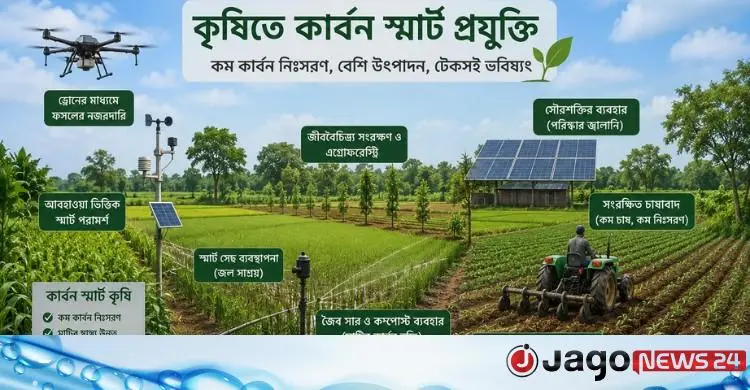
Climate change, pollution, declining soil fertility and rising production costs have put agriculture in a difficult position, especially in developing countries such as Bangladesh, where farming is tied to the environment, the economy and people's lives. Agriculture must become more efficient, technology-driven and environmentally friendly.
Against this background, "carbon-smart agriculture", or carbon technology in agriculture, has emerged as a breakthrough idea: a modern system that uses technology to cut emissions from farming, protect natural resources and raise production at the same time. Conventional farming releases large amounts of carbon dioxide, methane and nitrous oxide through excessive fertiliser, pesticide, irrigation and fuel use; carbon-smart farming aims to reduce this.
Spray drones
Spray drones can apply fertiliser, pesticide or organic inputs quickly and precisely. Farmers used to walk the fields spraying, spending more time, labour and money and coming into direct contact with toxic chemicals. With drones:
- large areas can be sprayed in a short time, and only where needed;
- less chemical is wasted and farmers face fewer health risks;
- less fuel is used, cutting emissions, and crops are not trampled.
Artificial intelligence
Artificial Intelligence (AI) is making data-based decisions easier. Smart farming platforms such as Dr. Chashi help farmers with disease diagnosis, weather information, fertiliser management and crop care. Using mobile apps, image analysis, data collection and machine learning, AI can identify a disease from a photo of the crop and suggest a solution, reducing excess fertiliser and pesticide, costs, labour and pollution.
Weather forecasting
Bangladesh's farming depends heavily on the weather. Forecasts tell farmers when rain will come, when to irrigate, when spraying is suitable and whether storms or floods are likely, which cuts unnecessary irrigation, pesticide waste, crop losses and water and fuel use.
IoT soil analysis
Internet of Things (IoT)-based sensors analyse soil moisture, pH, nutrients and temperature, showing the soil's real needs so that the right amount of fertiliser is applied. This reduces chemical use, maintains fertility, saves water and raises output.
Challenges and outlook
Farmers' limited knowledge of technology, high initial investment, poor rural internet, lack of training and a shortage of modern equipment are obstacles, but the writer says government, research institutes and the private sector working together can overcome them. Young farmers and agri-entrepreneurs are showing growing interest in digital agriculture, and AI-based initiatives such as Dr. Chashi could take Bangladesh's farming to a new level. Properly applied, these technologies can lower emissions, improve soil health, save water and make farming more productive and sustainable.
Source: Jagonews24. First published in Bengali on The Agro News.

Comments
(0)