
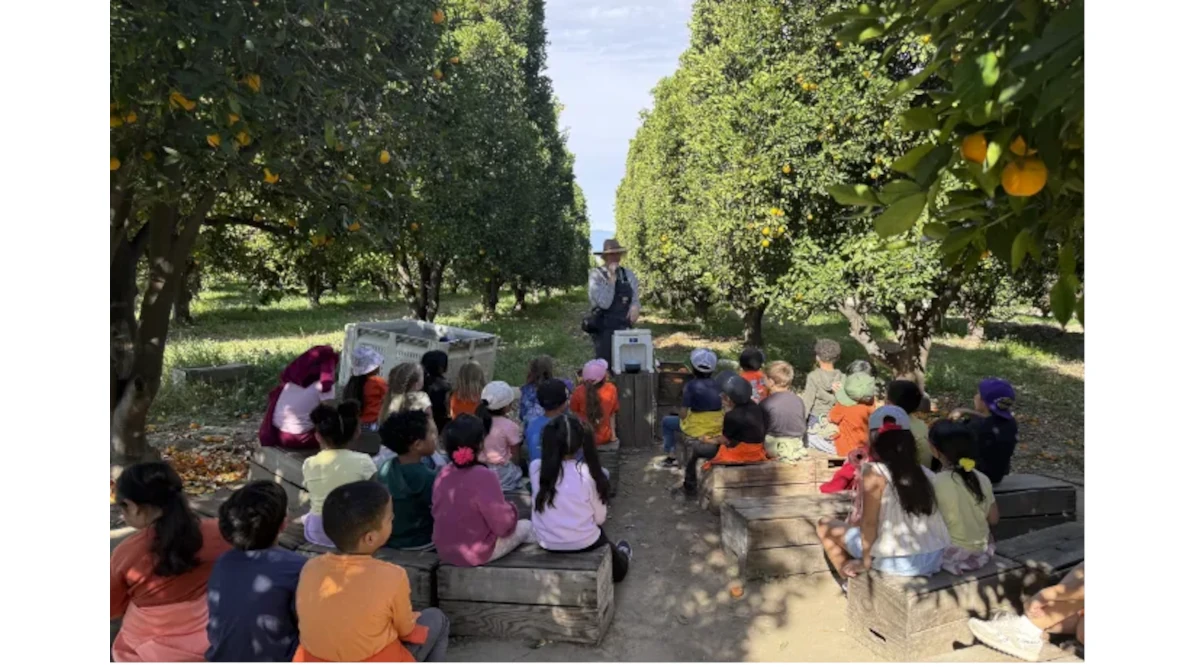
California's investment in locally sourced school meals is paying farmers back twice over, according to a new progress report on the state's Farm to School Incubator Grant Program. Every dollar granted to farmers generates roughly $2.10 in economic activity across the state, the evaluation found, largely because more food dollars stay in California.
The report was written by an independent team from UC Berkeley, UC Agriculture and Natural Resources, the Berkeley Food Institute and Food Insight Group, with contributions from Cornell University. California has made the largest farm-to-school investment of any US state and will have awarded about $126 million in incubator grants by 2027.
Rather than displacing existing markets, school sales added to them: 76 percent of surveyed participating farms expanded production to meet school demand, and farms reported higher sales and more acreage tied to school markets. Between 2021 and 2025, 92 school grantees spent nearly $6.4 million of grant money on whole or minimally processed foods, and 74 percent of purchases by TK-12 grantees flowed through food hubs and other intermediaries.
The findings land against a difficult backdrop for the state's growers. More than 7,000 small California farms went out of business between 2017 and 2022 as costs rose and markets disappeared, the report notes, and farmers are looking for stable buyers to stay viable.
"Farm to school markets appear to provide growth opportunities for participating farms," said Becca Jablonski, visiting associate professor at Cornell's Dyson School of Applied Economics and Management. Beth Katz, executive director of Food Insight Group and lead researcher, said the programme connects schools with local farmers while investing in kitchen infrastructure, the school food workforce and food and garden education.
The evaluation also warns that lasting farm-to-school systems need more than food purchasing: staffing, infrastructure, relationships and institutional capacity all matter, and many school kitchens still lack the equipment and trained staff to cook from scratch. A final report on the programme's economic, environmental and social impacts is due in early 2027.
Source: Morning Ag Clips
Comments
(0)