
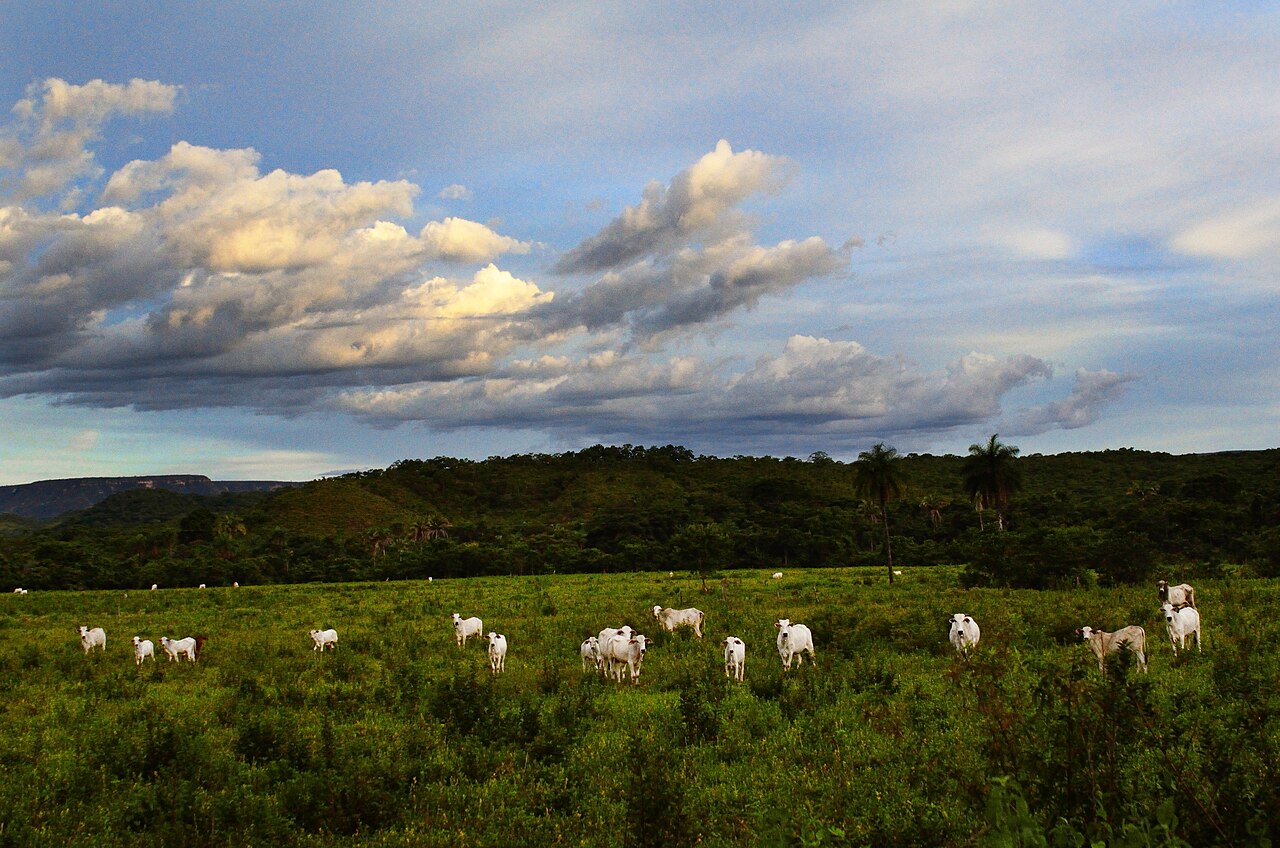
Brazil's rise as the world's largest beef producer and exporter is reshaping global trade and increasing competition in several of Australia's key export markets, according to a report by the agribusiness lender Rabobank.
Rabobank senior animal proteins analyst Angus Gidley-Baird said Brazil had overtaken the United States as the largest producer, with 11.7 million tonnes of beef a year, of which about 3.5 million tonnes is exported. Brazil's cattle herd reached a record 196 million head in 2023 and remains close to that level, helped by herd rebuilding, better genetics and higher productivity, said Wagner Yanaguizawa, Rabobank's animal protein analyst in Sao Paulo.
Brazil once ate about 70 percent of its own beef, but that share fell to 61 percent in 2025 as exports hit records, and Yanaguizawa expects foreign demand to keep growing faster than home consumption. Processors have a reason to sell abroad: in 2025 domestic carcase values averaged about 30,000 reais a tonne against 37,000 reais for export product. Australia, by contrast, exports 65 to 70 percent of its beef.
China is the pivot. It takes 46 percent of Brazil's beef exports, but new quota limits cut Brazilian shipments in the second half of 2025. Brazil sent 1.65 million tonnes to China last year and is expected to send only about 1.2 to 1.25 million tonnes this year, leaving surplus beef to be sold elsewhere.
Yanaguizawa said the United States, helped by a temporary duty-free quota, is likely to take some of that volume, and that the Middle East, Indonesia, Vietnam, Chile and the United Kingdom also offer openings, though not enough to replace China. Japan and South Korea have finished inspecting Brazilian plants and could open to its beef later this year. "These two markets are very important for Australia, and soon Australia may have a new competitor," he said.
Gidley-Baird said the question for Australian exporters is how much beef Brazil can redirect and how that will affect price competition in the coming months. Although Brazilian output is expected to dip in the second half of the year, Rabobank sees its long-term path as one of strong export growth.
Photo: Carlos Ebert / Wikimedia Commons (CC BY 2.0)
Source: Beef Central

Comments
(0)