
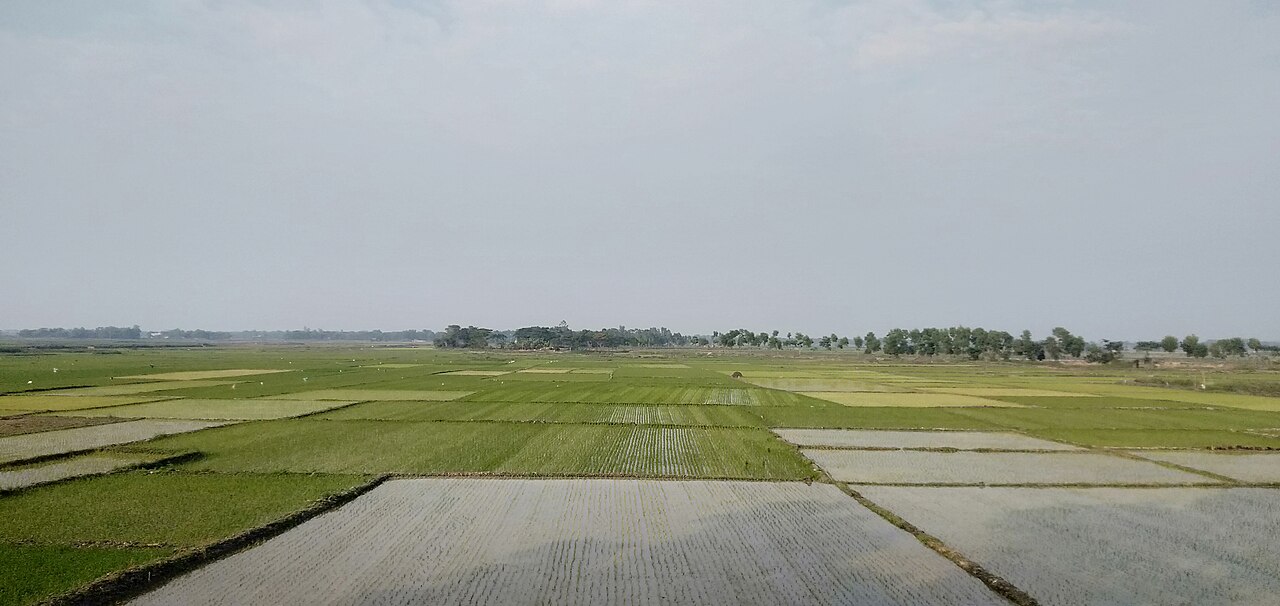
Boro is the rice of the dry season — transplanted from November to February and harvested in April and May — and the largest of Bangladesh's three rice crops. It depends on irrigation, and it underwrites the country's food security.
Its characteristics
- Irrigated: boro is grown entirely on irrigated water; the quality of irrigation decides the yield.
- High-yielding: 5–8 tonnes a hectare from modern varieties — BRRI dhan28, BRRI dhan29 and the hybrids among the most productive.
- A winter crop: it grows well in the cool, dry, low-rainfall months.
- Improved varieties: salt-tolerant and stress-tolerant types such as BRRI dhan67, and others that stand drought or waterlogging.
- A long life: 140–150 days from seed to harvest, which builds grain quality.
- Thirsty: 3,000–5,000 litres of water for every kilogram of rice; short water means short yield.
- Resistant varieties: some withstand blast and leaf-folder, but care and timely treatment are still needed.
- Good grain: medium, smooth and of good eating quality.
- The food-security crop: boro supplies the largest share of the country's rice.
- The right land: high and medium-low land; not the waterlogged low ground.
Manage the water well, and boro is the most reliable harvest a farmer has.
Photo: Boro rice fields in Sylhet — AbuSayeed / Wikimedia Commons (CC BY-SA 4.0)

Comments
(0)