
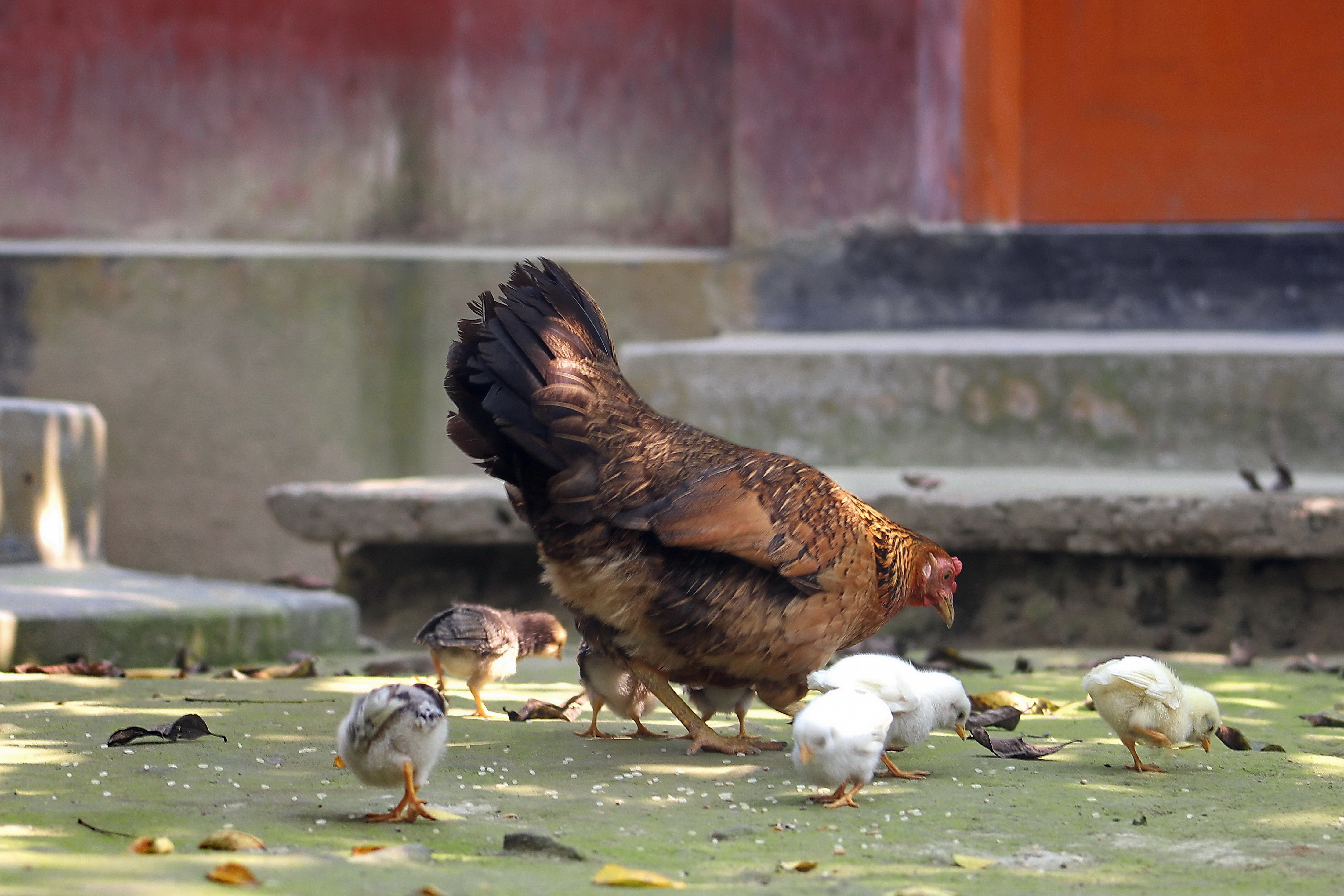
The Bangladesh Livestock Research Institute (BLRI) said in a press release on 27 June 2020 that it had developed an improved chicken that looks just like the country's local, or deshi, chicken, with the aim of bringing back the taste of traditional chicken meat. According to the institute, the bird is well suited to Bangladesh's weather and suffers less disease, so far fewer drugs are needed to raise it; BLRI said this makes its meat tastier and safer. The institute signed a memorandum of understanding (MoU) with Aftab Hatchery Ltd to market the chicken, which for the time being carries the working name "BLRI Multi Colour Table Chicken".
Jagonews24, The Business Standard and The Financial Express all reported the announcement that day. BLRI said the chicken would reach the market within the shortest possible time and that, under the agreement, only Aftab Hatchery would sell it. A commercial brand name had not yet been chosen.
What BLRI said about the new chicken
The institute's case rested on three claims, all of them BLRI's own, made in its press release and repeated by the company: the bird looks like a native chicken, it suits the local climate, and because it falls ill less often it needs fewer medicines. The Business Standard summed up the aim as restoring the taste of domestic fowl while offering a healthier and safer product. The Financial Express reported the breed as suited to Bangladesh's climate, with lower rates of disease infection and a smaller need for medicines.
BLRI Director General Dr Nathu Ram Sarker explained the reasoning. He said ordinary people have a strong demand for the meat of local chickens, yet the local chicken has become nearly extinct. In recent years, he said, consumers had turned to the Sonali chicken to meet that demand, but because the original Sonali line was not conserved, disease had become far more common than before. As a result, in his account, drug use in Sonali chickens had risen while the supply of safe chicken meat had become uncertain, and the new chicken was developed to meet the demand for safe meat with a local taste. The Financial Express reported him as saying that the absence of a defined breed in Sonali had led to disease problems and to farmers using medicines at random.
The reports of 27 June 2020 did not give the new bird's growth rate, slaughter weight, feed use or the results of any field trials, so no such figures appear in this report. What was announced was the development of the chicken, its working name and the marketing agreement.
The agreement with Aftab Hatchery
The new chicken was discussed at a meeting held on Friday at Aftab's office. Fazle Rahim Khan Shahriar, managing director of Aftab Bahumukhi Farms, said that, considering what consumers wanted, Aftab Hatchery had long been hoping for a reliable chicken of this kind. He said the company's main goal had been to bring back the taste of local chicken by developing a breed suited to Bangladesh's weather and tolerant of disease.
G H N Ershad, the company's director (sales), said the chicken is very easy to raise and gives much more meat than local chickens, and he expected it to draw a strong response from the country's farmers. He said the breed had been named "BLRI Multi Colour Table Chicken" for the time being and that a brand name would be finalised soon.
Nurul Morshed Khan, head of marketing at Aftab Bahumukhi Farms, said Sonali, too, had been developed in the country by crossbreeding, but because its pure line was not conserved, years of inbreeding had greatly increased infections, raising health risks and the chance of losses. Under the MoU with BLRI, he said, the chicken would be marketed only through Aftab Hatchery.
A public institute breeding a bird and a private hatchery multiplying and selling its chicks fits the way the commercial poultry industry was organised. The Food and Agriculture Organization of the United Nations (FAO), in its poultry sector review of Bangladesh prepared by Frands Dolberg in 2008, described commercial farms supplied by 130 parent stock farms and 8 grandparent farms, citing Saleque (2007), with five hatcheries the most important producers. In 2006, the review said, five grandparent farms produced 62 percent of the parent broiler day-old chicks, and weekly output that year was 5,542,000 broiler chicks and 488,000 layer chicks.
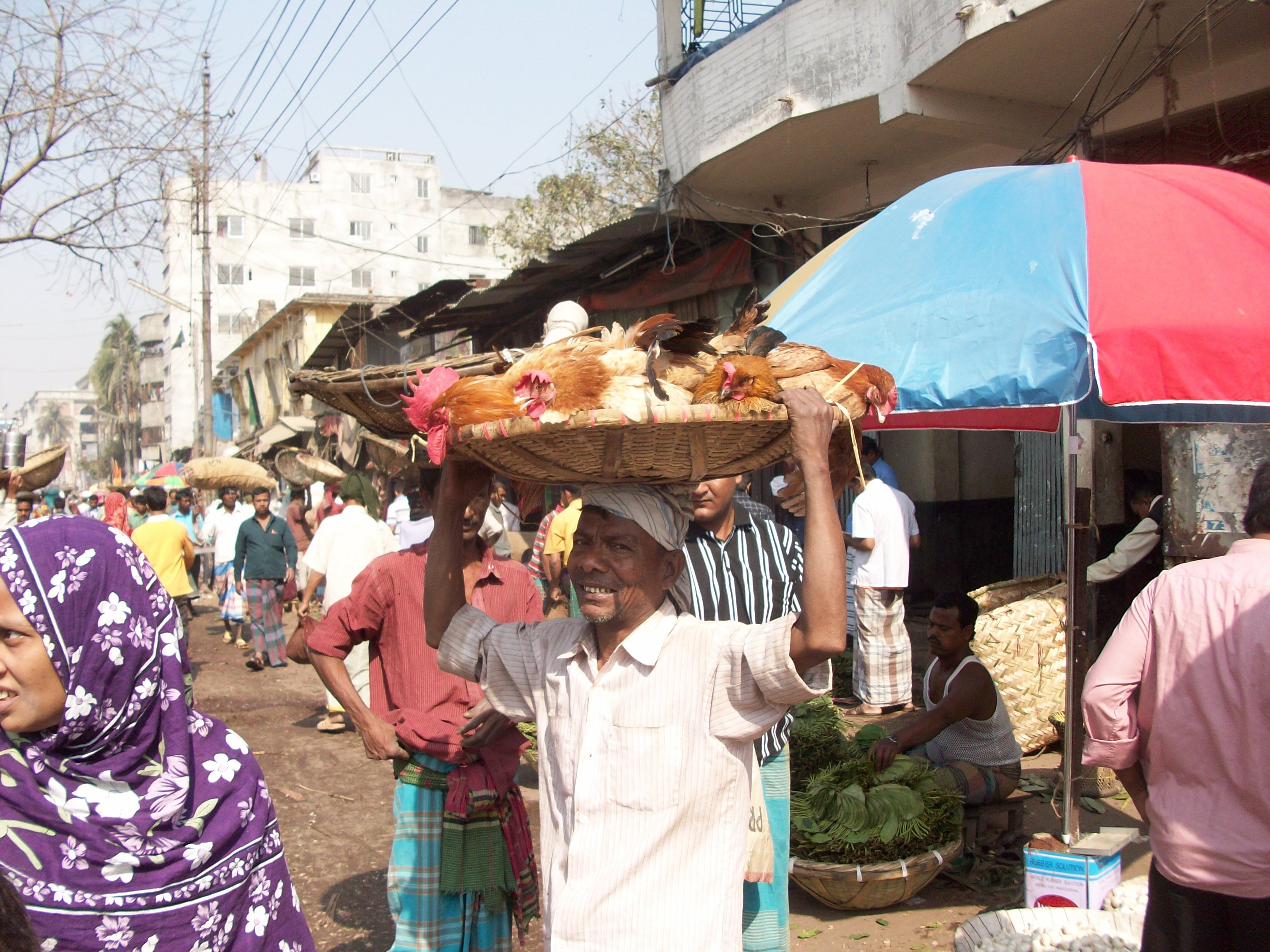
Sonali, the chicken the new breed was measured against
Sonali is a crossbred chicken produced by mating Rhode Island Red cocks with Fayoumi hens. A 2014 paper by M C Sumy, M K I Khan and M M Islam in the journal Livestock Research for Rural Development describes it as developed for villagers and kept in backyard or semi-scavenging systems, where Sonali hens were recorded laying 119 eggs per bird per year (Rahman and others, 1997) and 131 eggs (Khan and others, 2007), more than crosses of Rhode Island Red with the local Hilly chicken.
An FAO study summarised by The Poultry Site in July 2015 traced how Sonali spread. It was introduced to northern Bangladesh between 1996 and 2000 through donor-funded programmes, among them the Smallholder Livestock Development Project and the Participatory Livestock Development Project, which ran between 1992 and 2001 and involved nearly one million women. The study described the bird as looking much like local chickens, well adapted to the country's conditions and needing less care than other breeds, which made it easier for women and children to raise. In 2010 about 150.9 million Sonali day-old chicks were produced, roughly 35 percent of the country's commercial broiler and layer output.
The same study found that traders paid more for Sonali birds than for local chickens and that farmers preferred them to indigenous breeds. Sonali meat fetched almost twice the price of commercial broiler meat and was less affected by swings in price. Small and marginal farmers had begun raising the bird commercially to meet the demand for coloured birds. The study also named the weaknesses: Sonali's live weight is lower than that of commercial broilers, it is less suitable for table eggs, and inbreeding and unplanned crossbreeding were risks to the breed. It stressed that biosecurity and vaccination, especially against highly pathogenic avian influenza, were essential in every production system.
Those warnings are the background to what was said in June 2020: both BLRI's director general and Aftab's head of marketing blamed the failure to conserve a pure Sonali line for the disease problems they described.
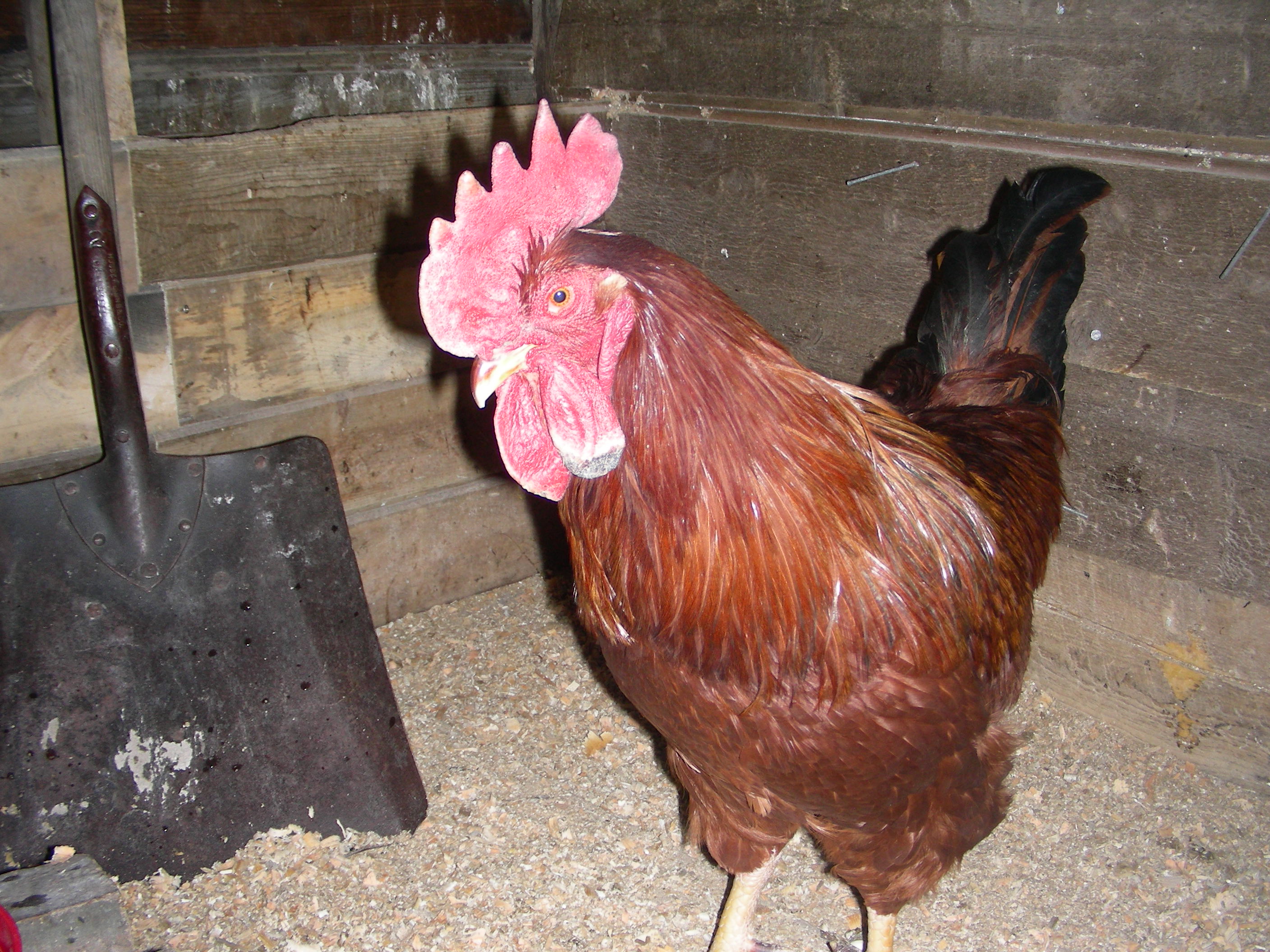
The two parent breeds behind Sonali
The Rhode Island Red is an American breed and the state bird of Rhode Island. Breeders developed it in Rhode Island and Massachusetts in the second half of the 1800s by crossing Oriental breeds with brown Leghorns from Italy. It began as a dual-purpose bird for meat and eggs; since about 1940 breeders have concentrated on laying, and the traditional type of hen lays 200 to 300 brown eggs a year. Standard males weigh about 3.9 kilograms and females about 3 kilograms, with plumage ranging from deep red to nearly black.
The Fayoumi is an Egyptian breed named after the Fayoum governorate, south-west of Cairo, and is believed to be an ancient breed. It is small: standard males weigh 1.35 to 1.8 kilograms and females 0.9 to 1.6 kilograms. It is hardy, considered well suited to hot climates and a good forager, and its hens lay small white or cream eggs, starting at about four and a half months. In the 1940s, eggs were taken from Egypt to Iowa State University in the United States because the Egyptian stock was thought to have greater resistance to bacterial and viral infection.
Sonali therefore carries the colour and look of a village bird with genes from two foreign breeds. The FAO study noted that it looks much like local chickens, and buyers paid more for it than for broilers; both BLRI and Aftab said in June 2020 that the new chicken, too, looks like a native bird.
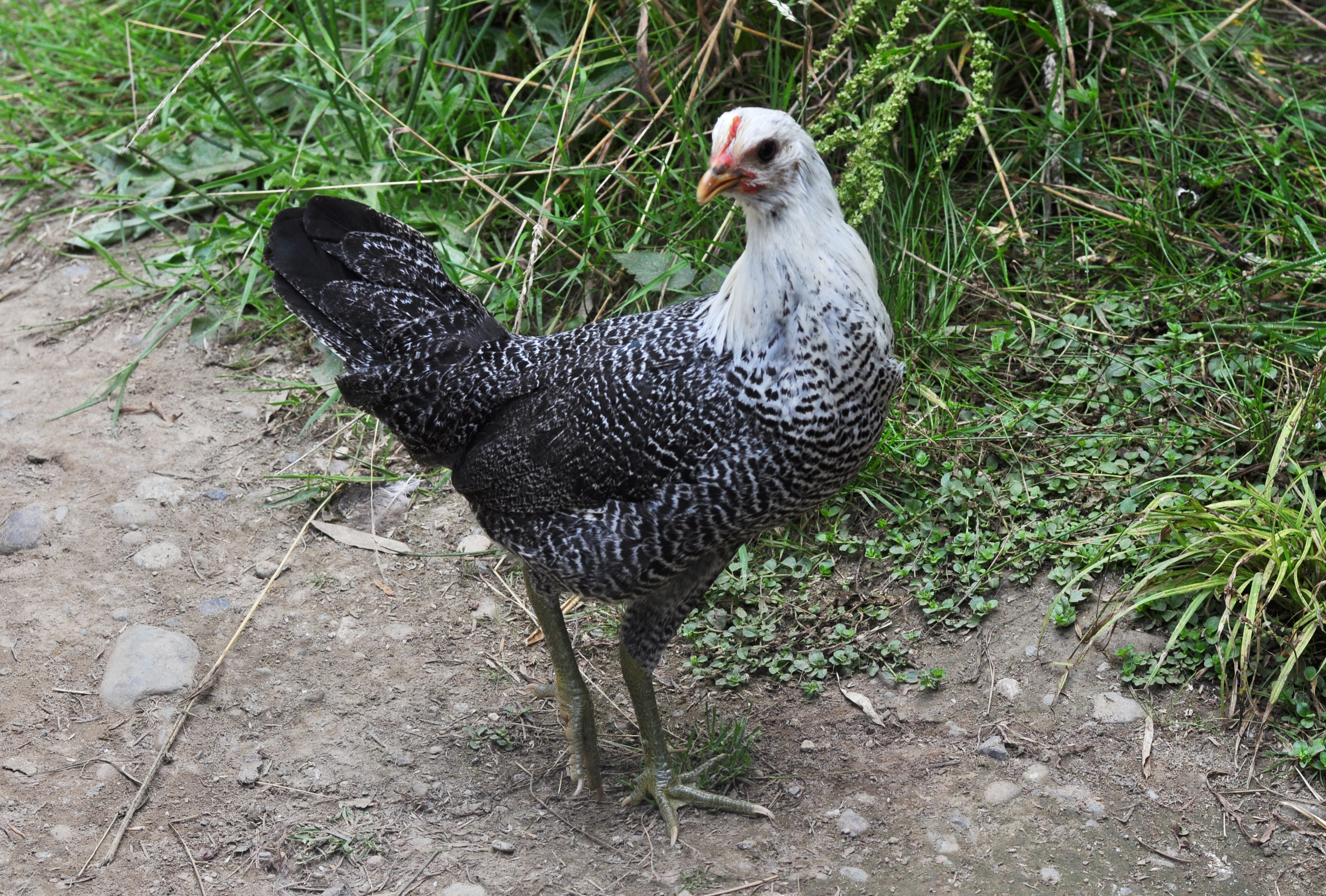
Local chickens in Bangladesh's villages
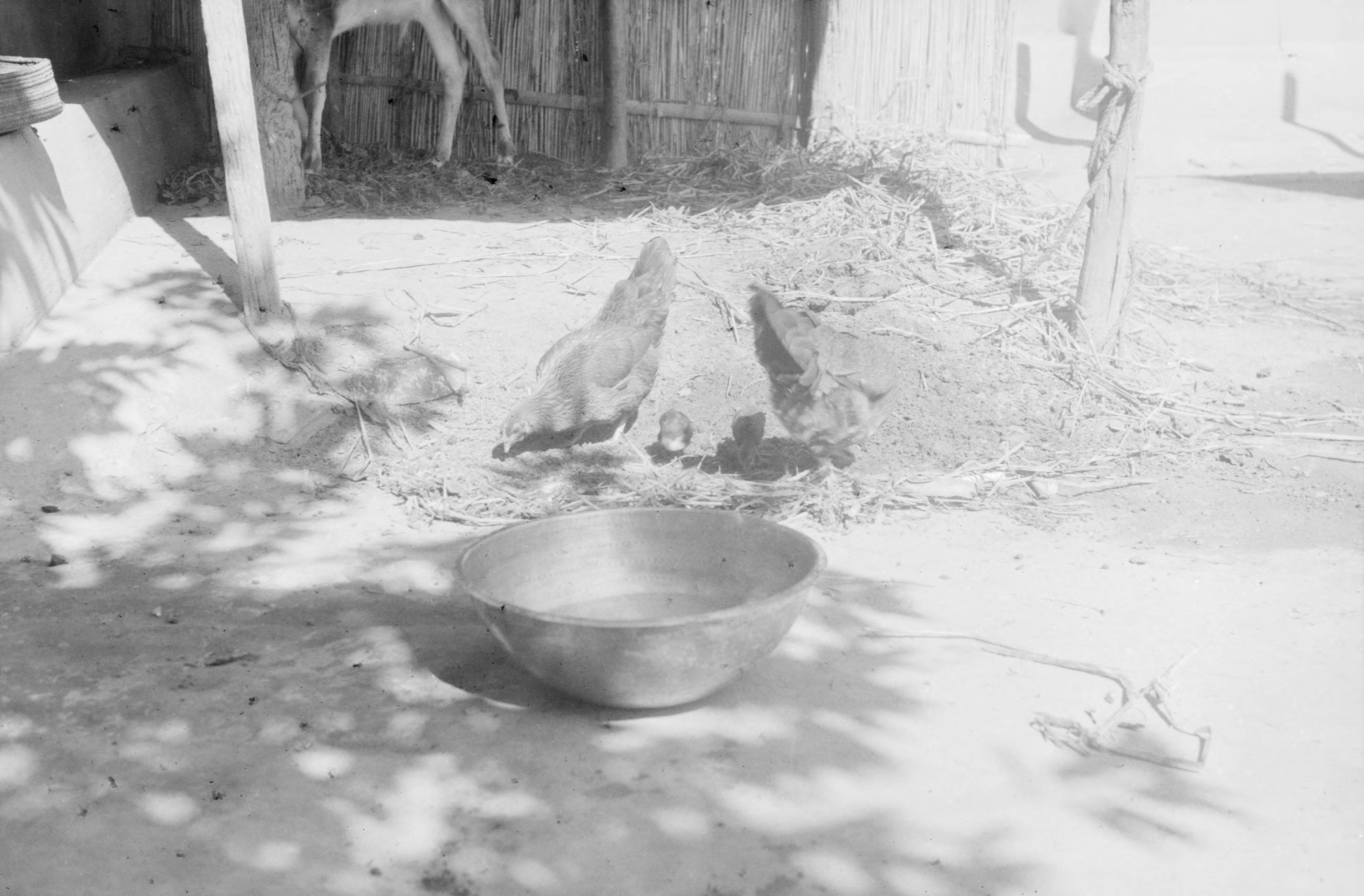
The deshi chicken whose taste the new breed was meant to bring back is the bird of the village yard. FAO's 2008 review reported that about 80 to 90 percent of rural households keep poultry and that the very poor tend to keep no other animal. Village flocks are small, three to ten birds, and a hen may lay 40 to 60 eggs a year, though selection can raise the yield to 120 eggs, according to Huque (1999). The review estimated about 140 million birds in this system, mainly looked after by women, kept partly for the household and partly for sale; their meat and eggs trade at a premium compared with commercial broilers and eggs.
Poultry is also the most evenly shared form of farm wealth. The review cited Alam (2008), who, working from 1996 agricultural census figures, put the Gini coefficient, a measure of inequality, at 0.66 for land, 0.37 for cattle and only 0.17 for poultry.
Development programmes built on this. A semi-scavenging poultry model was developed in the late 1970s by the Department of Livestock Services (DLS) and the NGO BRAC with support from the World Food Programme. It links seven enterprises: model breeders, mini hatcheries, chick rearers, key rearers, poultry workers, feed sellers and egg collectors. The model was used in three large national smallholder projects, the Smallholder Livestock Development Project I (1992 to 1998), the Participatory Livestock Development Project (1998 to 2002) and the Smallholder Livestock Development Project II (1999 to 2003), supported by DANIDA, IFAD, the Asian Development Bank, the government and NGOs. Their first aim was not more poultry but less poverty among women.
Banglapedia, the national encyclopedia, notes that local chickens produce less meat and fewer eggs than improved breeds, which is why commercial farms turned to improved varieties, and that local varieties are less susceptible to fowl paralysis. It names Newcastle disease as the main cause of chicken deaths in rural Bangladesh, fowl typhoid as more common in summer and fowl pox in winter.
The poultry sector before the announcement
The country's flock was already large well before 2020. The Bangladesh Bureau of Statistics' 2005 agricultural sample survey, analysed in FAO's review, counted about 188 million chickens and ducks, with the Dhaka and Rajshahi divisions holding more than half. The two divisions farmed very differently: only 9.4 percent of the birds in Rajshahi division were commercial, against 53.3 percent in Dhaka division, where demand from the capital drives production.
Output then grew quickly. The Financial Express reported on 12 October 2019, citing DLS data, that egg production had risen to 17.11 billion in fiscal year 2018-19 from 4.96 billion in FY2009. The Daily Star reported on 6 September 2019 that, according to the DLS, meat production rose 496 percent and egg production 198 percent between fiscal years 2009-10 and 2018-19, with chicken leading the growth in meat, and that the country had become self-sufficient in meat and eggs.
The farms behind that growth had been through hard times. The Financial Express counted 81,425 registered poultry farms as of August 2019: 54,411 broiler farms, 18,954 layer farms and 7,829 duck farms. It cited a study showing that the number of farms fell from 115,000 in 2007 to 55,000 in 2013 because of disease outbreaks and other problems, with bird flu striking in 2007, 2009 and 2011. In the same report Khondoker Md Mohsin, joint secretary general of the Bangladesh Poultry Industries Association, said the sector was passing through a tough time and that small and medium farms were leaving it for lack of working capital.
Medicines in poultry and the rule on feed
BLRI's promise of a chicken that needs fewer drugs addressed a problem researchers had documented. In a study published in Veterinary World in September 2019, Jannatul Ferdous and colleagues at Bangladesh Agricultural University surveyed 120 small-scale layer farms in seven upazilas of Mymensingh district in January and February 2017. They found ten antibiotics from seven classes in use; the most common were ciprofloxacin, enrofloxacin, amoxicillin and oxytetracycline. Most farmers gave the drugs in drinking water (75.83 percent), and 18.34 percent dosed their birds without any prescription.
The authors wrote that indiscriminate and injudicious use of antibiotics in layer farms is a common practice in Bangladesh and that such use is responsible for residue and resistance problems. They recommended strict biosecurity, education for farmers and others in the trade, a national residue control programme, regular collection of sales data and enforcement of prescribing laws. They also noted that their sample was small and from one district, so it did not represent the whole industry.
The law already drew one line. Section 14 of the Fish Feed and Animal Feed Act 2010 states that antibiotics, growth hormones, steroids and pesticides, along with other harmful chemicals, may not be used in fish feed or animal feed, and makes a breach an offence under the Act. Treating sick birds is a separate matter, for which farmers are served by the livestock offices of the DLS in each upazila.
In June 2020, then, the claim that the new chicken would need fewer drugs was BLRI's statement about the breed it had developed, not the result of a published trial, and it was offered as an answer to a problem that the industry, its regulators and its researchers had all recognised.
BLRI and its earlier poultry breeds
BLRI was founded in 1984 at Savar, near Dhaka, under the Livestock Research Institute Ordinance, 1984 (Ordinance No. XXVIII of 1984, dated 23 April 1984). That ordinance was replaced by the Bangladesh Livestock Research Institute Act, 2018 (Act No. 53 of 2018, dated 14 November 2018), which was in force when the new chicken was announced. Section 10 of the Act lists the institute's functions; among them are developing improved livestock breeds for milk, meat and draught power and improved poultry breeds for more eggs and meat, finding quick ways to diagnose animal diseases, developing vaccines against zoonotic and transboundary animal diseases, and carrying out One Health research on diseases that pass from animals to people.
Banglapedia describes the institute as having regional stations at Baghabari in Sirajganj and Naikhongchhari in Bandarban, six research and support divisions including one for poultry production, and a director general overseen by a board chaired by the Minister for Fisheries and Livestock. It lists among BLRI's work selective breeding programmes for Pabna cattle, Black Bengal goats, buffaloes, gayals and semi-scavenging poultry.
The institute had released chickens before. The Daily Star reported on 8 March 2015 that BLRI had developed "BLRI Layer Strain-2", nicknamed Shorna, its second layer breed after "BLRI Layer Strain-1", or Shuvra, developed in 2011. Shuvra lays white eggs and Shorna brown ones. Shorna's chicks can be sorted by sex on the day they hatch, white chicks being male and brown ones female, whereas with other breeds farmers usually need 10 to 12 weeks to tell hens from cocks. Md Sazedul Karim Sarker, then head of BLRI's poultry production research division, estimated that a farmer could save up to Tk 70,000 per 1,000 chickens over 10 weeks. The breed was developed with support from the Japan International Cooperation Agency (JICA), had been tried with farmers in Tangail, Jamalpur and Barisal, and the DLS was to spread it across the country.
Those were laying birds. The chicken announced in June 2020 was, as its working name says, a table chicken, bred for meat, with Aftab Hatchery named as its only seller.
Photo: TawsifSalam / Wikimedia Commons (CC BY-SA 4.0)
Sources: Jagonews24, The Business Standard, The Financial Express, The Daily Star, Food and Agriculture Organization of the United Nations (FAO), The Poultry Site, Livestock Research for Rural Development, Veterinary World, Banglapedia, Bangladesh Laws (Legislative and Parliamentary Affairs Division), Wikipedia
Comments
(0)