
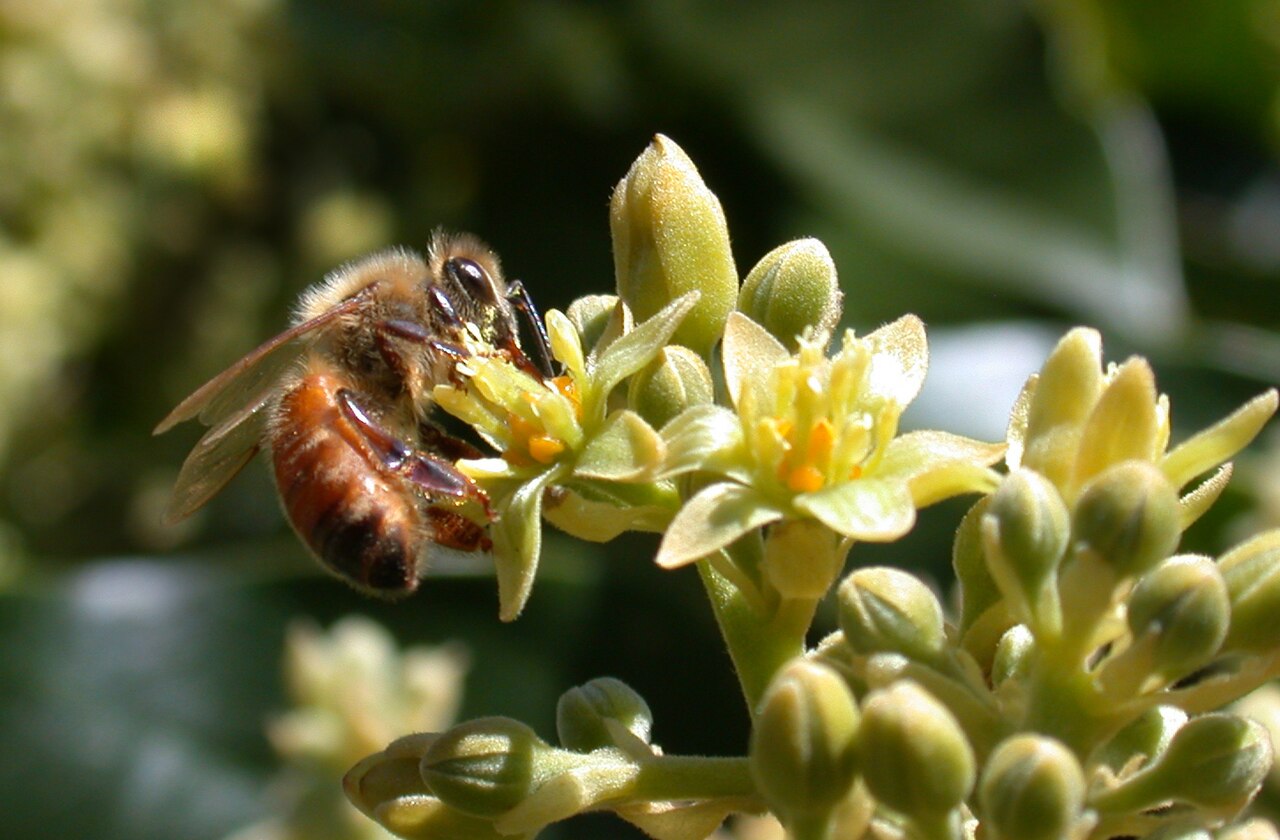
BloomX, an Israeli agtech company, has raised $13 million (EUR 11.2 million) in a Series A round to expand its robotic pollination systems for avocado and blueberry growers, bringing its total funding to $20 million. The round was led by Elah Fund, with existing and new investors including the Israel Innovation Authority.
The machines are meant to supplement bees, not replace them, during flowering when bee activity or pollination falls short. Robee, built for blueberries, copies the buzz pollination of bumblebees: it shakes the flowers with controlled vibrations so that the anthers release their pollen. The Yahav 2400, launched commercially in 2026 for avocado orchards, uses high-voltage electrodes to create an electric field that pulls pollen grains off male flowers onto a textile designed to mimic the surface of a bee's body, then carries them to receptive female flowers. Both combine robotic equipment with AI-based algorithms.
BloomX says growers using its systems have seen yields rise by about 20 percent on average, with bigger, better fruit, and returns of up to 10.5 times the investment. Future Farming notes that the company has not published its trial methods, comparison plots or the period behind those returns, so they remain the maker's own figures rather than independently verified results. One operator can cover up to 3.5 hectares (8.6 acres) a day, according to the company, and the machines can work in weather that keeps bees in the hive.
Rather than selling the robots, BloomX charges growers for pollination as a service, which spares them a large upfront purchase; it has not disclosed its prices per hectare. "Pollination, a critical link in fruit production, has remained entirely at the mercy of nature," said Thai Sade, co-founder and chief executive. He said the technology is meant to work alongside bees and give growers more control during flowering.
Founded in 2019, BloomX operates in Peru, Mexico, South Africa and Israel, and names Agrovision in Peru, Allesbeste in South Africa and the Granot Group in Israel among its customers. The new money will go into those markets and into preparing for the United States, including almonds as well as blueberries. For growers, Future Farming says, the question is whether the extra yield and quality reliably pay for the service, which independent comparisons with conventional pollination will have to show.
Photo: Andrew Mandemaker / Wikimedia Commons (CC BY-SA 2.5)
Source: Future Farming

Comments
(0)