
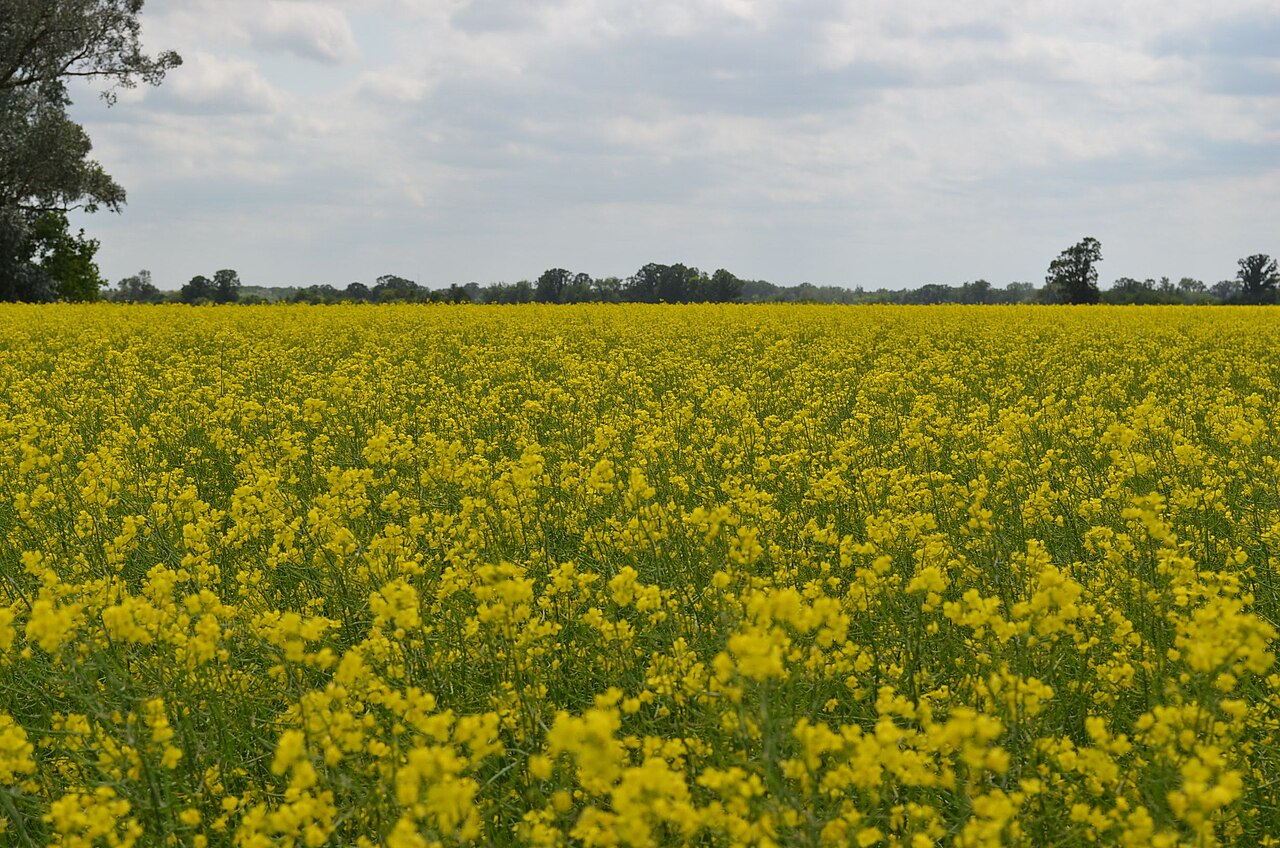
Bayer Crop Science has broken ground on a $50 million canola innovation centre in Winnipeg, the Manitoba Co-operator reported. The facility, in an industrial park on the east side of the city, will not be operating for a few years. Bayer executives and Manitoba's agriculture minister, Ron Kostyshyn, turned the first shovel at a ceremony on 16 October.
"(This) is a commitment to Canadian agriculture and a commitment to canola," said Kacy Perry, country division head of Bayer Crop Science Canada.
The company's focus is yield stability. When everything goes right, with enough nutrients, rain at the right time, the right heat and the right seeding date, canola can yield 70 bushels an acre. Bayer is more interested in the opposite case, what the crop yields when conditions go wrong, as they did in 2026. "What we really want to try and do is raise that yield floor," said Kerran Clements, Bayer's breeding, business and pipeline enablement lead for North America, so that good years bring great yields and bad years still bring decent ones.
Clements, who is based in Edmonton, described the site as really an oilseed innovation centre. Bayer will use it to develop new canola, winter canola and camelina seed for farmers in western Canada, the US Northern Plains and other parts of America. Besides top yields, the company sees room to take canola beyond its traditional base, to growers in Montana, Oklahoma and Kansas. Earlier this year Bayer and BP announced a strategic alliance on camelina, a crop whose tolerance of drier, lighter soils could suit parts of Saskatchewan and the brown-soil zones of the Prairies.
Rather than breed for one trait at a time, Clements said, Bayer tries to pull a family of traits forward together. Heat blast is one example of a single problem: hot days and warm nights in July can shorten canola's flowering and its yield potential, and a heat-tolerant hybrid could protect yield in a hot July. But the same hybrid also has to perform in a cool or wet season or under heavy disease. A vigorous hybrid with many strong traits should raise the yield floor in both new and established regions, including against problems farmers will face in 10 years that nobody can name yet.
"We don't know what the next big challenge (is)," Perry said. "But we have the facilities, the investment and the people, most importantly, that are prepared and ready to face those challenges."
Photo: Ethan Sahagun / Wikimedia Commons (CC BY-SA 3.0)
Reporting by Robert Arnason, Manitoba Co-operator.
Source: Manitoba Co-operator

Comments
(0)