
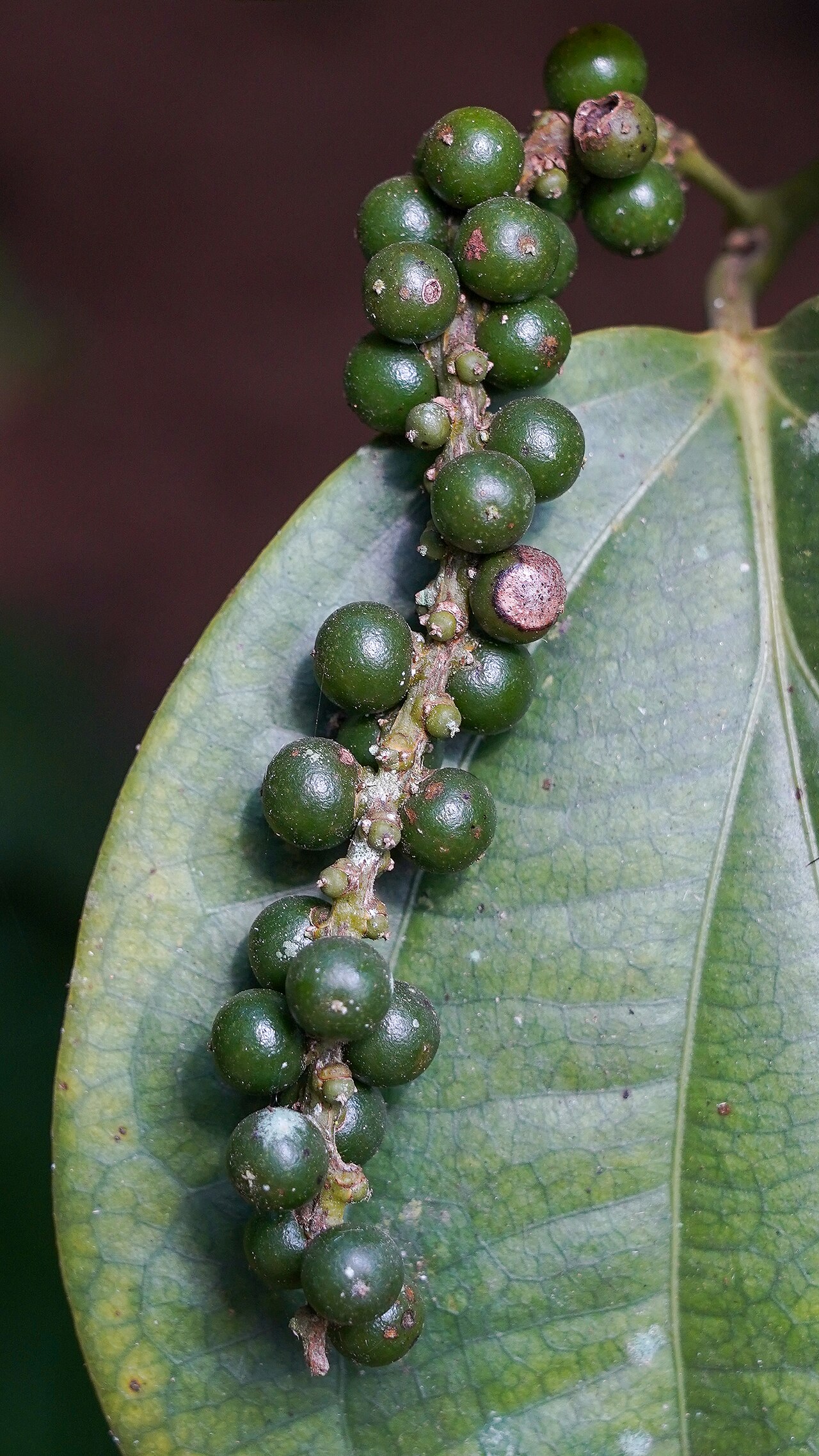
Black pepper, the king of spices, is more than seasoning. Its piperine aids digestion and speeds the metabolism; it is rich in vitamins C, K and A, calcium, magnesium and iron; and it is anti-inflammatory and antibacterial — an old remedy for colds, coughs, toothache and stiff joints. Demand at home and abroad keeps it a high-value crop.
Climate and soil
A warm, humid climate with 100–200 cm of rain and temperatures from 10 to 40 °C; loam rich in organic matter with a pH of 4.5–6.5. Bangladesh's hill districts and homestead groves with shade trees suit it.
Planting
A climbing vine, pepper needs a living or dead pole to climb. Plant rooted cuttings of a good variety 2–3 metres apart at the start of the monsoon, at the foot of the support.
Fertiliser and water
From the third year, each pit gets 300 g urea, 110 g TSP and 450 g MoP a year — a third of that in the first year, two-thirds in the second. Compost every year. Irrigate in dry spells but never let water stand.
Care
Weed as needed, mulch the base, tie the vine to its pole and prune to keep it within reach. The spikes ripen in the cold season; pick when the first berries redden and dry in the sun for black pepper.
A vine planted well bears for twenty years or more.
Photo: Green peppercorns on a black pepper vine — This Photo was taken by Timothy A. Gonsalves. Feel free to use my photos, but pl / Wikimedia Commons (CC BY-SA 4.0)
Comments
(0)