

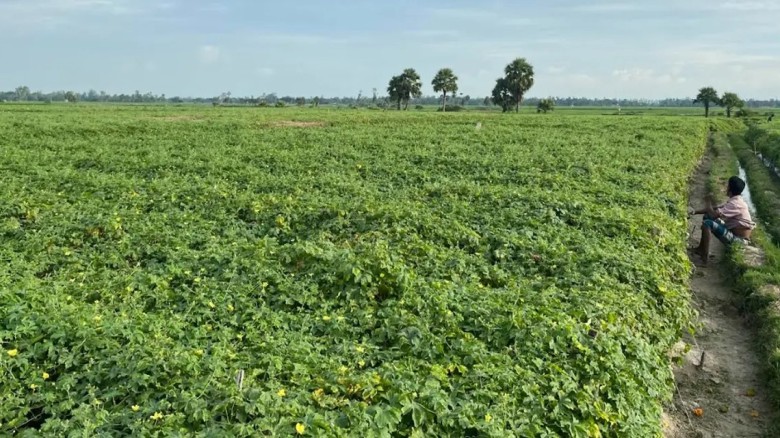
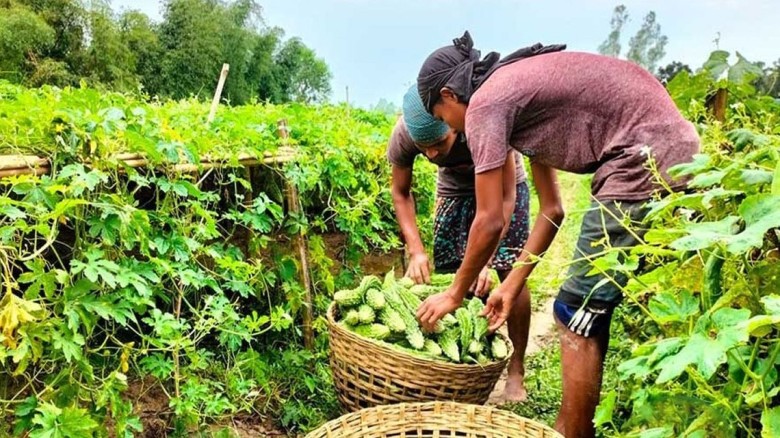
Despite great success in producing vegetables, Bangladesh still lags behind in the export trade, while many countries with less farming success are moving ahead in international trade. Some are even taking advantage of Bangladesh's weaknesses.
A decade without progress
In 2004, Bangladesh's vegetable export potential was held back only by a lack of air cargo space. Ten years later, the large wholesale market in Birmingham, England, showed produce from every country except Bangladesh. The reason was product quality.
To overcome this complaint, the Department of Agricultural Extension (DAE) took up a programme with support from Britain's Department for Environment, Food and Rural Affairs (DEFRA).
Nothing changed at Spitalfields
Five years after that, a visit to Spitalfields, England's largest wholesale market, showed nothing had changed. New countries were joining the export list while Bangladesh stayed where it was.
Losing out on packaging
Although Bangladesh ranks third in vegetable production, it loses international trade competition only for want of better packaging and some lame excuses. Others take the opportunity: with the help of some traders, Bangladeshi farm produce reaches international markets under another country's identity.
Rafiq Haider, president of the Bangladesh London Importers Association, gave various suggestions on what should be done. The question is when, and how, the initiative will be taken.
Source: Shykh Seraj, Hridoye Mati O Manush. First published in Bengali on The Agro News.
Comments
(0)