
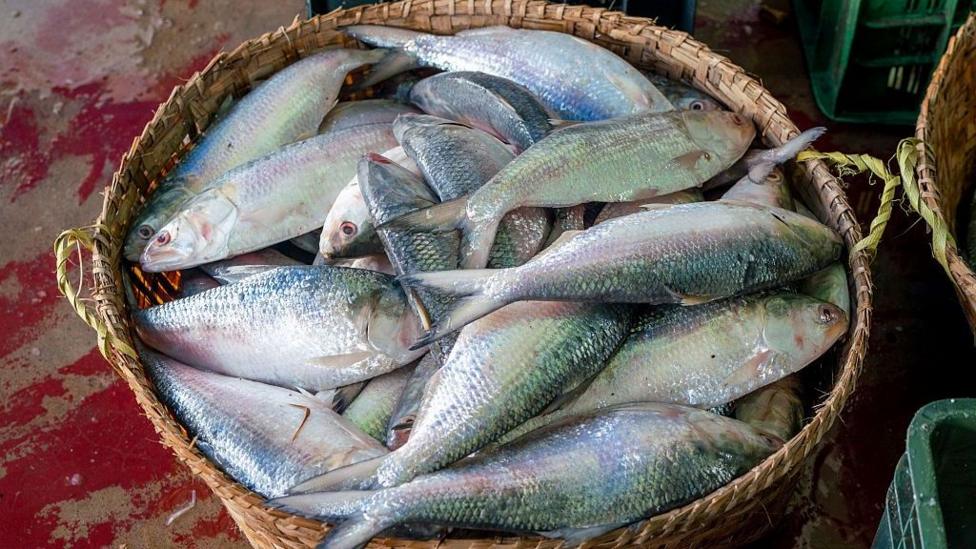
Bangladesh, long known as a hilsa exporter, is now importing the fish in quantity. According to the Jashore district fisheries department, 19 importing firms brought in 352,484 kilograms of hilsa from India in July and August, the first two months of the current financial year, worth about 70 million taka. Ashwadul Alam, fish quarantine inspector at Benapole land port, confirmed the figures.
Importers, clearing and forwarding agents and government officials say most of the fish arriving is caught off Gujarat in India. Syed Anwar Maksud, secretary of the West Bengal Chilled Fish Exporters' Association, said about 500 tonnes of hilsa had been exported to Bangladesh through West Bengal over roughly two months, and claimed almost all of it came from Gujarat.
Every year before Durga Puja there is a diplomatic argument about sending hilsa from Bangladesh to West Bengal. This year the direction has reversed: instead of Padma hilsa going east, large volumes of Gujarati hilsa are coming into Bangladesh along the Petrapole-Benapole route. In many Bangladeshi markets the fish is being sold as local hilsa, traders allege.
Price is the driver. Hilsa brought from India costs a fraction of what the fish fetches in the Bangladeshi market, which is what has encouraged traders to import. Md Monirul Mamun, the Jashore district fisheries officer, said firms are importing with proper permission from the Department of Fisheries but that officials do not know why. "We do not know the exact reason. Perhaps they have caught more over there," he said.
Dr Md Khaled Kanak, director general of the Department of Fisheries, told BBC Bangla that his department had granted a limited number of import permissions in response to applications from traders.
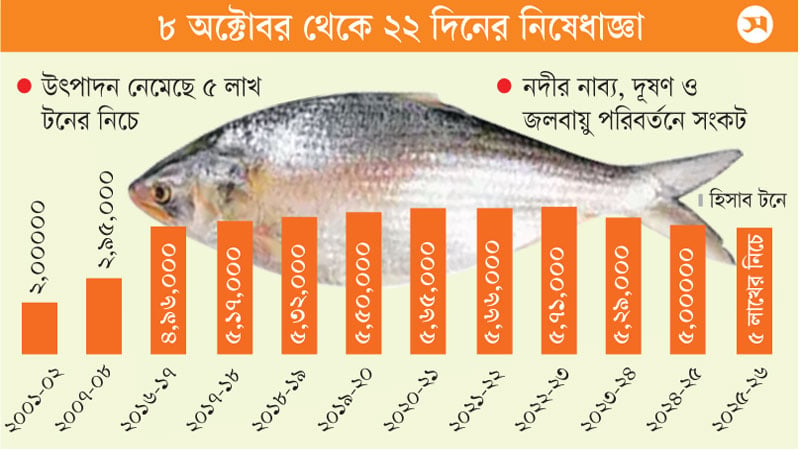
The production picture explains part of it. After nearly two decades of continuous growth, hilsa output in Bangladesh has fallen for three straight years and the average weight of the fish has begun to drop. Hilsa researcher Dr Anisur Rahman said river pollution, the killing of jatka with current nets and sand extraction have left too few fish in Bangladeshi waters, creating the shortage now being felt in the market.
When scientists at Bangladesh Agricultural University decoded the hilsa's full genome in 2018, it was hoped that conservation, production and quality would all improve substantially. Tonnes of imported hilsa arriving in the middle of the local season sit awkwardly beside that expectation.
Source: BBC Bangla
Comments
(0)