
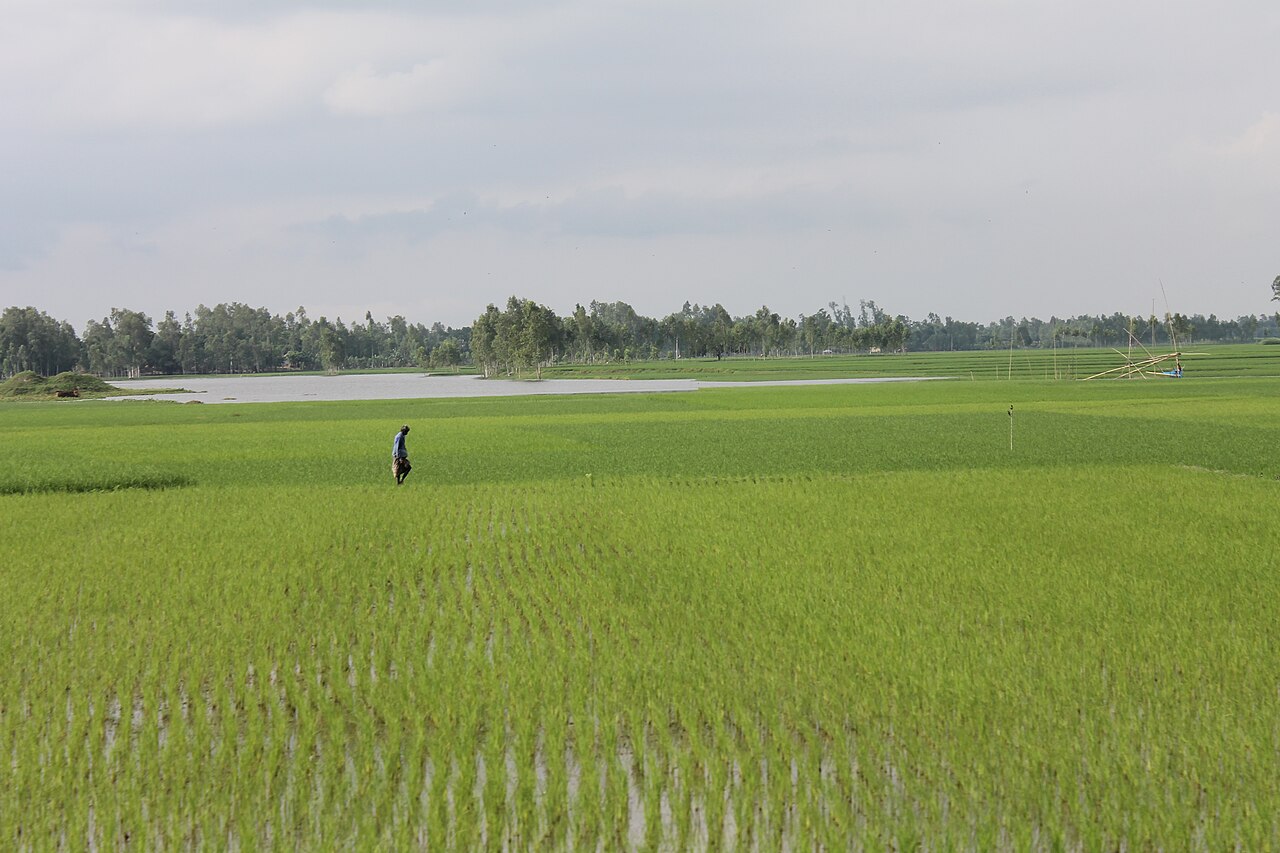
Bangladesh's farmers do not just grow crops; they lay the foundation of the country's food security, yet many struggle to secure a stable income, schooling for their children and medical care. In a column in the daily Naya Diganta, Dr Mohammad Mozammel Hoque, a retired professor of microbiology at Dhaka University and chairman of the Centre for Inclusive Policy and Governance (CIPG), argues that state policy must answer why. The views are the writer's own.
He cites Bangladesh Bank's annual report for 2024-25, which puts agriculture, including fisheries, livestock and forestry, at 10.94 percent of GDP, but says that share understates its importance to food, rural livelihoods and agro-based industry. The 2019 agricultural census counted 16,881,757 farm holdings, about 15.5 million of them between 0.02 and 1.01 hectares, so the needs of small units must be at the centre of policy.
His central point is that success cannot be measured only in tonnes harvested; what matters is how much money stays with the farmer after seed, fertiliser, irrigation, labour, land rent, transport and interest. Debts and household costs force farmers to sell right after harvest, and it is unclear how much of the higher price paid by urban consumers reaches the grower. He does not want all traders and wholesalers branded as exploiters; the problems are opaque deals, excessive deductions and anti-competitive behaviour.
He proposes farmer cooperatives and producer groups for joint collection, sorting, storage and sale, local collection points, reliable weighing and written receipts, and market prices posted at village markets as well as by mobile phone. Government procurement, he writes, should announce its timing, prices, standards and payment rules before harvest and include sharecroppers; announcing a procurement price is not enough, the test is whether farmers can actually sell at it.
After floods, drought, hail, salinity or pest damage, he wants relief to come with timely seed and inputs, longer repayment periods and new working capital on easy terms. Pilot crop insurance by region could be considered, he says, though weather-index insurance risks paying nothing when a field is lost but the index is not met. Tying credit to land titles leaves out sharecroppers, tenants and women farmers, and subsidies should be judged by who received them, when, and how far production costs fell.
The column asks for schooling support, rural health care and financial protection for marginal farm families to be treated as part of farm policy. He backs regular extension advice, pest and disease diagnosis, soil health management, tested organic fertilisers and biopesticides, integrated pest management, machinery hire services and better storage, drying and cold chains, but warns against pushing any technology on farmers before its results are verified. Securing a safe and dignified life for those who feed the country, he writes, is not charity but a duty of the state.
Photo: Samdani.srabon / Wikimedia Commons (CC BY-SA 4.0)
Source: Naya Diganta


Comments
(0)