
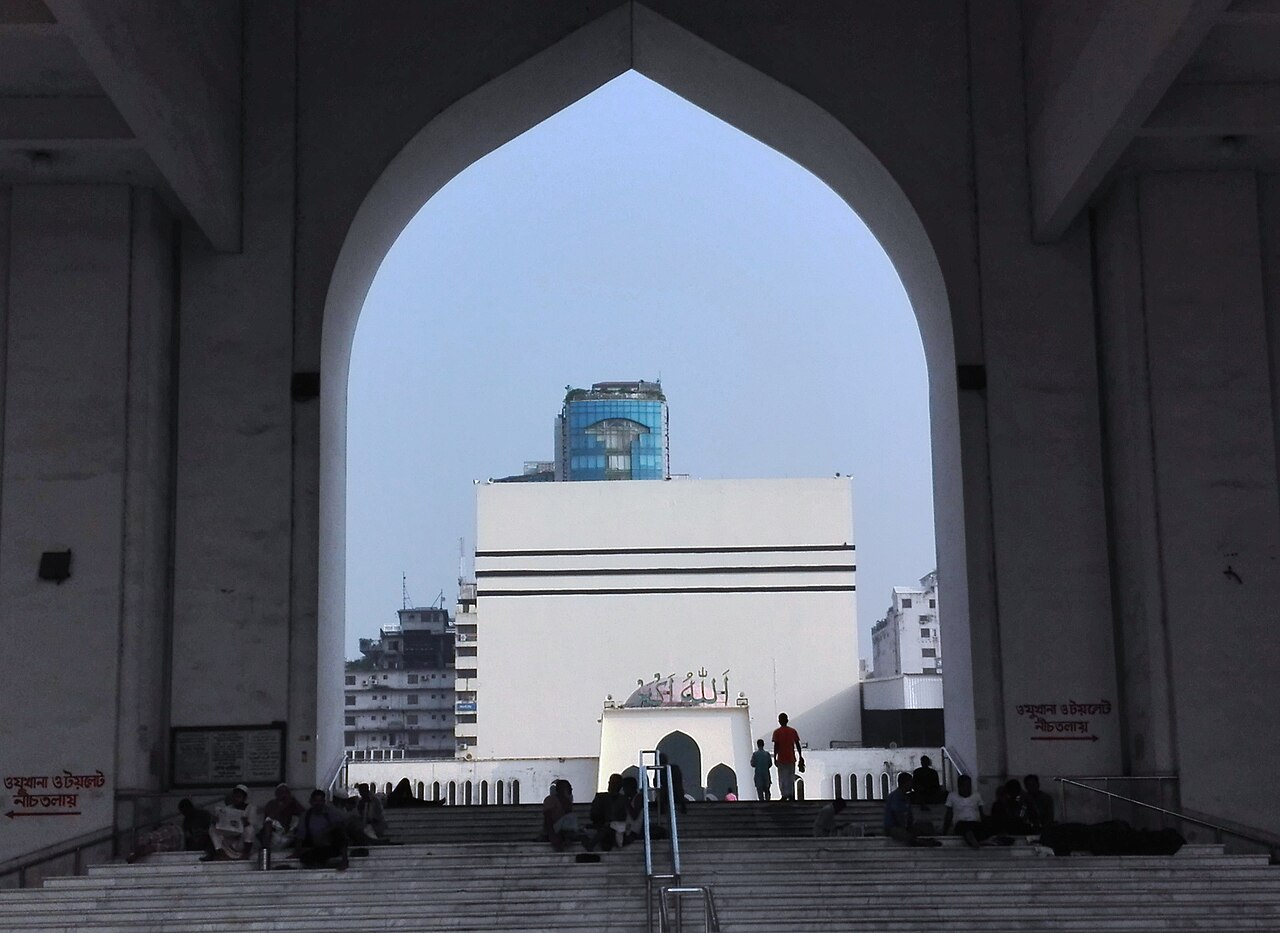
The mosque should not shrink to a place of worship visited for half an hour a day but return to being a centre for building society, argues Abdullahil Baqi, an Islamic scholar, writer and programmer, in a column on Prothom Alo’s religion page. He sets out nine roles for it.
He recalls that on the Hijra journey the Prophet Muhammad (peace be upon him) laid the foundation of the Quba mosque where he first stopped, and on reaching Madinah built Masjid an-Nabawi where his camel knelt (Ibn Hisham, al-Sirah al-Nabawiyyah). For a Muslim, he writes, organised learning began in the mosque.
The first three roles concern worship and knowledge: a centre for the five daily prayers, Friday prayers, eclipse prayers and the prayer for rain; regular study circles where people learn to tell the lawful from the forbidden and good from harm; and public education through the Friday sermon and short daily talks on current matters.
The next roles are social: visiting, with kindness, those who stay away from congregational prayer; keeping track of every family in the neighbourhood, bridging rich and poor, and delivering zakat and charity to the needy transparently and without middlemen; and building brotherhood among worshippers by spreading the greeting of peace, citing the hadith in Sahih Muslim (No. 54).
The seventh and eighth roles are moral: using the sermon to honour good character (Sunan Abu Dawud, No. 4800), and correcting people in gentle words rather than harsh ones. He cites the Prophet’s gentle response to a Bedouin who urinated in a corner of the mosque.
The ninth is kindness to children. When the young Hasan and Husain toddled into the mosque during a Friday sermon, the Prophet stopped and lifted them up (Sunan al-Tirmidhi, No. 3774). Quoting Ibn Hajar al-Asqalani, the writer says bringing children to the mosque is permitted and that tenderness towards them is itself a lesson.
Mosque reform and management, he concludes, need enough care for the mosque to regain its many-sided role in building society. The column is by Abdullahil Baqi; the views are the writer’s own.
Photo: Ferdous / Wikimedia Commons (CC BY-SA 3.0)
Source: Prothom Alo

Comments
(0)