
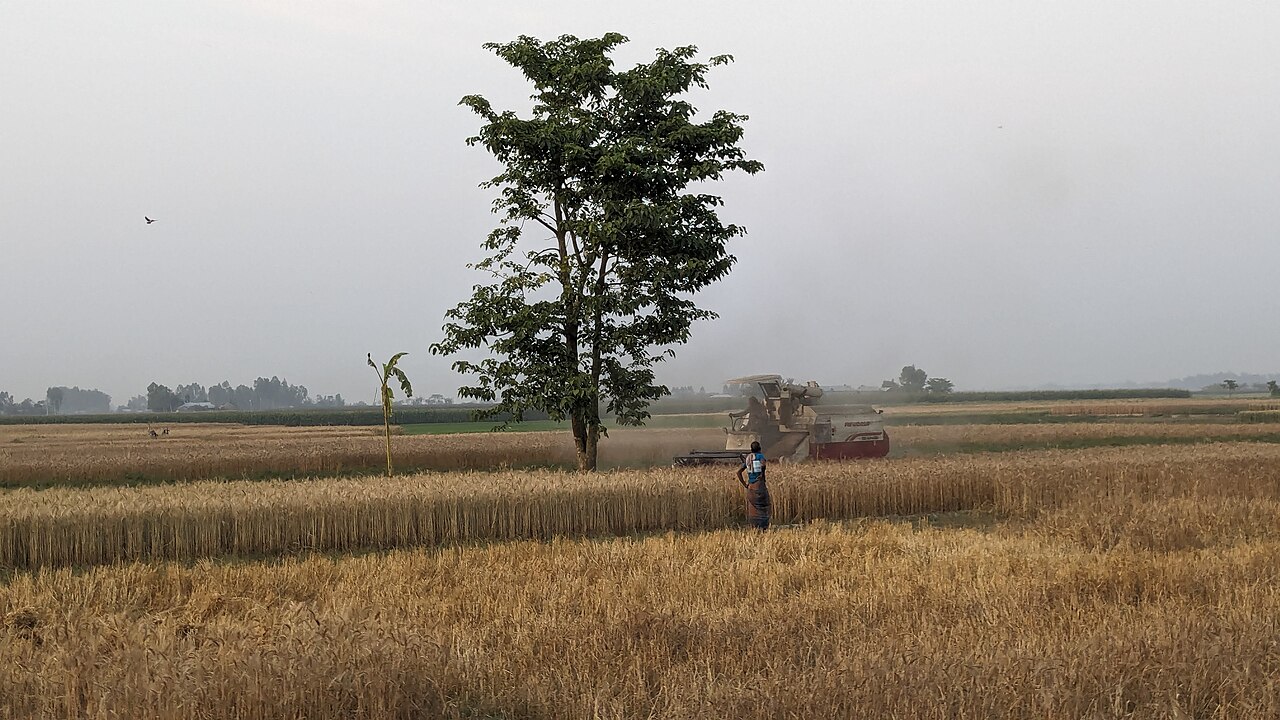
Tractors, rice transplanters and combine harvesters are spreading fast on Bangladeshi farms, but banks play almost no part in paying for them. Only 2 to 7 percent of the money spent on farm machinery comes from banks; the rest comes from relatives, informal lenders and NGOs at high interest.
A study titled 'Financing in Bangladesh's food system', presented jointly by the Bangladesh Institute of Development Studies (BIDS) and the International Food Policy Research Institute (IFPRI), found that only 2 percent of farmers own machinery, according to IFPRI research fellow M Mehrab Bakhtiar. Ninety-eight percent hire tractors, as do users of 95 percent of power tillers and 94 percent of power threshers. The share of crops cut by combine harvester rose from 1 percent in 2018 to 20 percent in 2023.
In IFPRI's survey, bank loans covered just 6 percent of the cost of buying a harvester, against 51 percent from relatives or informal sources and 29 percent from NGOs or microlenders. The agricultural credit policy does not cover machines bought to work other people's land, even though 99 percent of machines are hired out that way, so owners borrow at 20 to 31 percent interest.
Traders put the farm machinery market at more than Tk 10,000 crore, and up to Tk 12,000 crore with small parts, though there are no firm figures for local manufacture and sales.
Alimul Ehsan Chowdhury, president of the Bangladesh Agricultural Machinery Manufacturers Association, said high duties on imported machines and raw materials and a shortage of parts hold the sector back, and easy loans plus lower duties would help local makers. Mohammad Amir Hossain, chief executive of Abedin Equipment, said subsidies on machinery have stopped and farmers cannot use agricultural credit to buy machines.
Md Rowshan Alam, a director at the Department of Agricultural Extension, said the project that gave machines with special support in the haor and coastal areas and subsidies elsewhere was halted because of flaws. A new demand-based approach to mechanisation is planned, he said, and work is under way to expand solar-powered irrigation.
Reporting: Shamsul Haque Mohammad Miraj, Prothom Alo
Photo: Tanvir Rahat / Wikimedia Commons (CC BY-SA 4.0)
Source: Prothom Alo

Comments
(0)