
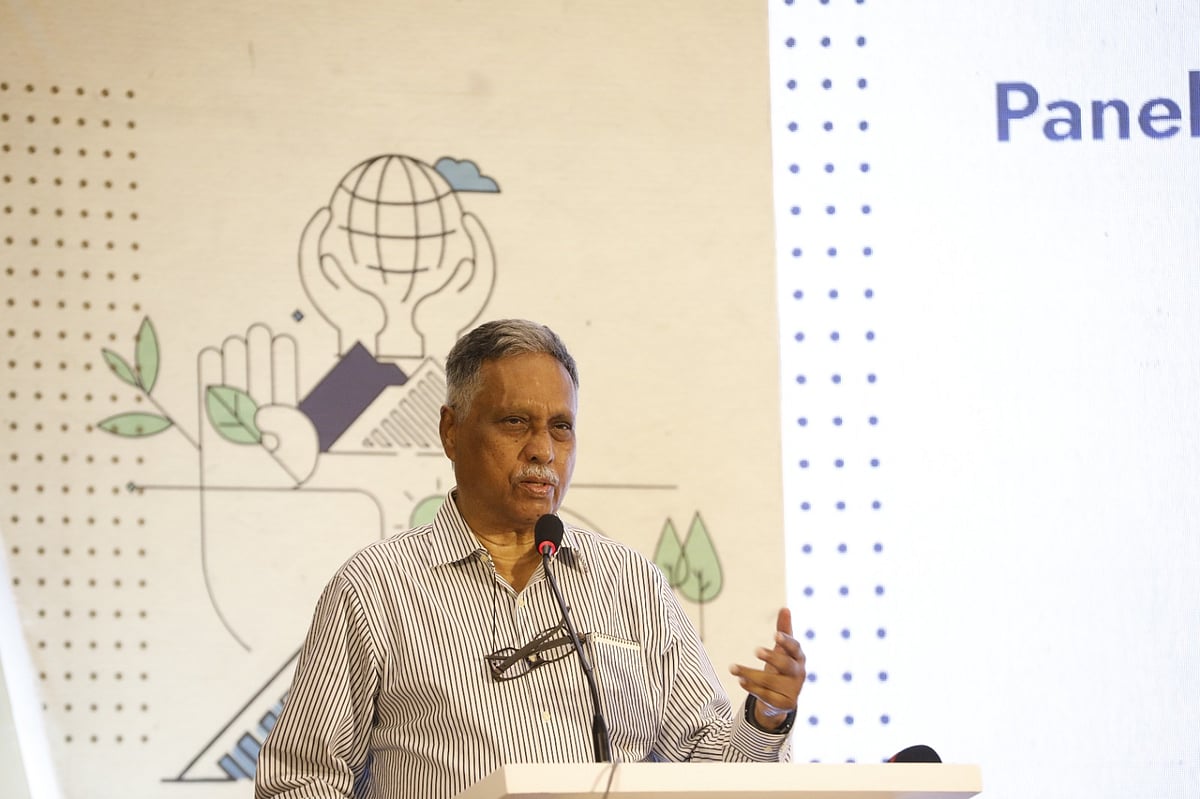
Climate change should not be treated as merely an emerging issue for Bangladesh; its effects must be modelled and prepared for now, Ainun Nishat, professor emeritus at BRAC University and a specialist in water resources and climate change, said on Thursday. The country's climate preparations, in his words, are good on paper but deficient in implementation.
He was chairing a panel on climate adaptation, knowledge and structural constraints at the day-long Syed Humayun Kabir Memorial Research Symposium 2026, organised by Banglar Pathshala and the Sajida Foundation at a hotel in Banani, Dhaka.
The real question, he said, is whether nationally adopted policies and plans are properly built into the work of the ministries; coordination between them is lacking. Citing one piece of work, he said the ministries of agriculture and health had offered little cooperation while it was being prepared. On the safe-water crisis in the south-west, he said installing water tanks would not solve the problem unless local needs and usage were taken into account, and that the preparations the north needs are not those the coast needs.
Bangladesh tends to plan the future on past experience, he said, but for climate change the situation 30 to 40 years ahead must be modelled and assessed now, because today's young people will bear the brunt. Thinking on climate remains heavily shaped by foreign agencies, which assume the government lacks capacity, bring money, and fund documents that then 'gather dust nicely on the shelf'. Planning on paper, he said, must be matched by scope for implementation in the field.
Joining the closing session online, Shamaruh Mirza, a senior regulatory specialist at the Australian Government Department of Health and Aged Care, said good intentions are not enough in policy-making: who will implement a decision, where the money will come from and how the work will be done at district level must all be considered. Farah Kabir, country director of ActionAid Bangladesh, said the country's larger problem is not a shortage of research but turning that knowledge into decisions and resource allocation; much research is done about people, not with them.
Physician and politician Tasnim Jara said that even where research evidence enters policy, implementation lags badly, and that informing the public in plain language lets them demand the services due to them. Senior Supreme Court lawyer Sara Hossain chaired the closing session, which also heard from Arizona University law professor Leslie Obiora, Brown University's Malabika Sarkar and Fuara Tasmim, additional director general of the health directorate. The symposium ran seven sessions in all.
Source: Prothom Alo

Comments
(0)