
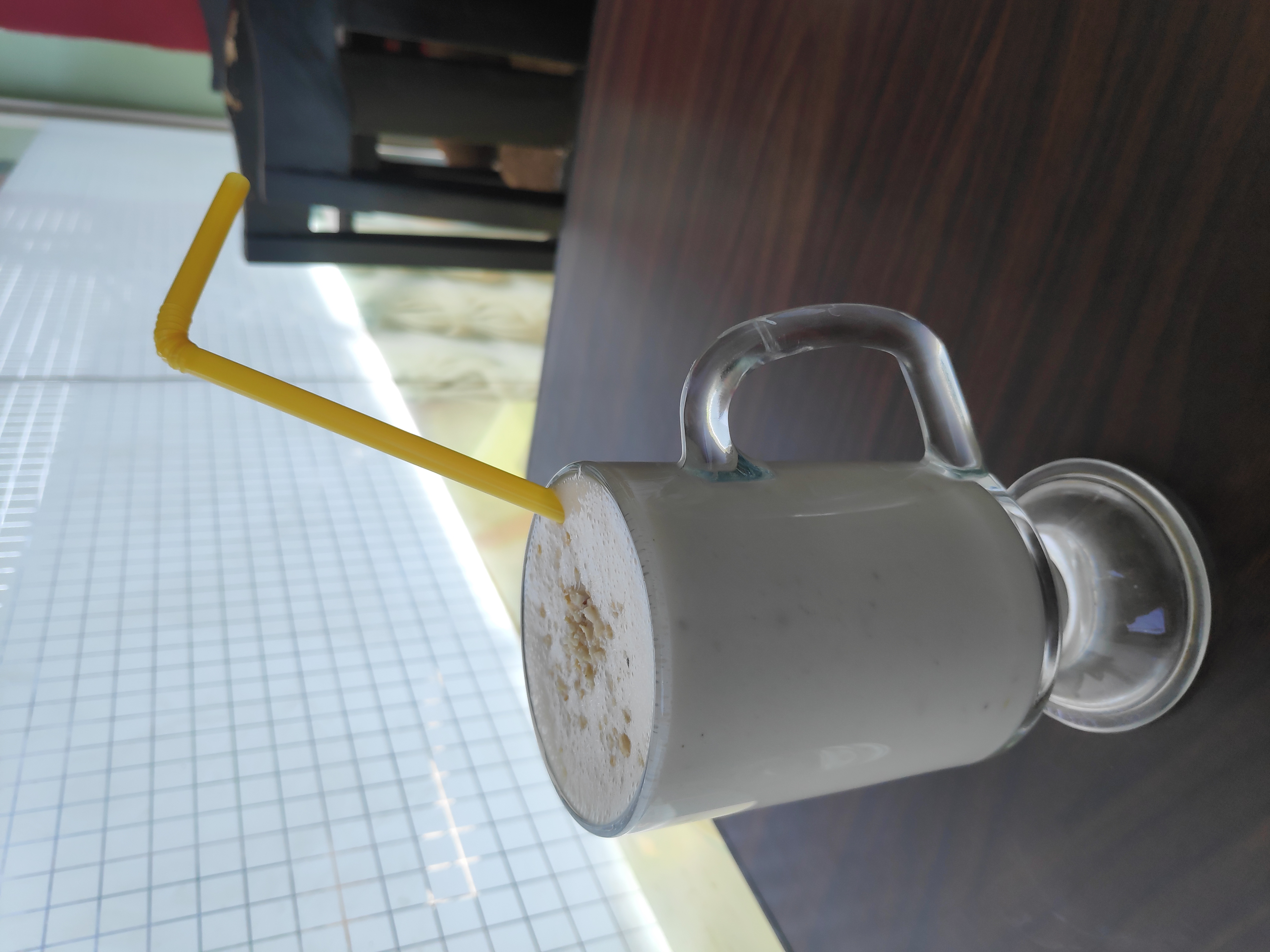
On 18 March 2026, during Ramadan, the lifestyle desk of the Bengali news site Jagonews24 published a short recipe for banana lassi, a cold drink of ripe bananas blended with sweet yoghurt, honey and a pinch of ground cardamom. The paper offered it as an easy drink for a hot day, one that takes a few minutes and uses ingredients most households already keep, and suggested serving it to the family at iftar, the meal that breaks the daily fast. This report sets out the recipe as it was published and explains, from official and reference sources available at the time, what goes into the glass: the lassi tradition, Bangladesh's banana crop, its sweet yoghurt, honey and cardamom, and what food and health authorities say about nutrients, sugar and safe preparation.
The recipe as Jagonews24 published it
The recipe has five ingredients. The quantities below are those the paper printed, with one correction. The original ingredient list gave the cold water as "250 litres", plainly a printing error in a recipe built on two bananas and 150 grams of yoghurt; it is shown here as 250 millilitres. The method itself tells the cook to add the water "as needed", so the amount can be adjusted to taste.
- Cold water: 250 millilitres (printed as "250 litres" in the original)
- Sweet yoghurt (mishti doi): 150 grams
- Ripe bananas: 2
- Honey: 2 spoons
- Ground cardamom: 1 pinch
The method, as published, has two steps:
- Put every ingredient except the water into a blender and blend them together well.
- Add water as needed and blend once more. The banana lassi is then ready to serve.
Because the water goes in last, the cook decides how thick the drink will be: a little water gives a glass close to a smoothie, while more water gives a thinner drink. The recipe does not name a banana variety or the size of the spoon, and it gives no serving count. Jagonews24 described the result as sweet, thick and satisfying, and suggested it as a drink for the iftar table.
The banana lassi was one of a run of Ramadan drink recipes the paper's lifestyle desk published that month. The same page linked to its recipes for bangi (musk melon) sherbet, laban, a cumin-water sherbet, ripe papaya lassi and a lemon and strawberry juice, all presented as drinks for breaking the fast.
What lassi is and where it comes from
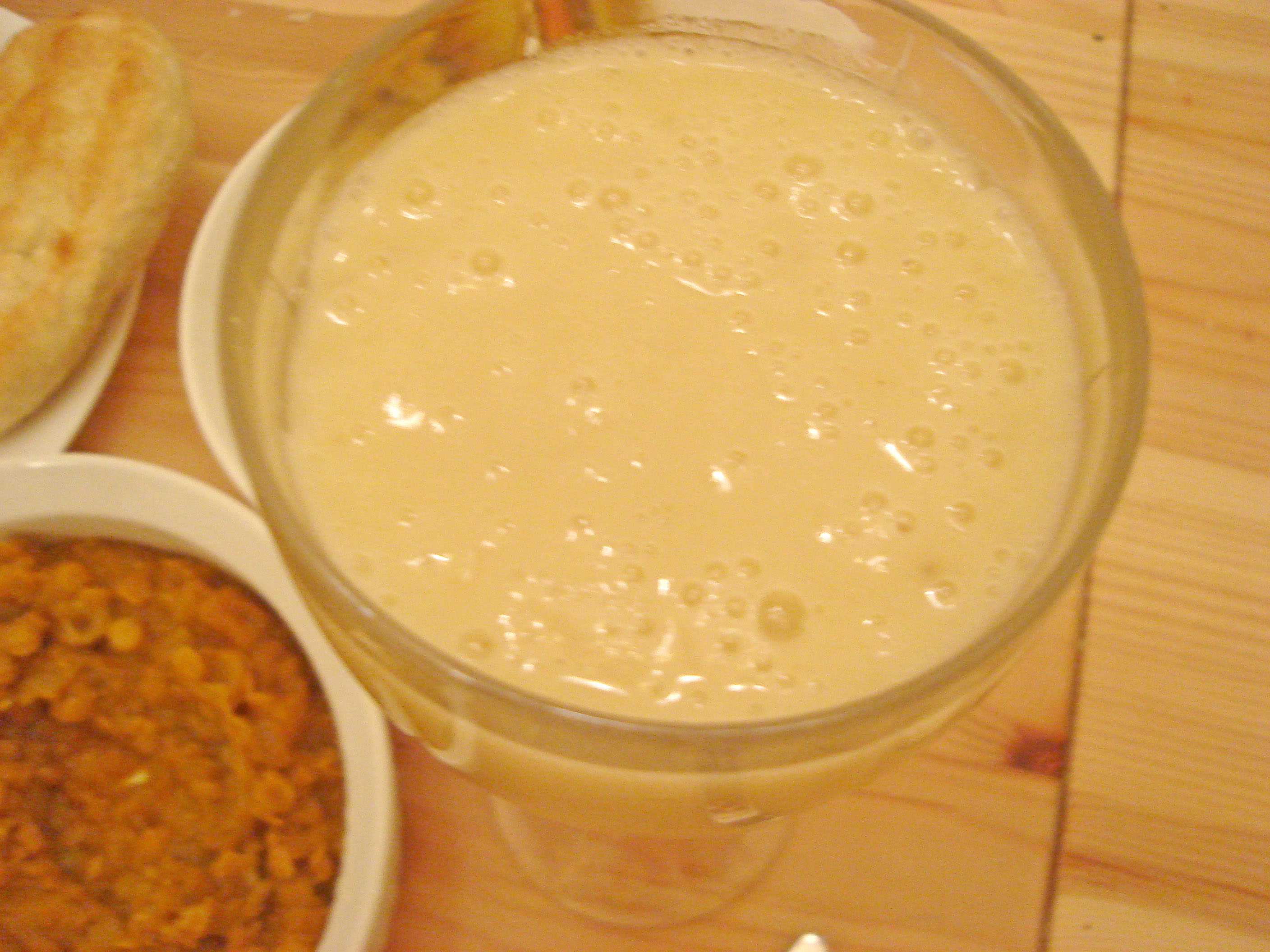
Lassi is a yoghurt-based drink with a consistency close to a smoothie. Reference works trace it to Punjab, where it was traditionally made from the yoghurt of water-buffalo milk and served in a clay cup called a kulhar; it is now drunk in many parts of the world. The basic drink is yoghurt blended with water and spices. Salted versions, known as namkin lassi, add salt, black pepper and cumin, while sweet versions, meethi lassi, are flavoured with cardamom, rosewater or saffron. Fruit is a common addition, which gives mango lassi and strawberry lassi; a banana lassi belongs to the same family of sweet fruit lassis, and its pinch of cardamom follows the sweet lassi tradition.
In Bangladesh the drink fits a long habit of eating yoghurt and fruit together. Banglapedia, the national encyclopedia of Bangladesh, describes how many rural households begin the day with puffed rice (moodi), flattened rice (chira) or popped rice (khoi) taken with milk or yoghurt and seasonal fruit such as mango, banana or jackfruit. It also notes that sweetened yoghurt, dahi, is often served as the last item at a formal or festive meal. Banana lassi brings two of those everyday foods, ripe banana and sweet yoghurt, into a single glass.
The banana: a fruit Bangladesh grows all year
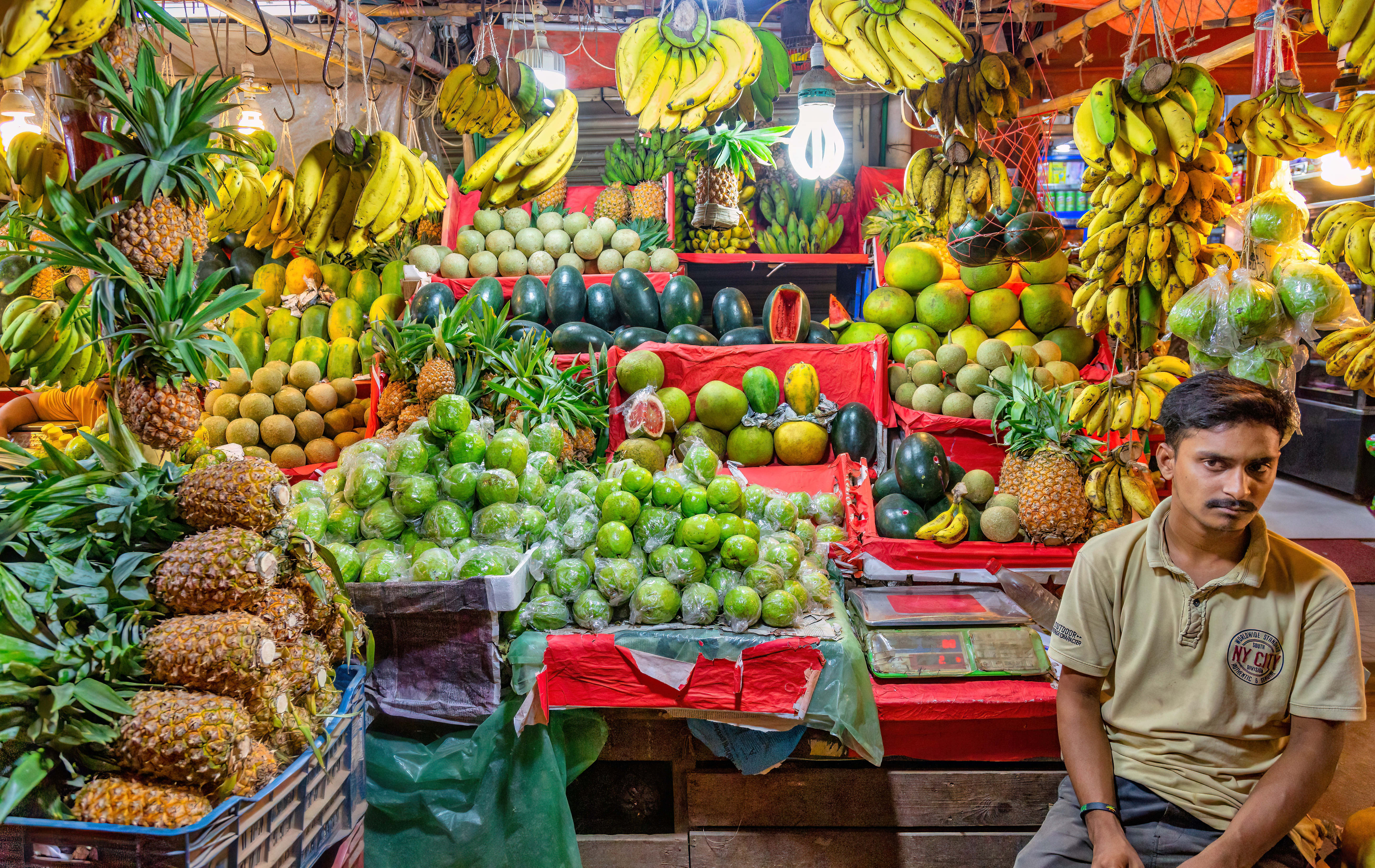
Banglapedia describes the banana, kola in Bengali, as a familiar tropical fruit that spread from its home in the south-western Pacific to India by about 600 BC and may be the world's oldest cultivated crop. The plant is one of the tallest herbaceous plants. What looks like a trunk is a pseudo-stem made of tightly wrapped leaf bases, and its leaves can reach 365 centimetres in length. Each plant produces a single drooping flower spike, with female flowers below and male flowers above, and the female flowers develop into the familiar bunch. A bunch carries five to fifteen clusters, or hands, and each hand holds six to twenty fruits. Cultivated bananas carry no seeds. Once a plant has fruited it dies or is cut down, and suckers growing from the underground rhizome become the next plants.
According to Banglapedia, bananas grow almost everywhere in Bangladesh throughout the year, and the principal growing areas are Rangamati, Barishal, Rangpur, Dinajpur, Noakhali, Faridpur and Khulna. Popular kinds include Sagar, Champa, Sabri, Singapuri and Mahersagar. Kancha kola, the green banana cooked as a vegetable, belongs to a separate sub-species from the dessert bananas eaten ripe, and the seeded Aita kola also grows in the country. A lassi calls for ripe dessert bananas.
Banglapedia records Bangladesh's banana harvest in 2005-06 as 909,060 metric tonnes from 138,360 acres. More recent Bangladesh Bureau of Statistics data, reported by The Financial Express in December 2025, put the output of ripe bananas at 813,560 tonnes in fiscal year 2024 and 862,692 tonnes in fiscal year 2025. The same report gave mango output as 1.87 million tonnes in fiscal 2025, down from 1.89 million tonnes, and jackfruit at about 1.02 million tonnes, and said Bangladesh spends about Tk 100 billion a year to import around 0.85 million tonnes of fruit such as apples and oranges.
The crop has its problems. Banglapedia lists Panama wilt, caused by the soil-borne fungus Fusarium oxysporum f. sp. cubense, as a widespread and destructive disease in Bangladesh; bunchy top, a virus spread by the banana aphid Pentalonia nigronervosa; bacterial wilt; and anthracnose, a fungal disease of the fruit that shows as black spots as bananas ripen. Insects such as the banana leaf and fruit beetle scar the skin and cut the fruit's market value. Growers who see these problems in their gardens can seek advice from their upazila agriculture officer.
Sweet yoghurt and Bangladesh's dairy farms
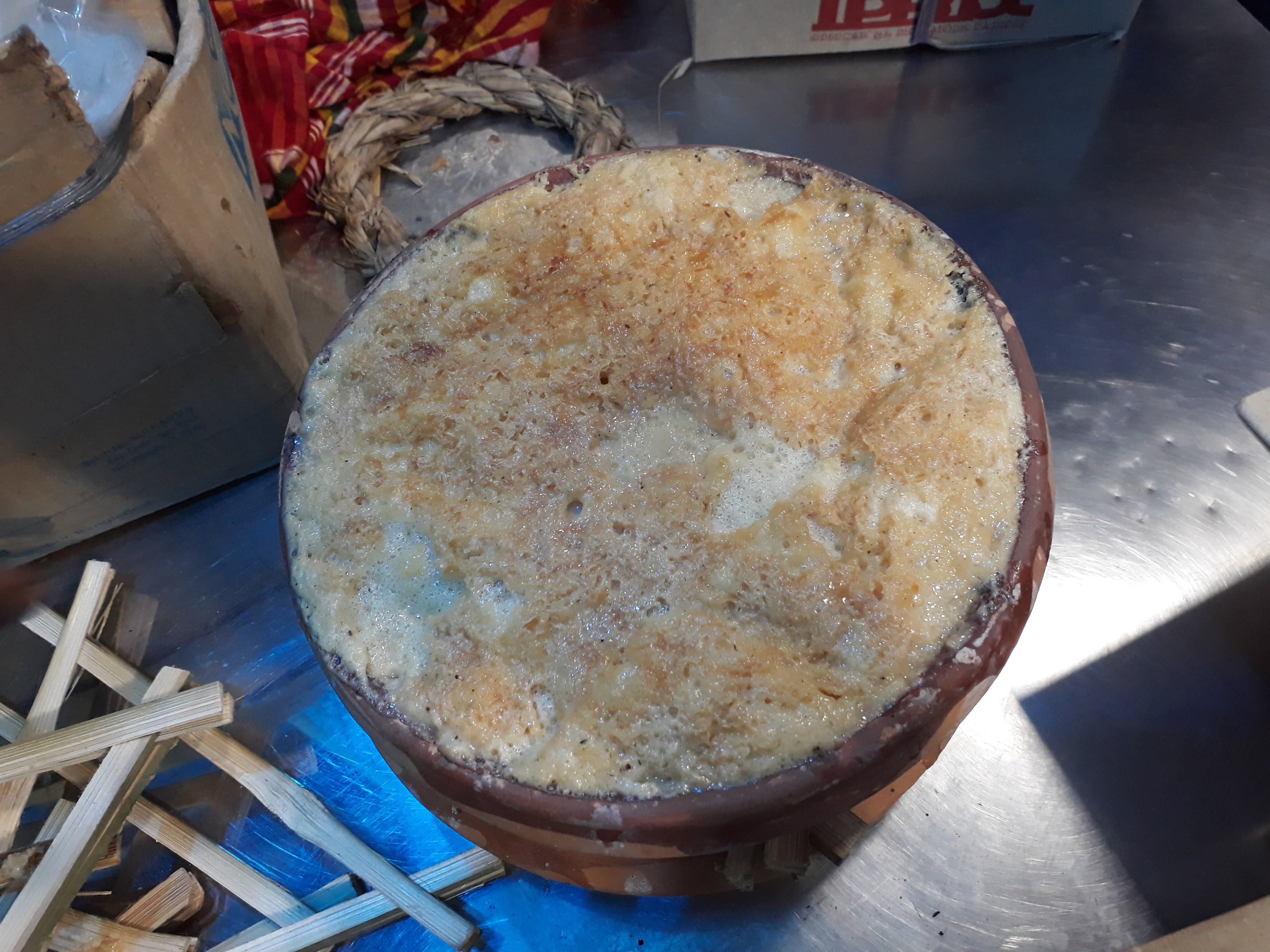
The second ingredient is mishti doi, sweet yoghurt. Banglapedia explains that Bengali sweets, unlike the thickened-milk sweets of northern India and Pakistan, are largely made from curdled milk, and it singles out the yoghurt of Bogura (Bogra) as a specially rich, sweet yoghurt. In the past, it says, large temporary cattle and buffalo sheds called bathan were put up on the pastures of North Bengal in the dry season, and a yoghurt industry grew around them. Farmers boiled the milk down to a quarter of its original volume, which is why Bogura yoghurt is almost as thick as khir.
Bogura's yoghurt was given geographical indication (GI) status in 2023. The Business Standard reported on 5 July 2023 that the Department of Patents, Designs and Trademarks under the industries ministry issued GI certificates on 25 June to Bogura's yoghurt, to the Langra and Ashwina mangoes of Chapainawabganj and to the Tulshimala aromatic rice of Sherpur, bringing the number of Bangladeshi GI products to 15. The same report said Bogura, often called the country's yoghurt capital, produced about 50 tonnes of yoghurt a day in around 400 factories of different sizes. A Financial Express report of June 2025 said around 500 yoghurt outlets operated in the district and that more than 1.9 million litres of milk were produced each day across Bogura's 12 upazilas, mostly for yoghurt.
Behind every pot of doi is milk from the country's livestock farms. The Department of Livestock Services' Livestock Economy at a Glance 2024-2025, based on provisional Bangladesh Bureau of Statistics figures, put milk production at 155.38 lakh metric tonnes in 2024-25, up from 150.44 lakh tonnes in 2023-24 and 140.68 lakh tonnes in 2022-23. Demand, calculated at 250 millilitres per person per day, was 162.33 lakh tonnes, and availability stood at 239.29 millilitres per person per day. The same table counted 251.71 lakh cattle, 15.32 lakh buffaloes and 272.91 lakh goats in the country.
The recipe asks for sweet yoghurt, which, as its name says, is already sweetened before it reaches the blender. Together with two spoons of honey and two ripe bananas, that makes banana lassi a sweet drink, which matters for the sugar advice below.
Honey: where Bangladesh's comes from, and why babies should not have it
Banglapedia defines honey as the sweet, thick fluid that bees make from the nectar of flowers and store in their hives as food. Its main sugars are fructose and glucose, and its colour, taste and smell depend on the flowers the bees visit. Two species matter commercially in Bangladesh: the giant honeybee, Apis dorsata, which has never been domesticated but produces most of the country's honey in the wild, and Apis cerana indica, which is found both in the wild and in hives.
The Sundarbans, the mangrove forest of the south-west, accounts for about 20 per cent of Bangladesh's honey, mostly single-flower honeys of the goran, golpata and khalshi types, according to Banglapedia. Elsewhere, mustard, mango and Indian jujube are important honey sources, and mustard honey is the best-known honey in the country. Most honey is collected between December and June, with the peak from February to April, the season in which this recipe was published. The Department of Agricultural Extension runs beekeeping training at upazila level and supplies hives to trainees, and the Bangladesh Small and Cottage Industries Corporation and the Bangladesh Institute of Apiculture also train beekeepers, including in moving hives to mustard-growing areas in winter. Honeybees also pollinate more than 60 farm crops.
Honey is not for babies. The UK National Health Service, in guidance last reviewed on 18 February 2026, says: "Do not give your child honey until they're over 1 year old." It explains that honey can sometimes contain bacteria that produce toxins in a baby's intestines, causing infant botulism, and adds that because honey is a sugar, avoiding it also helps prevent tooth decay. A lassi sweetened with honey should therefore not be given to a child under one year old.
Cardamom: the pinch of spice
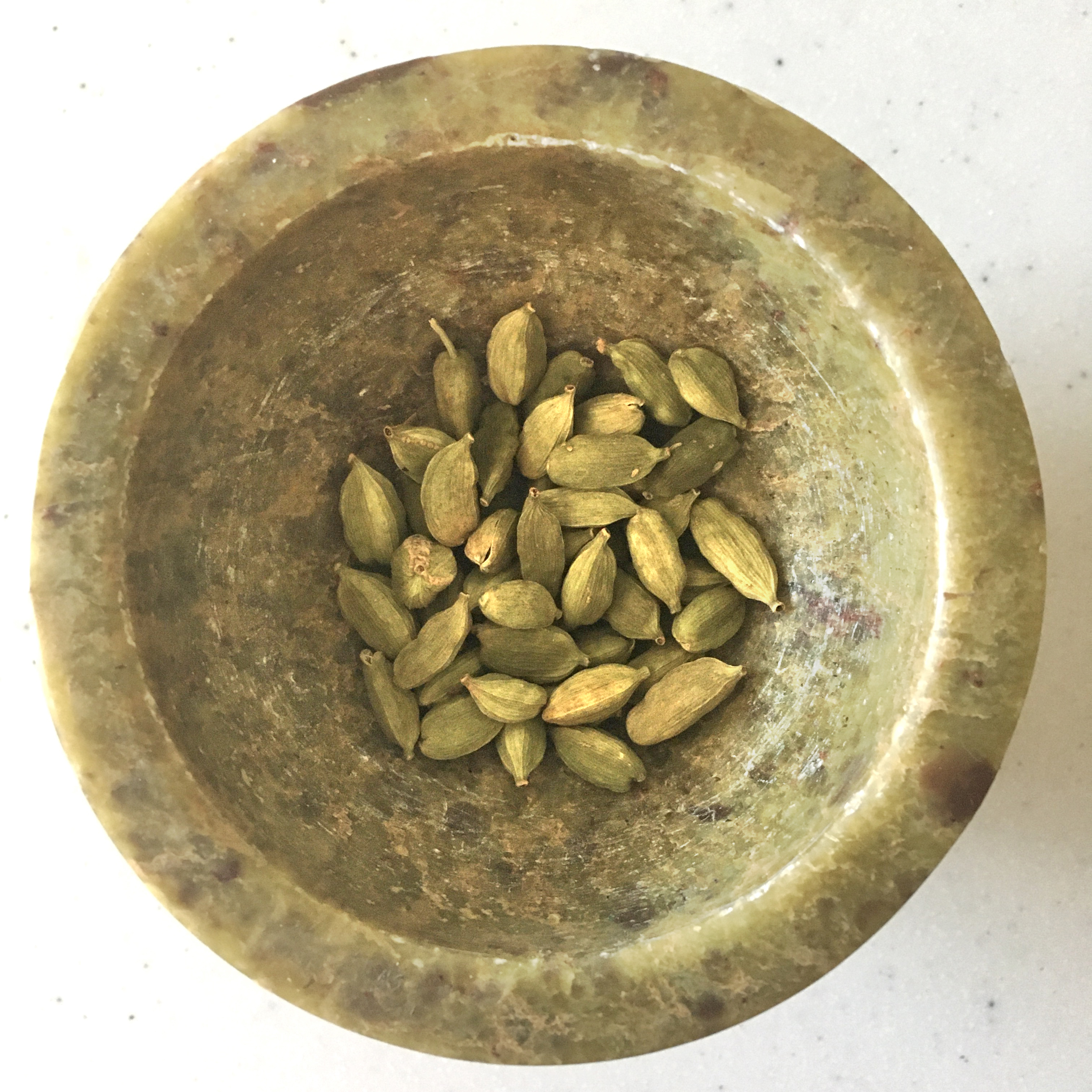
The cardamom in the recipe is green cardamom, Elettaria cardamomum, a perennial herb of the ginger family, Zingiberaceae, native to southern India. Its green seed pods are dried, and the seeds inside are used in cooking. In India the states of Sikkim and Kerala lead in both area and production, and the plant is also grown in Nepal, Vietnam, Cambodia, Thailand, Sri Lanka and Central America. Ground cardamom flavours many curries and masala chai, and in Iran and India it is used in coffee and tea.
Banglapedia lists cardamom among the spices obtained from seeds and notes that garam masala, the spice mix used in special meat curries and rice dishes, combines clove, black pepper, cinnamon and cardamom. Bengali sweet-makers also use cardamom powder, along with cassia leaves, raisins, cashew nuts and orange rind, to flavour and decorate their sweets. In this lassi a single pinch is enough to scent the drink.
What the ingredients contain
The United States Department of Agriculture's FoodData Central database gives nutrient values for each main ingredient per 100 grams. It does not analyse this recipe as a whole, so the figures below describe the ingredients one by one.
- Raw banana, per 100 grams: 89 kilocalories, 74.9 grams of water, 1.09 grams of protein, 0.33 grams of fat and 22.8 grams of carbohydrate, of which 12.2 grams are sugars and 2.6 grams dietary fibre; 358 milligrams of potassium, 27 milligrams of magnesium, 8.7 milligrams of vitamin C and 0.367 milligrams of vitamin B6.
- Plain whole-milk yoghurt, per 100 grams: 61 kilocalories, 87.9 grams of water, 3.47 grams of protein, 3.25 grams of fat, 4.66 grams of carbohydrate, 121 milligrams of calcium and 0.37 micrograms of vitamin B12.
- Honey, per 100 grams: 304 kilocalories, 17.1 grams of water, 0.3 grams of protein and 82.4 grams of carbohydrate, of which 82.1 grams are sugars, mainly fructose (40.9 grams) and glucose (35.8 grams).
The yoghurt figures are for plain, unsweetened yoghurt. Sweet doi has sugar added during making, so its sugar and energy content is higher than the plain yoghurt shown here, and it varies from one maker to another.
The World Health Organization's healthy diet fact sheet, in the version of 26 January 2026, defines free sugars as sugars added to foods and drinks plus the sugars naturally present in honey, syrups, fruit juices and fruit juice concentrates. WHO advises limiting free sugars to less than 10 per cent of total daily energy intake, which for a person of healthy body weight eating about 2,000 kilocalories a day is about 50 grams, or about 12 level teaspoons, and says a further cut to 5 per cent or less may bring additional benefits. In this recipe the honey and the sugar in sweet yoghurt count as free sugars; sugar inside the whole banana does not. The same fact sheet advises everyone older than 10 years to eat at least 400 grams of fruit and vegetables a day.
Anyone with diabetes or another condition that calls for a special diet should ask a doctor or a registered dietitian before adding a sweet drink like this to the iftar table.
Making it safely at home
A lassi is never cooked, so hygiene matters more than in most iftar dishes. The World Health Organization's Five Keys to Safer Food, a food-hygiene message whose poster WHO says has been translated into more than 87 languages, sets out five rules:
- Keep clean.
- Separate raw and cooked.
- Cook thoroughly.
- Keep food at safe temperatures.
- Use safe water and raw materials.
For a blended drink, the first, fourth and fifth keys apply most directly. Hands, the blender jar and the glasses should be clean; the yoghurt is a perishable dairy food; and because the cold water in this recipe goes into the glass without being boiled, it should be safe drinking water.
Photo: Gaurav Dhwaj Khadka / Wikimedia Commons (CC BY-SA 4.0)
Sources: Jagonews24 (18 March 2026), Banglapedia (Banana, Sweetmeats, Food Habits, Honey, Apiculture, Spice), USDA FoodData Central, The Financial Express (December 2025 and June 2025), The Business Standard (5 July 2023), Department of Livestock Services (Livestock Economy at a Glance 2024-2025), UK National Health Service, World Health Organization, reference entries on lassi and green cardamom.

Comments
(0)