
Israel's Aleph Farms and Singapore's Mottainai Food Tech have each won S$1 million ($780,000) Bezos Earth Fund Sustainable Protein Growth Stage Grants, presented with Enterprise Singapore at the Asia-Pacific Agri-Food Innovation Summit, FoodNavigator reported on 30 October. Their technologies sit at opposite ends of alternative protein, but both now face the same task: moving from proof of concept to commercial production.
Aleph Farms grows beef from animal cells rather than raising whole animals. Co-founder Didier Toubia framed cultivated meat around supply resilience, listing Covid, the war in Ukraine, African swine fever in Asia, avian flu in the US, tariffs and disruption to fertiliser markets. It started with beef, he said, because plants struggle to copy the taste, cooking properties and bite of whole cuts.
The company claims its product has 80% less cholesterol than beef and a better calorie-to-protein ratio, and that it cuts carbon by 92%, land use by 98% and water use by 99%. "The profitability and the scalability are proven now, especially for the right products," Toubia said, meaning premium cuts such as sirloin rather than mince. Aleph has regulatory clearance in Singapore and expects to begin production and launch with selected restaurants in the first half of 2027.
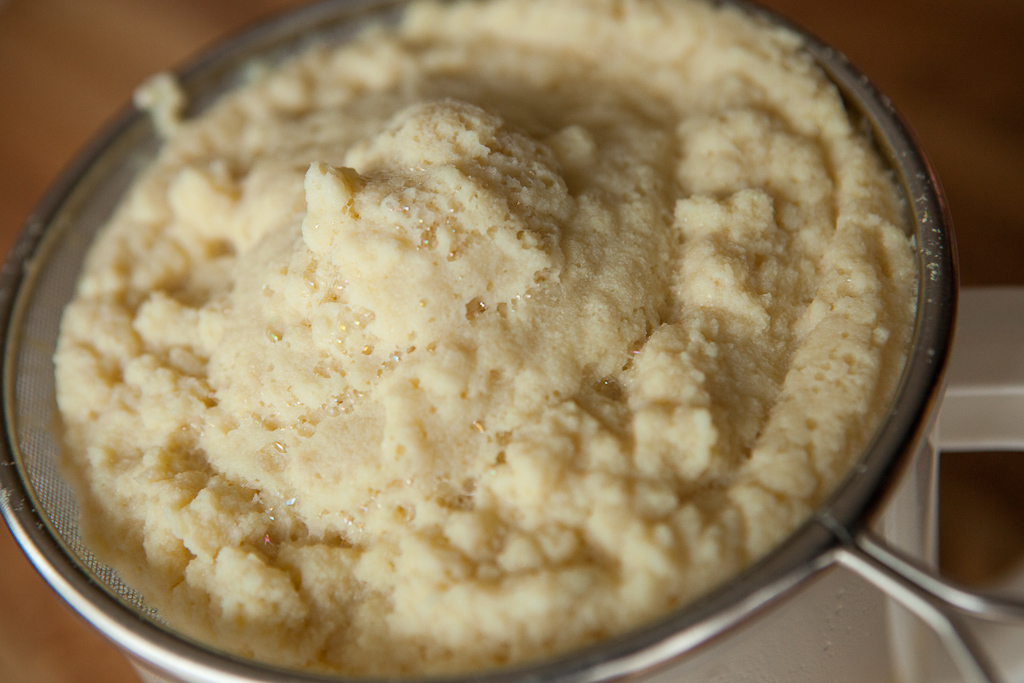
Mottainai Food Tech starts from the cheap end. It takes okara, the soy pulp left after making tofu and soy milk, and uses solid-state fermentation to turn it into an ingredient called Jiro Meat. The company targets hybrid products: by its own figures, replacing half the chicken or pork in a dish with Jiro Meat cuts the cost per cooked kilogram by 18% and raises yield by 9%, because the ingredient soaks up juices the meat releases, keeping cooking losses under 5%.
The two winners show how the sector's question has changed, FoodNavigator wrote: from whether new technologies can recreate meat to whether firms can build viable businesses on them. The claims on cost, nutrition and environmental impact are the companies' own.
Photo: Pax Ahimsa Gethen / Wikimedia Commons (CC BY-SA 3.0)
Source: FoodNavigator

Comments
(0)