
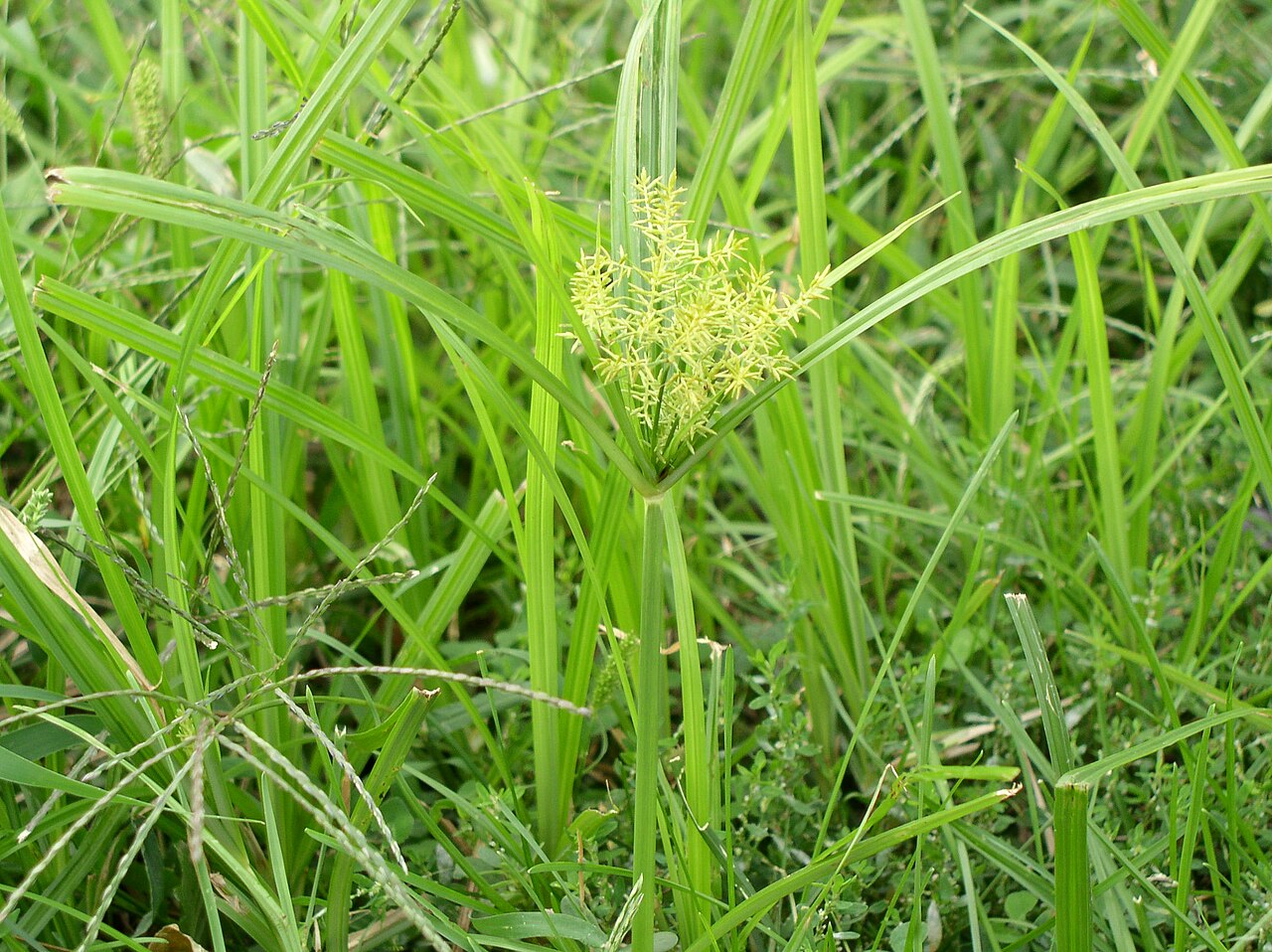
Swiss machinery maker Ecorobotix will add 10 commercial plant-detection models to its ARA precision sprayer from March 2027, among them potatoes, garlic and leeks, and release 55 more for free testing, including one that targets yellow nutsedge, Future Farming reported on 30 October.
The ARA uses cameras and image recognition to tell crop from weed and spray only the weed. Ecorobotix says the models moving into commercial use were tested on more than 11,000 hectares in over 20 countries in 2026, with an average 86% reduction in spray inputs compared with broadcast spraying. The figure is an average across those trials; the company has not published results for each crop model. The additions take its library to more than 120 recognition and treatment models.
Yellow nutsedge (Cyperus esculentus) is an invasive weed that spreads through underground tubers and is hard to control. Ecorobotix says its new algorithm can find it among crop plants and hit it with a non-selective herbicide without harming the crop. "We are offering the first precision spraying solution capable of detecting yellow nutsedge and applying a non-selective herbicide directly to the weed without damaging the crop," said Simon Gasser, agronomist and crop algorithm product manager. The model will be free to test from March 2027; Future Farming notes that its effectiveness and crop selectivity in different field conditions have not yet been shown in published comparative results.
The potato model was compared with broadcast spraying in Swiss field trials, and the company says it controlled common weeds, assessed 20 days after treatment, though detailed figures were not released. Belgian grower Luc Détroz reportedly used it on 300 hectares. "In a single pass, we were able to control goosefoot and knotweed, and the field remained weed-free until the end," he said.
More than 1,000 ARA sprayers are now working worldwide and have treated over 600,000 hectares, according to the company, and the area treated with its carrot model rose by more than 80% as growers looked for alternatives after restrictions on the herbicide metribuzin. New software can make an existing machine useful for more crops and weeds, but a detection model does not make every herbicide legal to use: local product authorisations and application rules still apply.
Photo: Blahedo / Wikimedia Commons (CC BY-SA 2.5)
Source: Future Farming

Comments
(0)