
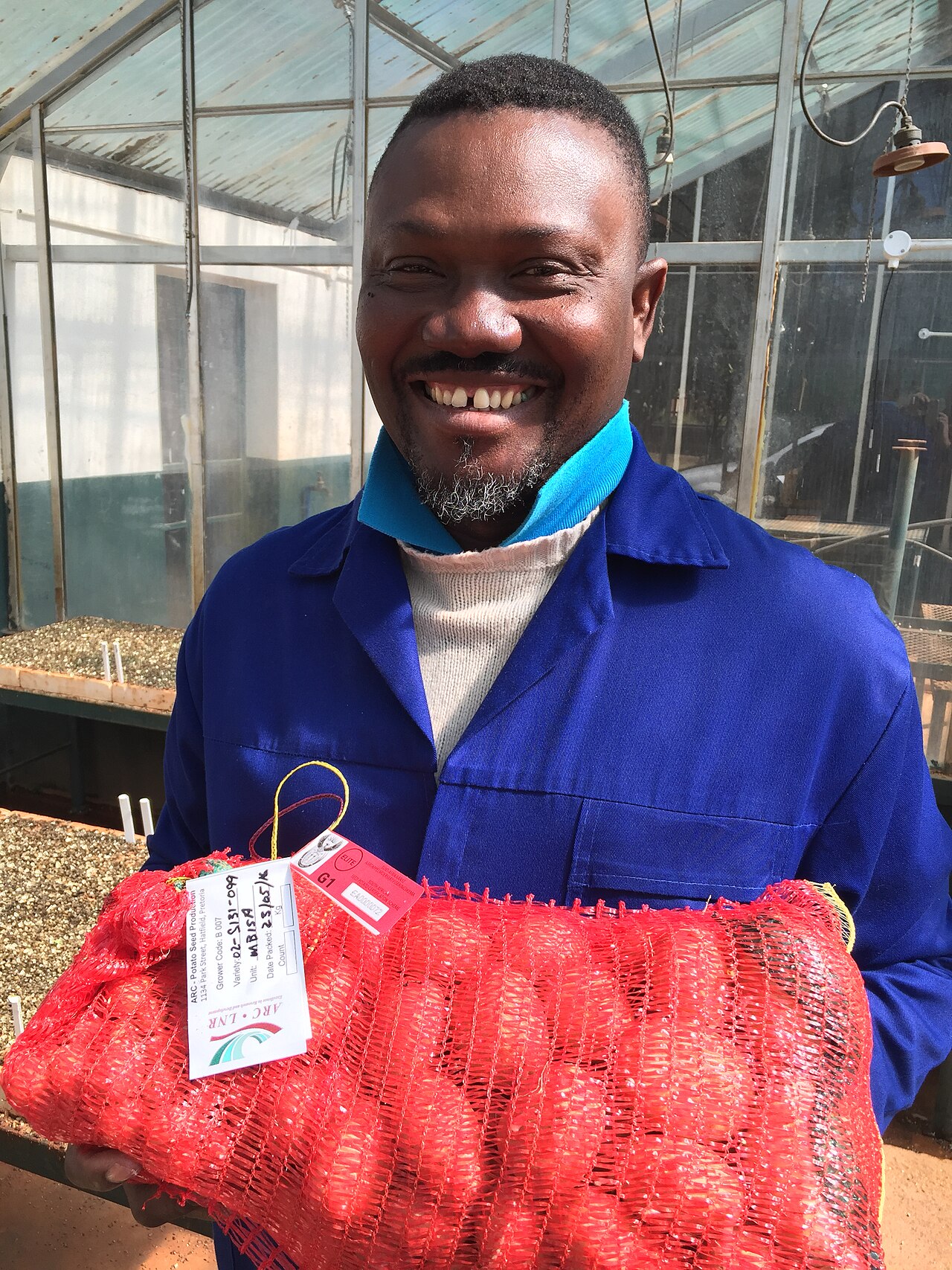
UK start-up Airponix and Dyson Farming Research have begun a two-year study into whether England can grow its own Generation Zero, or G0, seed potatoes, the disease-free first generation from which later seed and commercial crops are multiplied. The project is funded through Defra's Farming Innovation Programme and delivered by Innovate UK.
England needs an estimated 3.5 million to 4 million G0 tubers a year, and growers usually multiply that stock three or four times in the field before commercial planting. The partners want to find out whether growing it domestically in a controlled indoor setting could be cheaper and more reliable than current supply routes.
Airponix's system is a variation on aeroponics, in which roots hang in air rather than soil. Its patented method sprays an ultra-fine, nutrient-rich fog on to suspended roots in a sterile enclosure. The trial uses natural light and a peat-free growing medium; the UK industry is under pressure to phase out peat by 2030.
Machine vision cameras watch root development, foliage, tuber formation and plant stress around the clock, and growers can adjust the fog for each variety and growth stage. The companies say that lets them harvest tubers as they reach the right size, rather than all at once as in the field.
The trial sits in a Dyson Farming Research glasshouse, with four Airponix units known as A-frames holding more than 6,000 plants. Chief executive Michael Ruggier points to a 940 square metre facility run by NADEC in Saudi Arabia that the company says yields about 1 million mini-tubers a year from 33,000 plants on roughly 3 cubic metres of water a day. Those figures come from the company and have not been independently verified. Airponix is aiming for production costs under half those of existing propagation methods.
Photo: Philippus Jacobus Steyn / Wikimedia Commons (CC BY-SA 4.0)
Source: Global Agriculture


Comments
(0)