
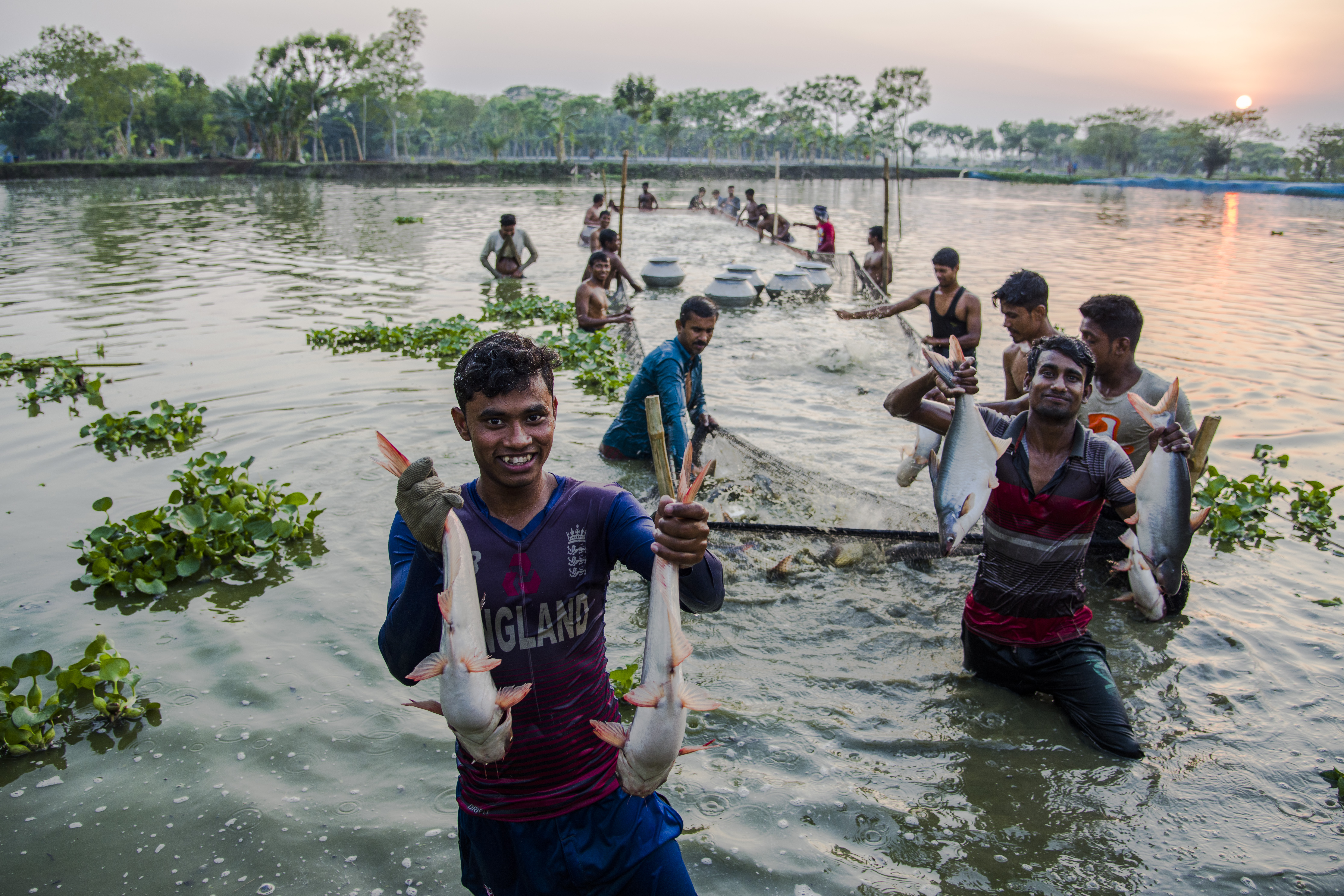
The upazila administration of Trishal in Mymensingh district said in November 2024 that it had developed a way of farming fish with sensors, a mobile app and artificial intelligence (AI), Jagonews24 reported on 11 November 2024. According to the officials and staff involved, the system could raise fish output in a small area three to four times, protect cropland because more fish could be raised on less land, and, if someone put "gas tablets" into a pond to kill the fish, keep about 70 percent of them alive by producing oxygen at once. These figures came from the people running the project; the report did not cite an independent test of them.
The trial pond in Kanihari union
The trial was run in a government pond of 52 decimals in Kanihari union of the upazila, the report said, and those involved described it as already successful. Setting up the AI technology on those 52 decimals cost Tk 26 lakh. At farm level, they said, using the technology on one acre of land could cost about Tk 5 lakh.
The administration began the work about a year before the report. It installed sensors in a government pond and built a mobile app linked to those sensors. Feed-spreading machines were placed around the pond, and devices to increase the oxygen supply were installed both below and above the water.
The people behind the project explained the problem it was meant to solve. Many farmers feed their fish regularly and take every kind of care of their ponds, yet the fish do not grow as expected. When the fish are sold the output falls short of what was hoped for, and many farmers end up with a loss. Those involved put this down to farmers not knowing the health of the pond and not knowing how much oxygen the pond needs, which lets the condition of the pond decline. The sensors and the app, run through artificial intelligence, were made under the administration's initiative to save farmers from such losses, and with the technology they had succeeded in raising more fish in less space, they said.
How the system works, as its makers described it
According to the report, the AI system checks around the clock whether the amount of oxygen in the pond is right, whether ammonia has risen, and when and how much feed should be given. The feeders and the oxygen devices are all run by the system. Whenever the pond needs something, the equipment switches on automatically. Information on the health of the pond appears regularly as graphs, so that action can be taken quickly, and no manual work is needed, the report said.
Trishal upazila fisheries officer Samsuzzaman Masum told Jagonews24 that the main purpose of developing AI technology for fish farming was to find how three to four times as much fish could be produced in a small space. The necessary sensors are fitted in the pond, he said. From them it is known how much oxygen the pond holds and whether anything unusual has happened, and the sensors collect the pond's temperature and other parameters. Afterwards, he said, when the pond needs what, whether feed is needed and what the temperature is, are all known automatically with the help of the sensors, and the system works fully automatically.
The local fisheries department told the paper that such technology is used for fish farming in various countries of the world. If it started in Bangladesh, the department said, farmers would benefit, and both production and the quality of fish would rise.
Deeper ponds and more fish per decimal
Ponds for fish farming are usually 5 to 6 feet deep, the report said, but under this method ponds are dug up to 18 feet deep, which allows more fish to be raised on a small piece of land. In the conventional method 150 to 200 pangas can be stocked per decimal; under this method 1,200 fish are stocked, and less feed is needed, according to the report's sources.
The report said 72,000 pangas had been stocked in the pond under this method, and in that passage it described the pond as 58 decimals, while elsewhere it gave the size of the trial pond as 52 decimals. The report did not explain the difference, and both figures are given here as it printed them. With the trial judged a success, the upazila administration was working to spread the technology to farmers through training, the report said.
Earlier research in the same upazila gives a picture of how pangas was farmed there before such technology. Researchers of the Department of Fisheries Technology at Bangladesh Agricultural University (BAU) surveyed 15 pangas farms in Mathbari, Dhanikhola and Sakhua in Trishal from January to June 2016, in a study published in the Journal of Environmental Science and Natural Resources. On those farms the average production of pangas was 40,765 kg per hectare per year, the feed conversion ratio was 2, and fish were usually harvested when they reached about 500 g to 1 kg.
The researchers noted that an earlier Bangladeshi study had found stocking densities ranging from 10,000 to 31,000 fry per hectare, and that the Trishal farmers they surveyed stocked at a higher level than the published literature suggested, a sign that fish farming in the area was gradually becoming more intensive. In the same survey 67 percent of ponds depended on water from deep tube-wells, and farmers said high temperatures caused problems such as oxygen depletion and poorer water quality, while heavy rain flooded ponds in summer.
The constraints the Trishal farmers listed in 2016 were lack of money, lack of scientific knowledge, poor-quality fry, poor feed quality and the high price of feed, off-odour in the fish and low market prices for pangas. The average selling price of pangas in the study area at the time was Tk 80 to 85 per kg.
What the trial cost and the plan for farmers
Rony Saha, a fisheries instructor at Kishoreganj Diploma Institute, told Jagonews24 that installing the AI technology on the 52 decimals had cost Tk 26 lakh. Of this, Tk 10 lakh went on developing the software, and Tk 16 lakh on installing the various kinds of devices. At farmer level, he said, the cost for one acre would be Tk 5 lakh. He also said the technology at the site would produce 64 kg of oxygen every hour.
In aquaculture engineering an aerator's output is usually described by its standard oxygen transfer rate: the amount of oxygen the machine adds to water in one hour under a standard set of test conditions, expressed in kilograms of oxygen per hour. A fact sheet of the US Southern Regional Aquaculture Center (SRAC Publication No. 3700, "Pond Aeration", 2005) notes that aerators transfer less oxygen under pond conditions than under the standard test conditions, so such figures are best used to compare similar machines rather than as a design figure for a pond. The Jagonews24 report did not say how the 64 kg figure was arrived at.
Trishal Upazila Nirbahi Officer Jewel Ahmed told the paper that the administration was arranging training at farmer level. To make farmers interested, he said, it had taken up fish farming under the method in one pond in each union, and its staff would keep a watch over those ponds at all times.
The claim about gas tablets
The most striking claim in the report concerned ponds poisoned with what are sold as "gas tablets". Rony Saha said the poison available in the market as gas tablets reduces the oxygen in a pond or brings it down to zero, and that is why the fish in the pond die. With this technology, he said, the server will show that the oxygen in the pond is falling and the machines will work to raise it, automatically increasing the oxygen level by creating air in the pond and applying oxygen to the water.
The report said the system does not need oxygen cylinders, because it produces the gas automatically and applies it to the pond water, and that this could save 70 percent of the fish even after gas tablets had been put into a pond. The report did not describe a test in which a pond was poisoned, and the 70 percent figure is the project's own estimate.
Pond poisoning out of enmity has been reported in Bangladesh before. Bangla Tribune reported on 14 January 2020 that unknown people had put gas tablets into two ponds in Parshun village of Nandigram upazila in Bogura on the night of 12 January. The fish farmer said fish worth about Tk 25 lakh had died and that someone had done it out of enmity. The officer in charge of Nandigram police station said he had heard that fish in two large ponds had been killed with poison and that legal action would be taken against those involved, subject to investigation, if a case was filed.
The Jagonews24 report did not name the chemical in the tablets. According to the US National Institute for Occupational Safety and Health (NIOSH), phosphine is a colourless gas used, among other things, as a fumigant; it has an odour of garlic or decaying fish but is odourless when pure, and several solid compounds known as phosphides release phosphine gas. NIOSH says phosphine is absorbed into the body by breathing it in.
Killing fish by poisoning water is prohibited in Bangladesh. Rule 6 of the Protection and Conservation of Fish Rules, 1985, framed under the Protection and Conservation of Fish Act, 1950, says no person shall destroy or try to destroy any fish by poisoning water, or by depleting fisheries through pollution, trade effluents or otherwise, in inland waters.
Why oxygen and ammonia decide a pond's health
Fisheries scientists treat dissolved oxygen as the most important water quality variable in fish culture. A fact sheet by John A. Hargreaves and Craig S. Tucker of Mississippi State University (SRAC Publication No. 4601, 2002) explains that its importance in intensive farming comes from the speed with which it can change: over a matter of hours, or sometimes minutes, dissolved oxygen can move from optimum to lethal levels. Three things cause this: oxygen does not dissolve well in water, so water holds only a limited amount; fish, plankton and organisms in the pond mud can use it quickly; and oxygen diffuses very slowly from the air into undisturbed water.
SRAC's aeration fact sheet adds that in aquaculture ponds the mass of plants, animals and microbes is much greater than in natural waters, so oxygen is sometimes used faster than it is replaced. Depending on how low the oxygen falls and for how long, fish may eat less, grow more slowly, convert feed less efficiently, become more prone to infectious disease, or suffocate and die. Farmers avoid this by aerating ponds mechanically.
Ammonia is the second measure the Trishal system was said to watch. According to SRAC Publication No. 4603, "Managing Ammonia in Fish Ponds" (2004), the main source of ammonia in fish ponds is the excretion of the fish themselves, and the rate rises with the feeding rate and the protein in the feed; ammonia also diffuses from decomposing organic matter on the pond bottom. The toxic, un-ionised form increases sharply as pH rises and is greater in warmer water. In properly managed ponds ammonia seldom reaches lethal levels, but it can cause reduced growth, poorer feed conversion and lower resistance to disease at lower concentrations. When a dense algal bloom suddenly dies, ammonia rises quickly while oxygen falls.
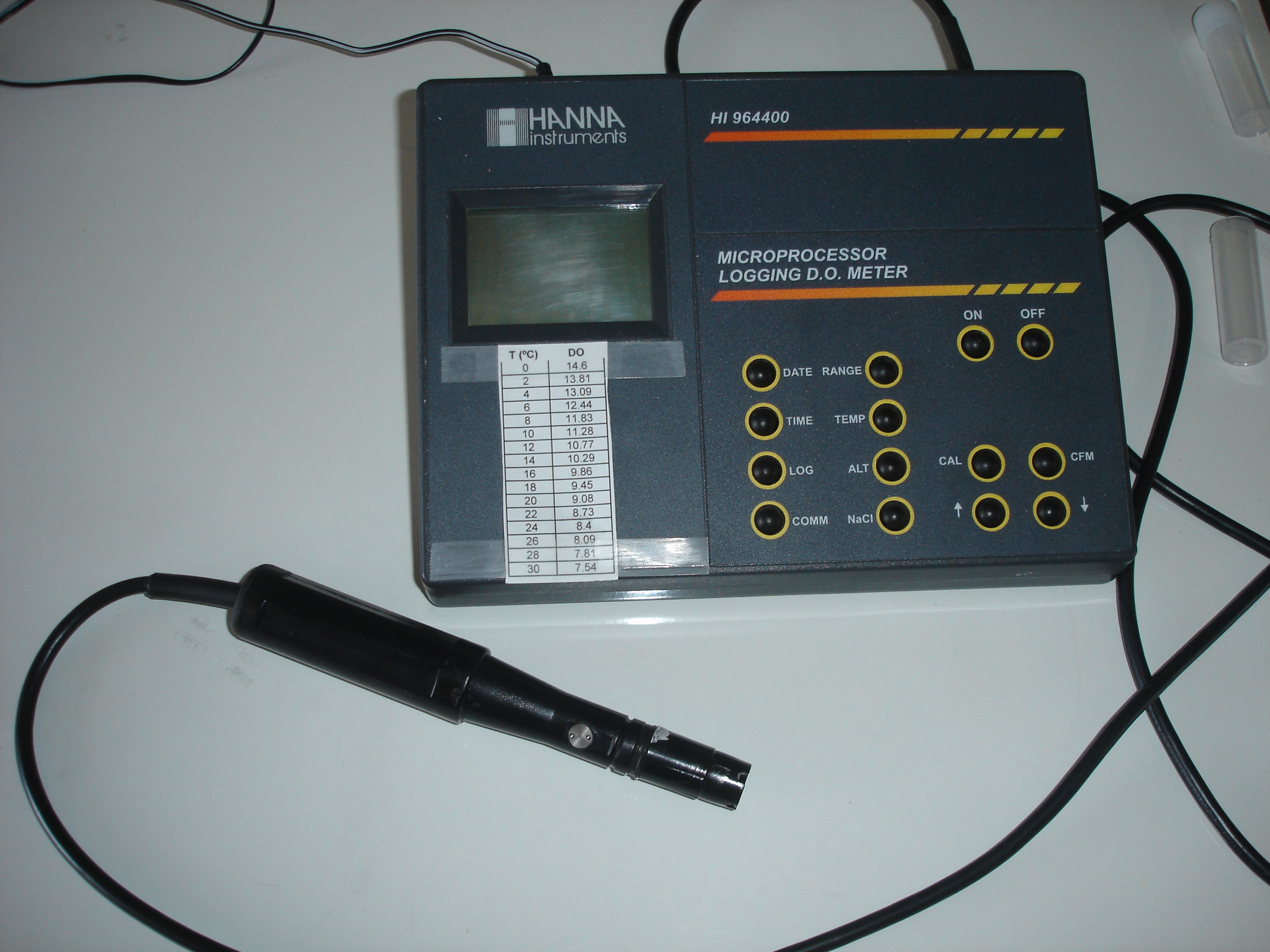
Oxygen is measured with sensors that react with oxygen and produce an electrical or optical signal in proportion to its concentration; SRAC describes polarographic, galvanic and fibre-optic types, and calls a dissolved oxygen meter indispensable equipment on commercial fish farms where many ponds must be checked routinely.
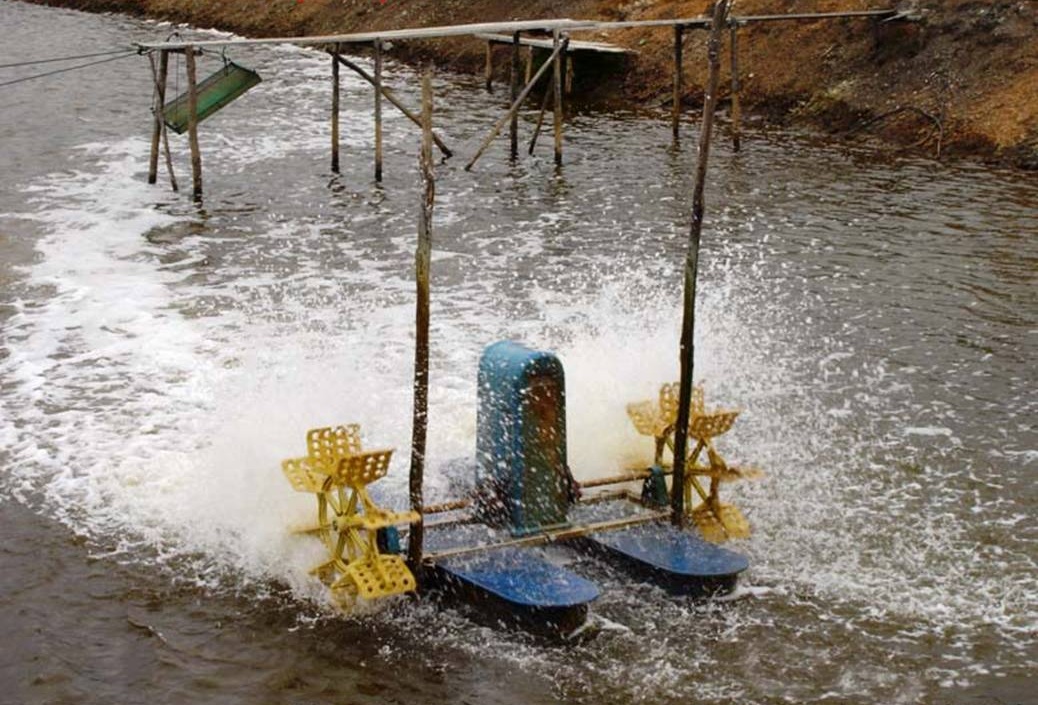
On aeration equipment, SRAC Publication No. 3700 says paddlewheel aerators are the most common type in large ponds and vertical pump aerators are common in small ponds of under one acre. Diffusers that release bubbles from the pond bottom can be very efficient in deep water, because pressure from the water above lets more oxygen dissolve and the bubbles stay longer in the water, but they are seldom used in shallow ponds. Systems that use pure oxygen can transfer oxygen quickly, but their running costs are too high for routine aeration of large ponds. The Trishal report did not say which type of device was installed.
Pangas, the fish at the centre of the trial
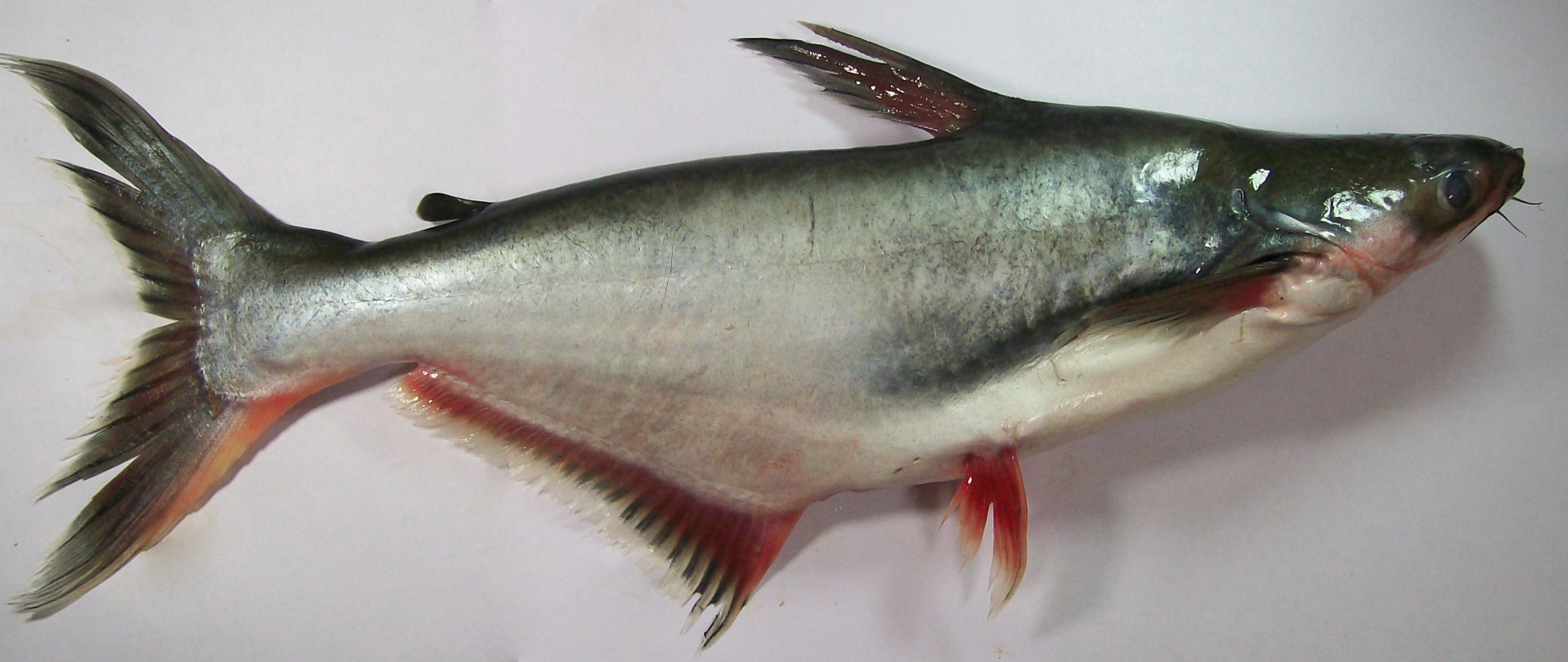
Pangas (Pangasianodon hypophthalmus), known in English as striped catfish or iridescent shark, is a catfish native to the Mekong and Chao Phraya river basins of Southeast Asia. Adults can reach about 130 cm and 44 kg. The fish can tolerate water low in oxygen because its swim bladder can be used as an air-breathing organ. In the wild it is listed as Endangered by the IUCN (2011 assessment), while it is farmed in large quantities for food.
According to the BAU study, pangas was introduced to Bangladesh from Thailand in 1989, and its induced breeding was first achieved in 1991 at BAU and the Bangladesh Fisheries Research Institute (BFRI). The fish became popular for its rapid growth, easy culture, disease resistance and tolerance of a wide range of conditions. Pangas farming in the area was first started by private enterprise in Trishal: the survey found it began with well-off people, mainly construction contractors, on leased ponds, and as local farmers and young educated people saw the fast growth and profit, the practice spread across the region within a few years. Dhanikhola union was an early centre with many farms.
Mymensingh remains the heart of this farming. A study by a team that included WorldFish researchers, published in the journal Aquaculture International in 2022, said the Mymensingh division produced 43 percent of Bangladesh's total pond pangasius (figures from 2018). It found that most finfish farmers there were experienced and practised polyculture, and that over a production cycle pangasius gained body mass nearly four times faster than tilapia, a strong incentive for farmers to grow it.
Trishal and the fish economy around it
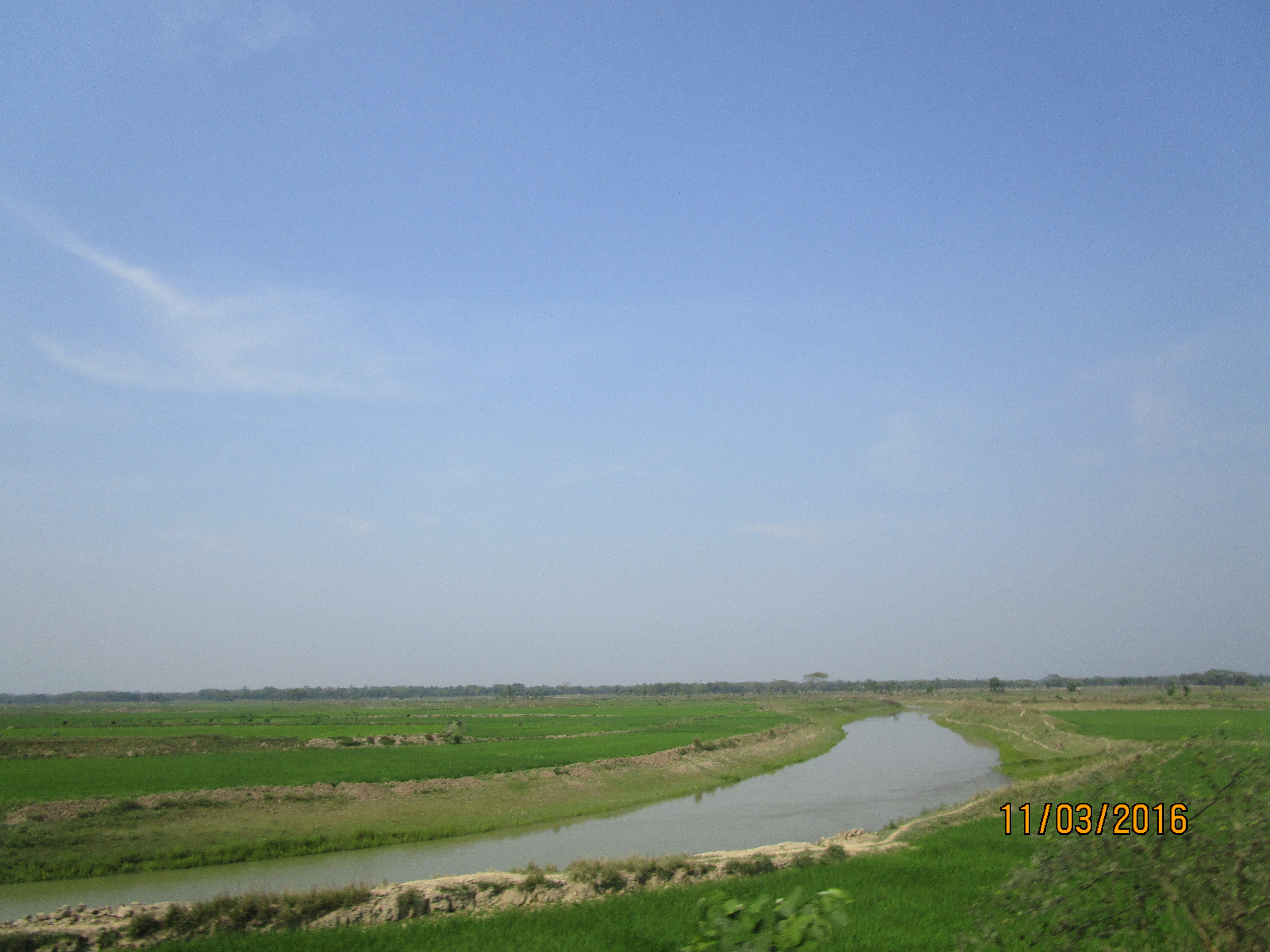
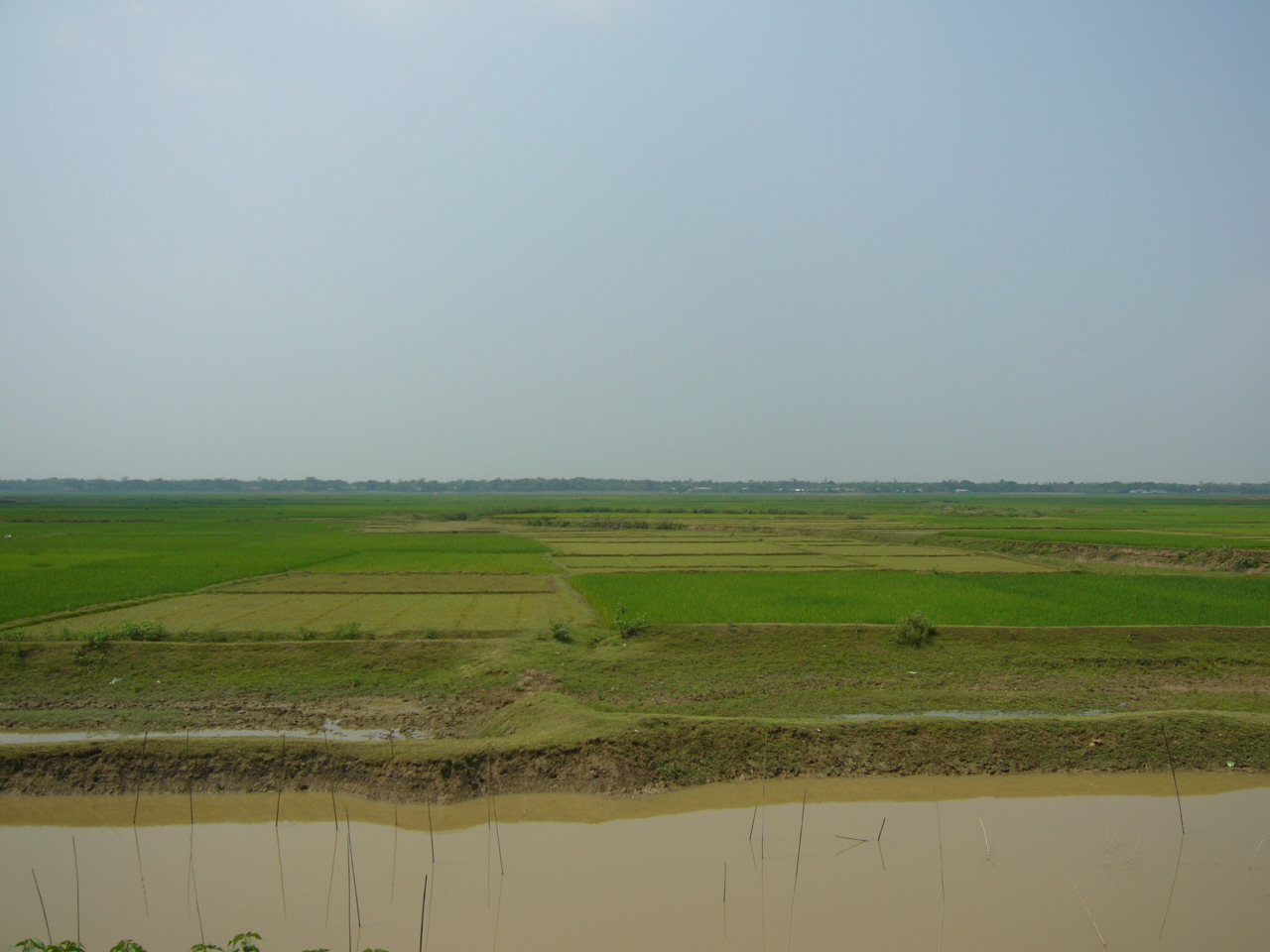
Trishal is an upazila of Mymensingh district covering 338.45 square kilometres, according to Banglapedia, the national encyclopedia of Bangladesh. It is bounded by Mymensingh Sadar upazila on the north, Bhaluka and Gaffargaon upazilas on the south, Ishwarganj, Nandail and Gaffargaon upazilas on the east and Fulbaria upazila on the west. Its main river is the Old Brahmaputra. Trishal thana was formed in 1909 and became an upazila in 1983. It has one municipality and 12 unions, one of which is Kanihari, where the trial pond lies. The 2011 census counted 419,308 people in the upazila, and Banglapedia gives agriculture as the main source of income for 62.69 percent of them. Jatiya Kabi Kazi Nazrul Islam University, founded in 2005, is in the upazila.
The trial came at a time when fish farmers were under pressure from costs. The Business Standard reported on 17 December 2023 that, according to the Ministry of Fisheries and Livestock's annual report, Bangladesh's fish production reached 49.15 lakh tonnes in FY2022-23, up from 47.59 lakh tonnes in FY2021-22, and that fish farming (aquaculture) supplied 57.39 percent of the fish in FY2021-22. Farmers told the paper a different story: after the pandemic and the Russia-Ukraine war, fish feed prices had risen by 66 percent to Tk 70 per kg, eroding their profits. A farmer in Trishal who raised pangas, rui, katla and pabda in 30 enclosures said he had cut his production from 1,200 tonnes a year before the pandemic to 800 tonnes. The director general of the Department of Fisheries told the paper that the official production figures were rigorously verified.
Sensors and AI in fish farming elsewhere
The idea behind the Trishal pond has been studied by researchers for several years. A review titled "Exploring opportunities of Artificial Intelligence in aquaculture to meet increasing food demand", published in the journal Food Chemistry: X in 2024, describes how AI programs analyse data from sensors that measure temperature, dissolved oxygen, pH and ammonia to find patterns and anomalies that may indicate a problem with water quality, so that farmers can act before the fish are harmed. Continuous real-time monitoring, the authors write, can give more accurate and timely information than manual checks, and AI-based feeding can reduce feed wastage and improve growth.
In Bangladesh, researchers at the Embedded System Research Center of Daffodil International University published a study in the journal Heliyon in September 2024 on a real-time monitoring system for galda (freshwater prawn) farms. Their device, placed in a farm in Kaliganj upazila of Satkhira, measured pH, temperature, total dissolved solids, electrical conductivity and salinity, sent the data to cloud storage, and alerted farmers through a web application when values left the optimal range. Over a 90-day test it collected 3,240 records, and its regression model predicted next-day values with an r-squared of 0.94. The authors wrote that cost-effective solutions, local data storage and functions suited to farms of different sizes would be crucial for wider adoption in the country.
Photo: Ujjalmc / Wikimedia Commons (CC BY-SA 4.0). The top picture shows farmers harvesting pangas from a pond in Bangladesh, as background; it is not the Trishal trial pond.
Sources: Jagonews24 (11 November 2024), Banglapedia (Trishal Upazila), Bangladesh Agricultural University study (Journal of Environmental Science and Natural Resources, vol. 11, 2018), Aquaculture International (2022, via the WorldFish digital archive), The Business Standard (17 December 2023), Bangla Tribune (14 January 2020), Department of Fisheries (Protection and Conservation of Fish Rules, 1985), Southern Regional Aquaculture Center (Publications 3700, 4601 and 4603), US CDC/NIOSH (Phosphine), Food Chemistry: X (2024), Heliyon (September 2024), Wikipedia (Iridescent shark)
Comments
(0)