
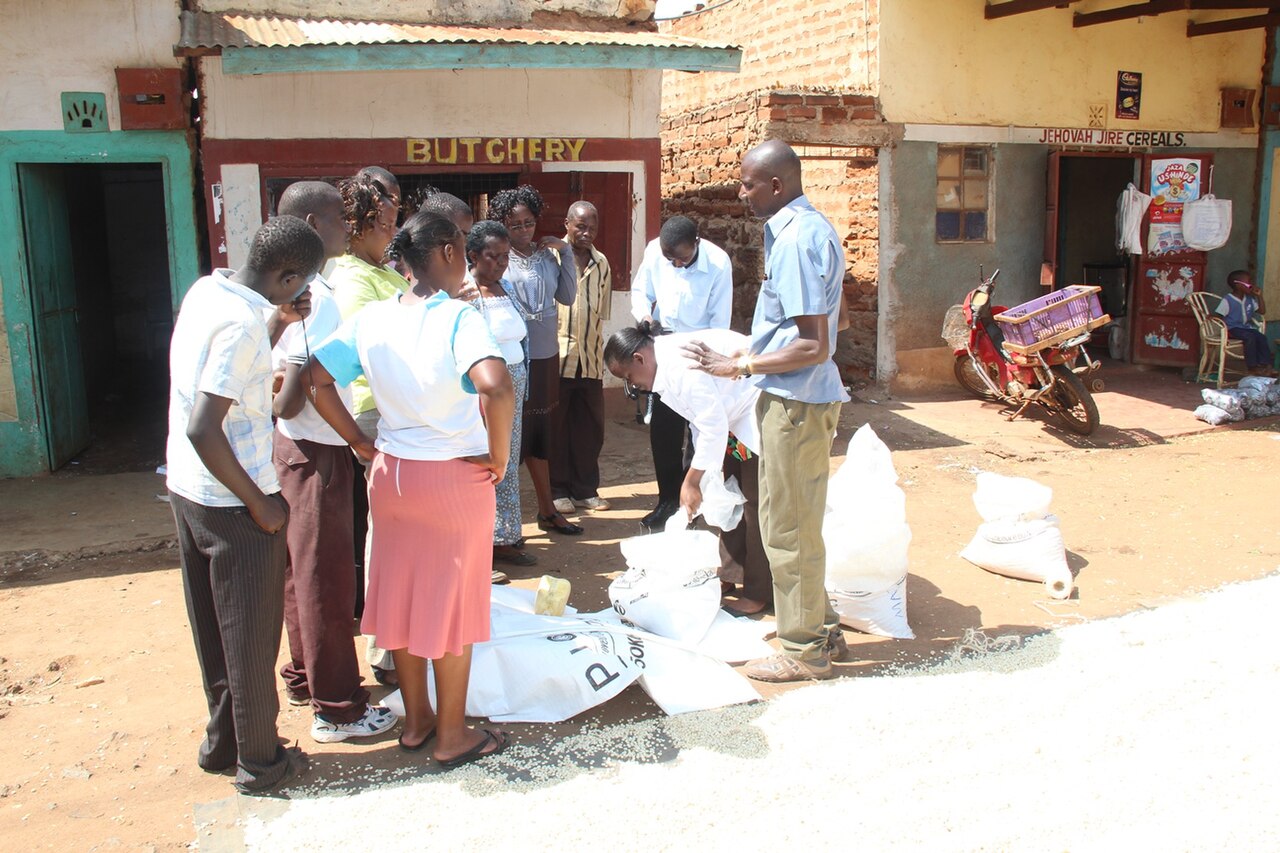
Africa will not meet its pledge to halve post-harvest losses unless it first measures them, argue Assan Ng'ombe, Kindie Tesfaye, Jacqueline Chepkoech and Eric Kataka Mukabi in a commentary published by AGRA. The views are the writers' own.
Citing FAO, they write that sub-Saharan Africa loses an estimated 23 percent of its food between harvest and retail, against a global average of 13.3 percent and about 10 percent in North America and Europe, and that FAO saw "no apparent progress" in cutting losses worldwide since 2015. They note that the United Nations estimated about 309 million Africans faced hunger in 2026, the most of any continent.
African leaders pledged under the 2014 Malabo Declaration to halve post-harvest losses by 2025. By 2019, the writers say, only five of Africa's 54 countries had reported enough data on losses, and the deadline passed with the target missed. The Kampala Declaration of January 2025 renewed the aim, to halve losses by 2035, but no continental baseline year has been clearly set. "A target without a baseline is not truly a target," they write. The often-quoted figure that Africa loses about USD 4 billion of grain a year comes from a 2011 World Bank study using 2007 market prices.
The technology already exists, they argue. They cite Wageningen University research finding that after 200 days in storage, maize in ordinary woven polypropylene bags lost about 36 percent of its weight, while maize in hermetic bags lost only 1.5 percent. Yet adoption is low: in one Malawi study of 627 farmers introduced to hermetic bags, only 7 percent kept using them. The bags paid off in Uganda and Malawi, where maize prices rise sharply between harvest and the lean season, but less so in Zambia, where seasonal price gaps are narrower. "The bag did not change. The maize did not change. The biology did not change. The market changed," they write.
They point to the RE-GAIN programme, a USD 105 million investment backed by the Green Climate Fund in Burkina Faso, Ethiopia, Kenya, Malawi, Tanzania, Uganda and Zambia. Its surveys found hermetic bags and drying tarpaulins broadly affordable, metal and plastic silos mostly out of reach for smallholders, and the average farmer walking nearly an hour to reach a supplier. Food loss in the programme areas generates an estimated 167,000 tonnes of carbon dioxide equivalent a year.
Their prescription is threefold: every country should set and publish a baseline and report progress each year; storage technology must be sold where farmers live, at prices and on credit terms they can manage; and warehouse receipts, aggregation and market information must make storing grain pay. "Where storing grain does not generate higher returns, farmers will not invest in storage technologies," they write.
Photo: icipe / Wikimedia Commons (CC BY 2.0)
Source: AGRA


Comments
(0)