
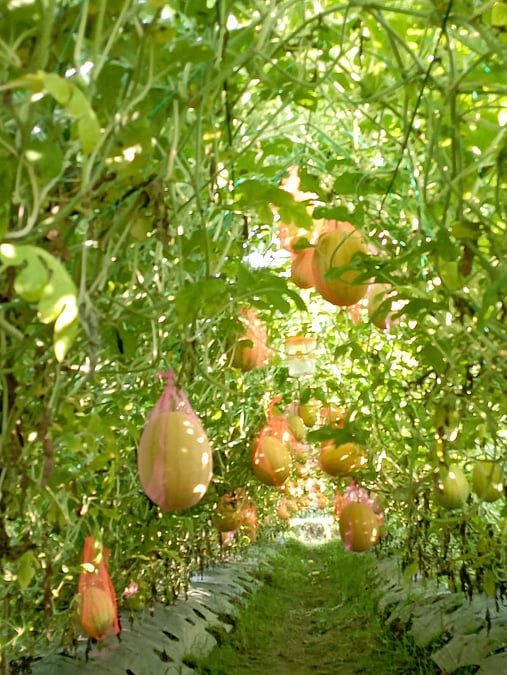
Abdul Jabbar, a 28-year-old agri-entrepreneur from North Shrimai village in Kachuai union of Patiya upazila, Chattogram, has grown the small, yellow-skinned 'Suryadim' watermelon on about 40 decimals of land this monsoon. Since Sunday he has been selling the fruit from his field at Tk 120 a kilogram.
Jabbar said he sowed the seed on 26 July and the fruit was ready for sale about one month and 25 days later. The crop has cost him about Tk 75,000 in all, and he hopes to sell roughly Tk 300,000 worth. He had tried the variety on just four decimals last year and, after a good harvest, expanded the area this season.
Because water logging in the rainy season can rot watermelons lying on the soil, he built U-shaped trellises, trained the vines up them and hung the fruit in nets. Growing them hanging on the trellis reduces that risk, he said, and the plants also set more fruit. The seedlings were raised in trays before being transplanted to the field.
White hybrid watermelons brought in from the northern districts usually sell in Patiya for Tk 50-60 a kilogram, Jabbar said, while Suryadim fetches at least Tk 120. He described the variety as having small, relatively few seeds and deep red flesh. Upazila agriculture extension officer Tapan Kumar Roy said a single Suryadim fruit usually weighs two and a half to four kilograms.
Jabbar learned of the variety from agricultural programmes on YouTube and sourced the seed himself. Watermelon is normally a winter crop in the area, he said, "but the Suryadim variety can be grown in the monsoon too." Sub-assistant agriculture officer Dipan Chowdhury said the upazila agriculture office had supported him this season with seed and mulching paper.
Jabbar farms about six acres of vegetables, including the 'Bahubali' tomato raised from grafted seedlings, with papaya, cucumber, spiny gourd, bitter gourd and beans as mixed crops, and about 600 decimals of ginger on the neighbouring hill. He says he uses yellow sticky cards, pheromone traps and bio-pesticides instead of chemical fertiliser and pesticides, spending about Tk 1.5 million a year and selling about Tk 2 million worth of vegetables.
He started farming at 16, as a class ten student helping his father, and later expanded with loans from a bank and his elder brother. Dipan Chowdhury said the agriculture office hopes other farmers in the area will take up new varieties after seeing his field. The report is by Prothom Alo's Patiya correspondent.
Source: Prothom Alo
Comments
(0)