
China is building the world's largest hydropower project on the Brahmaputra in Tibet, and Chinese researchers themselves warn that climate change may increase the river's flow this century, raising flood risks in India and Bangladesh downstream. Amar Desh reported the findings, citing Monday's South China Morning Post.
In a study published on 8 October in the China Science Bulletin, a team from the Chinese Academy of Sciences and Yunnan University used tree rings from the south-eastern Tibetan Plateau to reconstruct nearly seven centuries of river flow, from 1325 to 2020, and then modelled flows under future climate scenarios. Flows may rise and extreme high-flow events such as floods may become more frequent, they found, and water infrastructure should be planned with shared-river risks in mind.
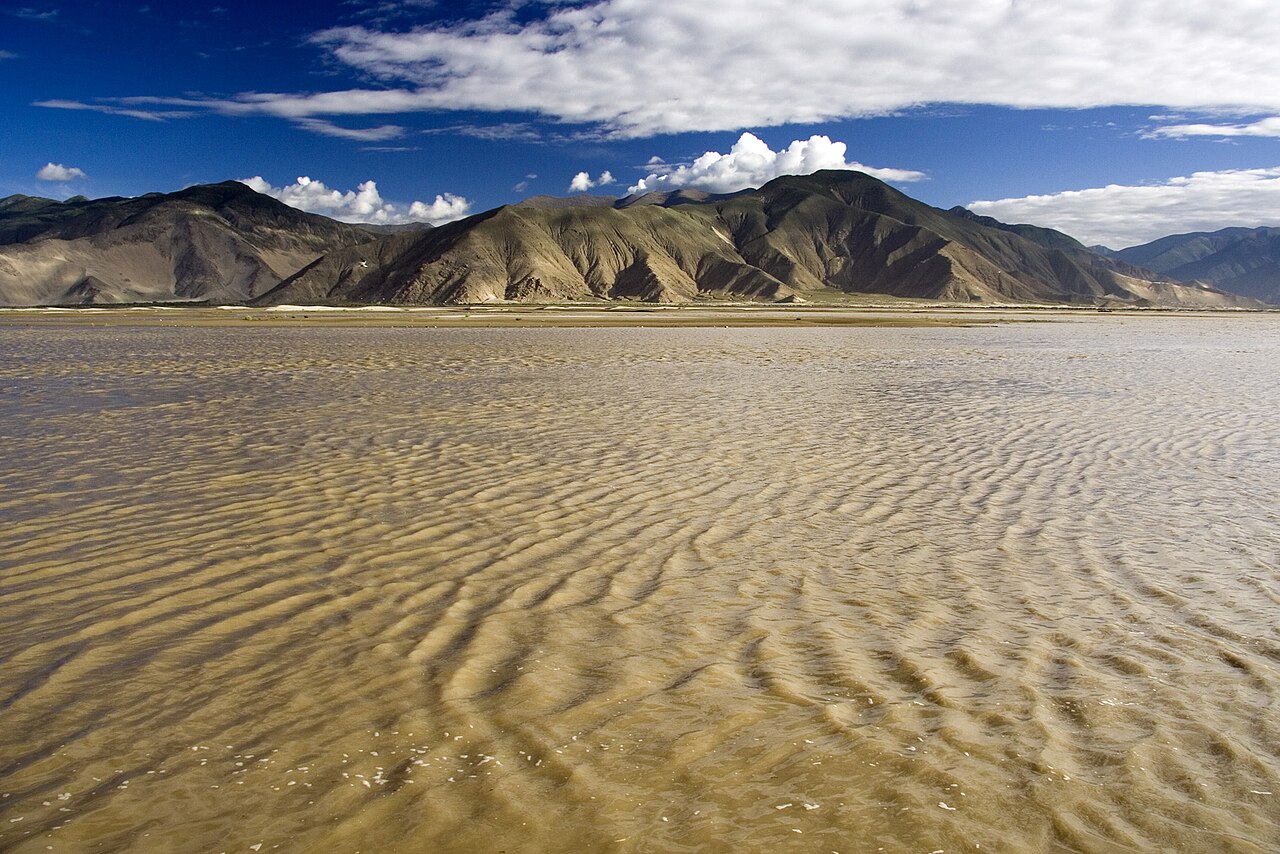
Temperatures on the Tibetan Plateau are rising at about twice the global average, changing snow cover and the water cycle, the researchers say. Known in Tibet as the Yarlung Tsangpo, the river becomes the Siang in Arunachal Pradesh and then the Brahmaputra, flowing through India into Bangladesh, so changes in its flow can affect floods and droughts in South Asia.
The project is estimated to cost $168 billion. It is being built in Medog (Motuo) county near the disputed border with India, using the river's sharp U-shaped bend through a deep gorge. Once complete its installed capacity could exceed 60,000 megawatts, about three times that of the Three Gorges Dam, currently the world's largest operating hydropower station.
Environmental and geological concerns remain. In July, Chinese geologists warned that an active fault runs directly beneath the proposed dam and recommended measures to stabilise slopes and reduce landslides. On 26 August a flash flood on the China-Nepal border, caused when ice and rock blocked a river that then burst through, was reported to have killed about 1,500 people, with more than 5,500 missing.
China's foreign ministry has said downstream countries will not be harmed and that decades of research and safety measures address the concerns. But the new warning about rising flows and floods matters for India and Bangladesh, which depend on the river, as climate change, dams and cross-border water management become major tests of the region's water security.
Reported by Amar Desh, based on the South China Morning Post.
Photo: The Yarlung Tsangpo river in Tibet, Luca Galuzzi / Wikimedia Commons (CC BY-SA 2.5)
Source: Amar Desh



Comments
(0)