
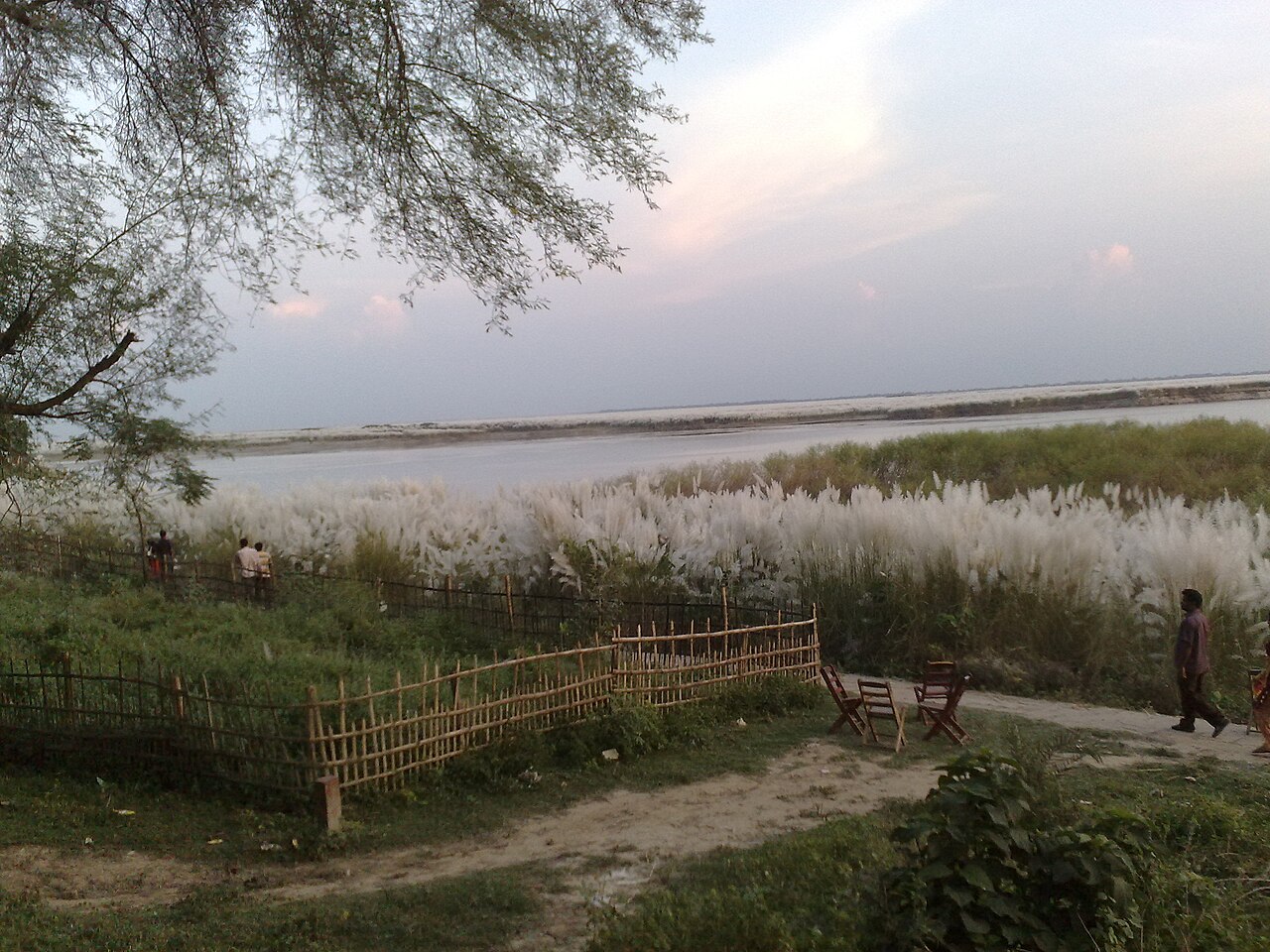
Kash grass that grows naturally on the sandbars of the Brahmaputra and Dharla rivers has become a source of extra income for farmers on the chars of Kurigram and Lalmonirhat. The land is unfit for crops, and kash needs no sowing, fertiliser, pesticide or irrigation; the only cost is labour at cutting time, Agricare24 reports.
At Char Montala in Chilmari upazila, Kurigram, a wide kash field has grown up on a Brahmaputra sandbar. Farmer Belal Hossain said two of his four acres are sandbar where kash comes up by itself. Last year he cut about 30,000 bundles from one acre and sold them at Tk 8 to 10 each, earning Tk 265,000 in all. Cutting and gathering cost about Tk 45,000 to 50,000 an acre.
Mesher Ali of Char Folimari in Lalmonirhat Sadar upazila earned Tk 145,000 last year from the kash on two bighas, at a cost of Tk 40,000. This year kash has grown on four bighas, and a trader has already paid him Tk 40,000 in advance.
Farmers say the demand comes from betel growers, who use kash to build the frames and roofs of their vineyards, so it sells across the country's betel areas. In season, wholesalers carry it off the chars by boat and truck. Chilmari kash trader Habibur Rahman said temporary kash markets open every year from November to February along the Brahmaputra, Dudhkumar and Dharla, and claimed about Tk 100 crore changes hands at them in a season.
Professor Shafiqul Islam Bebu, convener of the Kurigram Char Development Committee, said demand and prices have risen over the past 10 to 12 years as betel growers use more kash. Abu Fattah Md Roushan Kabir, deputy director of the Department of Agricultural Extension in Kurigram, said kash usually starts growing in June and July and matures by November.
For char people living with river erosion and floods, kash is more than an autumn view: the cutting season brings work for farmers, labourers, traders and transport workers, and cash from land that grows nothing else.
Photo: Auyon / Wikimedia Commons (CC BY-SA 3.0)
Source: Agricare24

Comments
(0)