
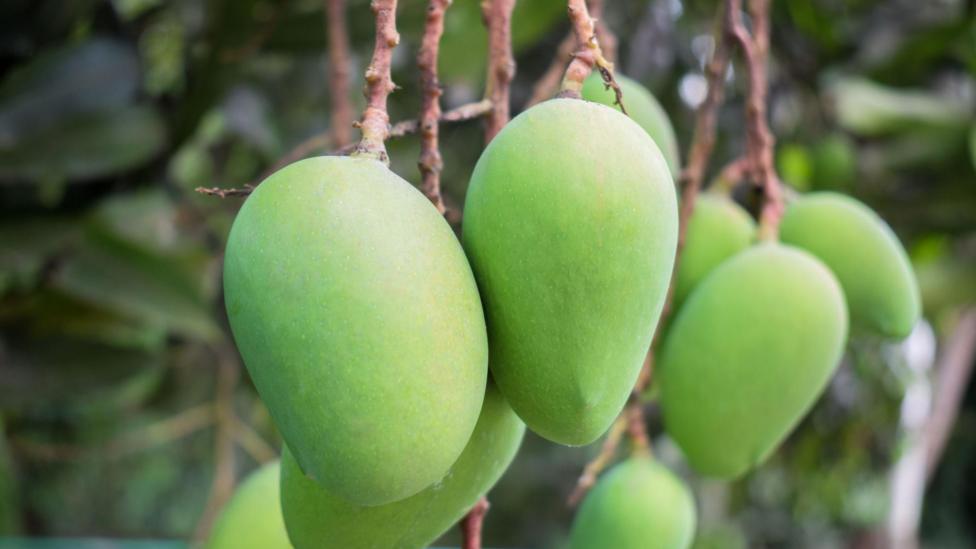
Mangoes from Satkhira are reaching markets across Bangladesh before the month of Jyaistha has even begun. Under the district administration's mango calendar, harvesting of the Gopalbhog and Gobindabhog varieties started on Tuesday 5 May, to be followed by Himsagar and Langra, with Amrapali picked from early June. In Rajshahi and Chapainawabganj, the country's traditional mango heartland, picking starts on 15 May, so the south-western coastal district has the market to itself for more than a week.
Khan Nazmus Sadat, a grower in Kalaroa, says storms were fewer than usual this year and pests caused some trouble, but the crop is good overall; early-season prices ran from Tk 1,900 to 2,400 a maund depending on variety, and he sold 15 crates of Gobindabhog at Tk 1,900 a maund. Local trader Mohammad Shaharul Islam Raj expects Satkhira's fruit to reach every corner of the country within days.
The Satkhira office of the Department of Agricultural Extension has set a production target of 70,000 tonnes this year and an export target of at least 100 tonnes. Its deputy director, agriculturist Md Saiful Islam, says about 12,300 growers have planted mango on 4,140 hectares this season. A decade ago the district was known for the Sundarbans and its shrimp enclosures; agricultural researchers now describe it as a new source for the national mango economy.
Dr Md Sharaf Uddin, principal scientific officer at the Regional Horticulture Research Centre, explains the head start: "For every degree of latitude gained, the mango harvest is delayed by three days." Satkhira lies at 22.60 degrees north and Chapainawabganj at 24.56, so harvesting in Rajshahi and Chapainawabganj begins at least six to seven days later, and later still in Panchagarh. Temperature matters too: flowers take 25 to 30 days to open after the buds appear, but on the warmer coast they open earlier and the fruit matures sooner. The same rule holds for mango growing everywhere, he says.
Saiful Islam adds soil salinity as a factor: in Satkhira salt shortens the life cycle not only of mango but of rice, so crops mature a little ahead of schedule. On taste, Dr Sharaf Uddin says the same variety differs little between Satkhira and Rajshahi, though the drier weather in Rajshahi and Chapainawabganj at this time of year tends to give somewhat larger fruit. The current rain helps ripening, he says, but would become harmful if it continued for another eight to ten days.
Satkhira's Himsagar and Chapainawabganj's Khirsapat are the same mango, Saiful Islam notes, but the coastal fruit carries a little more dry matter because of the heat and salt, which makes it slightly sweeter. Officials say fruit bagging and pesticide-free cultivation have already put Satkhira mangoes on the shelves of European chain stores. With saline water making other crops uncertain, many farmers in the district are switching to mango, and an early market combined with export demand is turning it into a new cash crop for the coast.
Source: BBC Bangla


Comments
(0)