
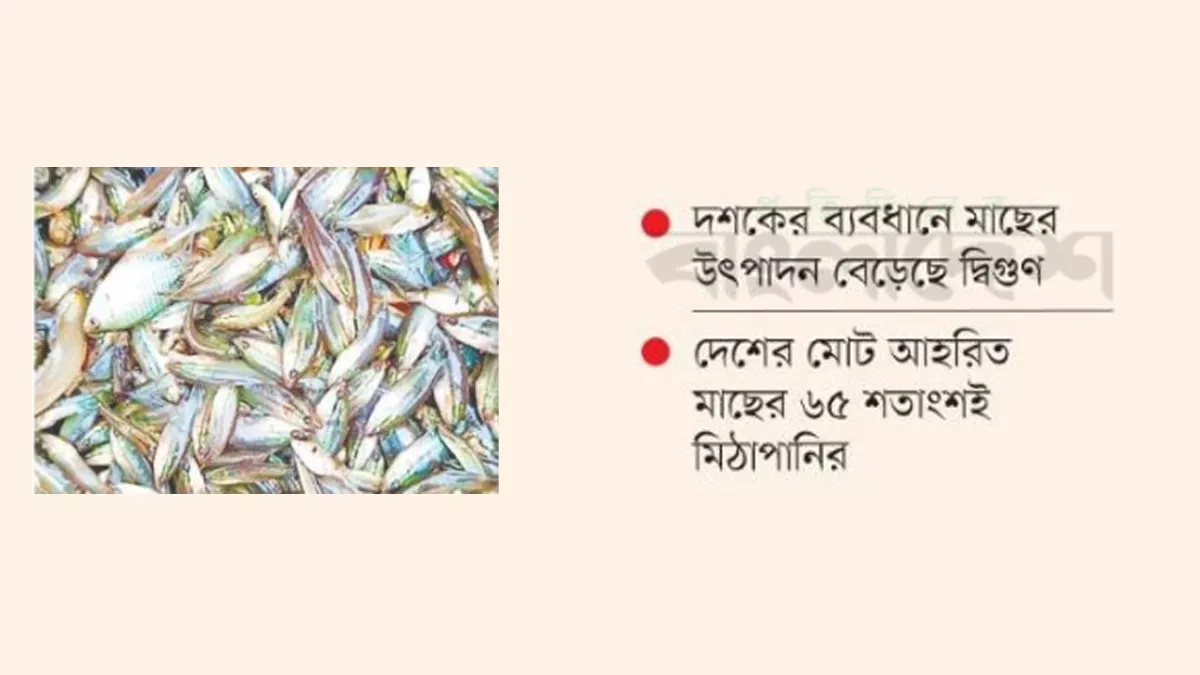
Native freshwater fish from the rivers, canals, beels and haors have become a rarity in the capital's markets. A tour of Karwan Bazar, the Jatrabari wholesale market, Gulshan DNCC market, Mohakhali and Tejgaon Samity Bazar found that, apart from a few small species such as puti, mola, gutum, tiny shrimp and tengra, about 50-60 percent of the fish on sale is imported or farmed; even large baim, ayre and prawn depend on imports. Haider Ali, a small-fish trader who buys in Dhaka and sells in Savar, said wild fish from rivers and wetlands are now very scarce and most of the tengra, mola and shrimp he sells are farmed.
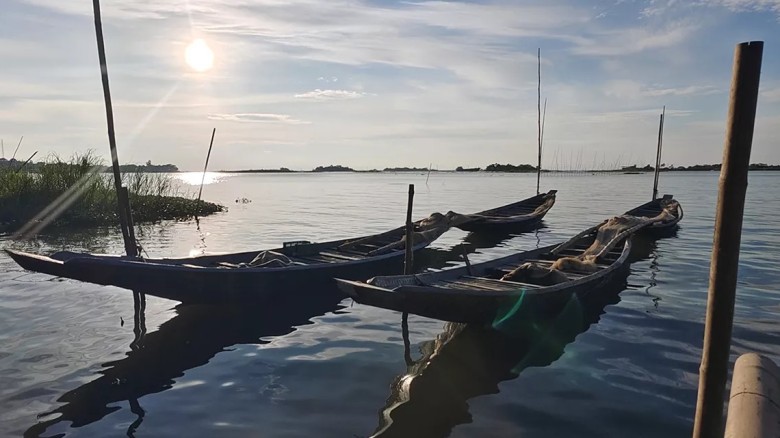
According to the Department of Fisheries, Bangladesh ranks second in the world for freshwater catch from open waters. The country has 260 freshwater species, 143 of them small fish that make up about 30 percent of total production, and 64 of those species are on the way to disappearing. The department's annual reports show production from natural waters rising from 471,595 tonnes in 1983-84 to 573,376 tonnes in 1993-94, 732,067 tonnes in 2004 and 995,805 tonnes in 2014 — yet wild fish are scarce in the market. Over the same 40 years the area of open water has shrunk by 34.5 percent: inland open water accounted for 62.59 percent of the fish-producing area in 1983-84 and 28.9 percent in 2023-24.
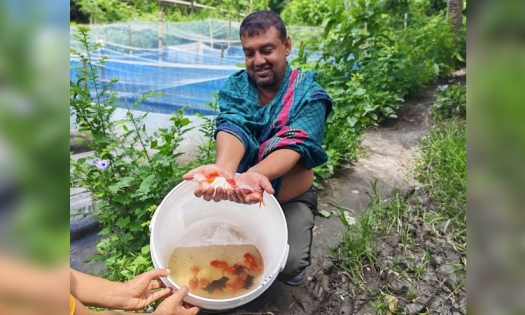
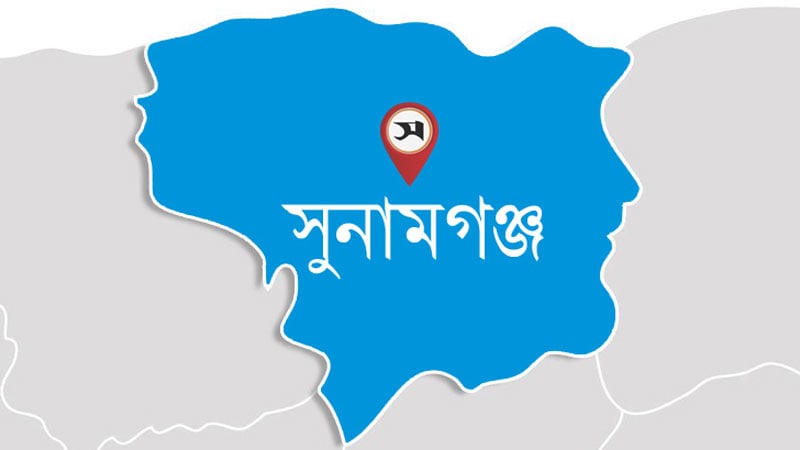
The picture repeats across the divisions. In Mymensingh's old Brahmaputra, Kangsha and haor-beels, infilling, pollution and over-fishing have all but wiped out nandina, bhangan bata, piyali, napit koi and mahseer, though the Bangladesh Fisheries Research Institute there is bringing back pabda, gulsha, tengra and other species through induced breeding. Many of the 40-50 species once found in Terokhada's Chitra river and Bhutiar beel in Khulna are going the same way. Md Jamal Hossain, senior fisheries officer of Barishal Sadar, said royna, sarputi, baim and pabda are heading for extinction there and koi, shing, magur and shol have become hard to find. In Rangpur the Teesta and Ghaghat run dry in the lean season, and in Sunamganj's haors residents blame farm chemicals, fishing in the breeding season, Chinese duari nets and blocked flows.
Fish come in from Uruguay, Dubai, Oman, Yemen, India, Myanmar and Pakistan, with freshwater rui and katla mostly from India and Myanmar. National Board of Revenue data show 5,973,173 kg of frozen rui and katla imported through Chattogram port in 2024, with an assessed value above Tk 63.44 crore. The WWF and Zoological Society of London report The World's Forgotten Fishes says a third of the world's freshwater fish are at risk of extinction and 80 species are already gone; 65 percent of Bangladesh's total fish output comes from freshwater.
Dr Jahangir Alam, country director of the Wildlife Conservation Society Bangladesh, said a 2015 study of 253 freshwater species found 64 endangered, vulnerable or critically endangered, and a new study is under way in 2026. Dr Moin Uddin Ahmed, principal scientific officer of the Department of Fisheries' inspection and quality-control wing, said imports are normal in a free-market economy, but the wing's deputy director Molla Emdadullah said the main problem is that rivers have no flow — reduced by the Farakka barrage, with many rivers dried up. An official who asked not to be named said the ministry has been written to about the water problem; unless breeding conditions are secured, he said, production cannot rise.
From a Protidiner Bangladesh report by Faruk Ahmad Arif, with correspondents in Rangpur, Barishal, Khulna, Mymensingh, Chattogram and Dharmapasha. Source: Protidiner Bangladesh
Comments
(0)