
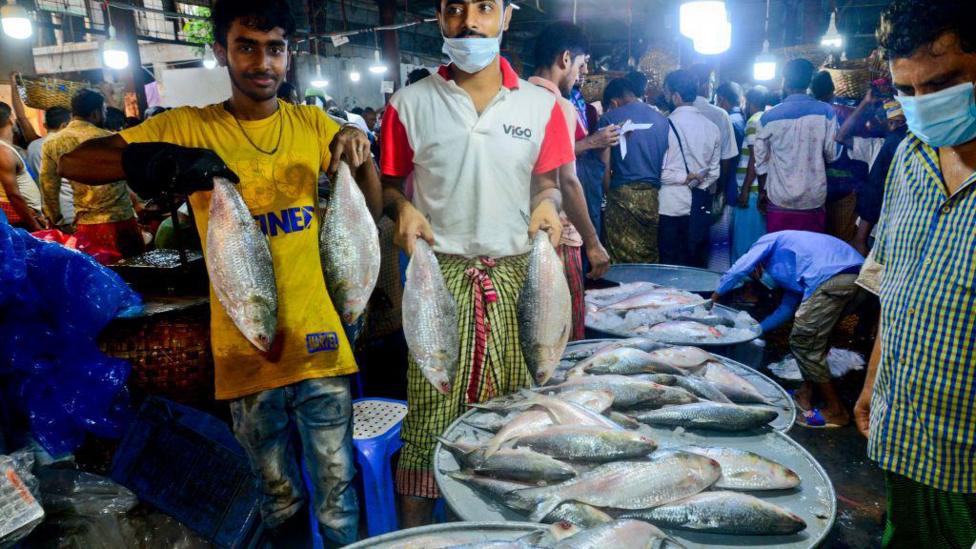
After nearly two decades of continuous growth, hilsa production in Bangladesh has fallen for three years running and the average weight of the fish has begun to drop. Researchers are worried, and a six-year Department of Fisheries project aimed at raising output has effectively ended in failure.
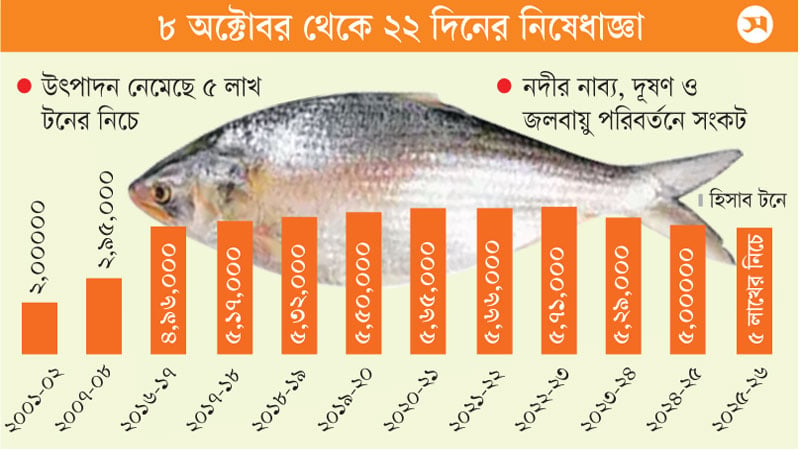
The figures set out the trend. Department of Fisheries data show production at 199,000 tonnes in 2002-03, rising on average every year after that. In 2022-23 output was 571,000 tonnes; in 2023-24 it was 529,000 tonnes; and in 2024-25 it came to 504,000 tonnes.
Molla Emdadullah, director of the hilsa resource development and management project at the Department of Fisheries, acknowledged the decline. "Production kept rising because of measures such as closing the fishery during the breeding season. But it started to stumble from the 2022-23 financial year," he told BBC Bangla. The project, begun in 2020, ends this June, and preparations for a new one are already under way in government.
Researchers regard the loss of size as the greater danger. Dr Anisur Rahman, a hilsa researcher and former director of the fisheries science institute, said: "Bigger hilsa had started to appear. It is essential to identify why production and weight suddenly began to fall. More small hilsa in the market and fewer big ones — that is dangerous for the hilsa population too."
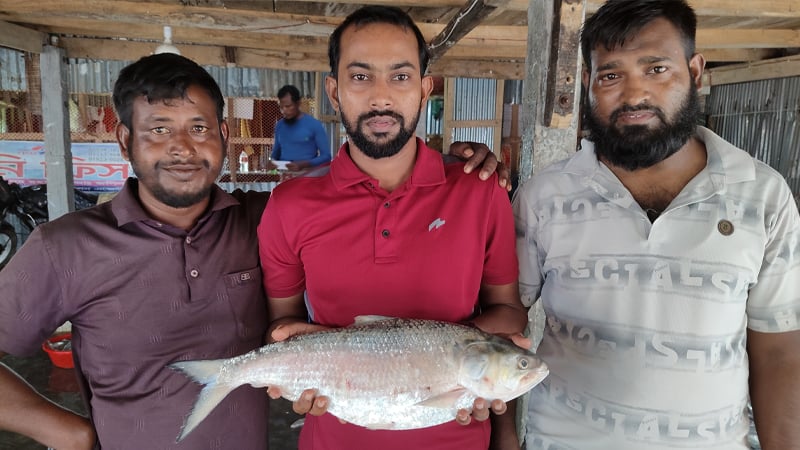
Buyers are feeling it in price. Hilsa has become steadily more expensive over the past two years. A buyer reported paying about 3,500 taka a kilogram at the Chandpur arat recently for fish weighing 900 to 950 grams, while at Karwan Bazar in Dhaka hilsa of 800 to 900 grams is being offered at an average of more than 2,000 taka a kilogram.
The stakes are large. According to the Bangladesh Fisheries Research Institute, hilsa accounts for about 12 percent of the country's total fish production, and the Ministry of Fisheries and Livestock says roughly 70 to 80 percent of the world's hilsa is produced in Bangladesh.
When scientists at Bangladesh Agricultural University decoded the fish's full genome in 2018, major gains in conservation, production and quality were expected. Falling output instead is now reshaping the calculations of fishers and wholesalers alike.
Source: BBC Bangla

Comments
(0)