
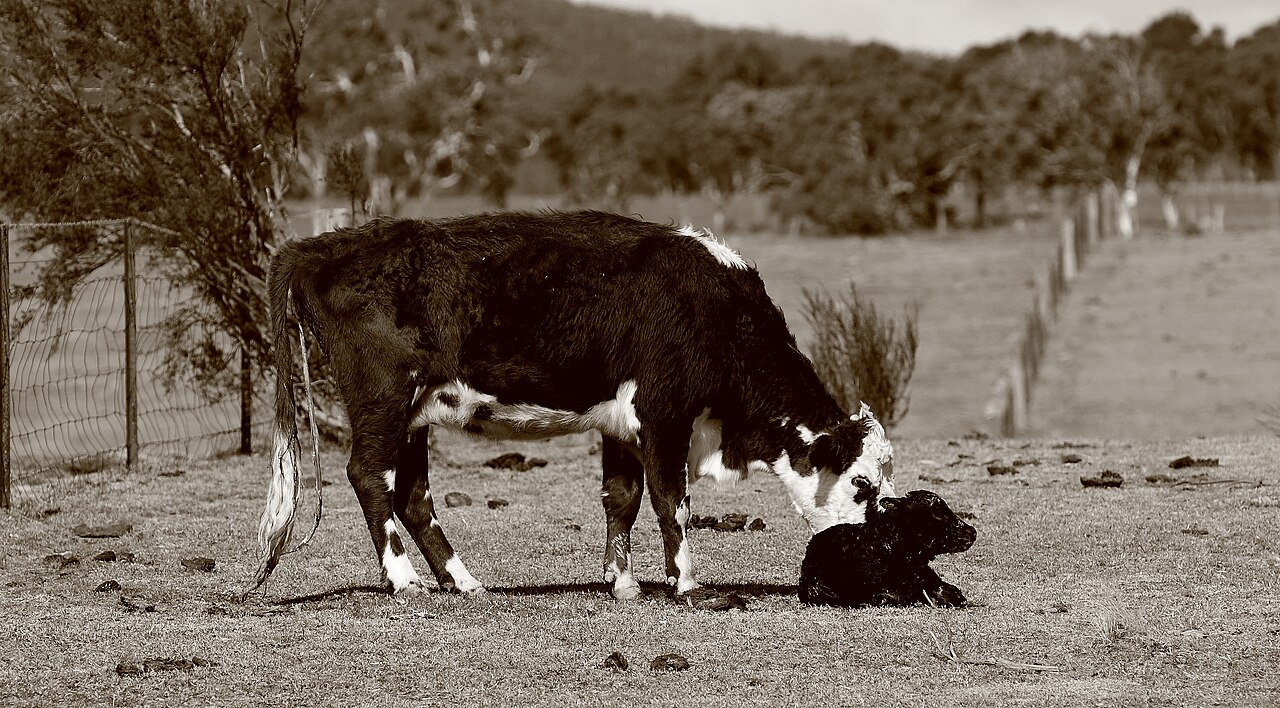
For most beef producers next year's weaners have only just been born, and how well they grow will drive both sale income and the choice of replacement heifers. Beef Central's weekly genetics review argues that weaning weight, used on its own, hides as much as it shows: it does not say how the calf reached that weight, how much the cow contributed, or whether she can do it again on the feed the farm can grow.
The review draws on the Line 1 Hereford herd, kept at the US Department of Agriculture's Fort Keogh Livestock and Range Research Laboratory in Miles City, Montana, since 1934. In a 2006 study of 6,835 records of gain from birth to weaning, Michael MacNeil and Thomas Mott found that the calf's own growth genetics explained about 13 percent of the variation in weaning gain. Genetic differences in cows' ability to rear a calf, through milk and mothering, explained another 25 percent; lasting non-genetic differences between cows, such as how they were reared or an old udder injury, 18 percent; and seasonal and other passing effects the remaining 40 percent.
The cow therefore shapes her calf's weight twice, once through the genes she passes on and again through the environment she provides as a mother, while the bull acts only through the calf's genes, his daughters later carrying his maternal genetics. Because a little under half of a cow's rearing performance repeats from one calf to the next, several calves give a far truer picture of her than one. The study also estimated a genetic correlation of 0.80 between maternal pre-weaning gain and milk production.
Australian breeders can already separate these parts. BreedPlan's 200 Day Growth EBV describes a calf's own growth to 200 days, and its Milk EBV the mother's genetic contribution to that weight, expressed in kilograms of calf rather than litres of milk. BreedPlan notes that higher Milk EBVs suit cows run on good feed or herds selling weaners, but that on poorer country high-milk cows may struggle to get back in calf.
Environment also changes how cattle rank. A 2017 Fort Keogh study put direct heritability of pre-weaning gain at 10 percent in an average year, rising to 18 and 22 percent towards poor and good years. And faster growth says nothing about feed: in the Beef CRC Maternal Productivity Project, 500 Angus cows at Struan in South Australia and Vasse in Western Australia from a low residual feed intake line ate about 7 percent less feed a year and weaned calves more efficiently, but were leaner, had a 6.3 percent lower weaning rate and calved about 5.4 days later.
The review's advice is to aim for a balance of growth, maternal ability, cow size and fertility that fits the farm's feed and market, and to judge each cow over several years by linking her calves' weights to her condition score and pregnancy results. For seedstock breeders, weighing calves before any group is treated differently, and recording management groups accurately, is what makes the EBVs sold to clients reliable.
Photo: Jlenevez / Wikimedia Commons (CC BY 3.0)
Source: Beef Central


Comments
(0)