
Bluetongue has now been confirmed in 28 herds in 11 Irish counties, Ireland's Department of Agriculture, Food and the Marine (DAFM) says, Agriland reports. Twenty-six of the cases are in cattle and two in sheep, in Kildare and Wexford. Wexford has the most cases, 10, followed by Kildare with six.
Bluetongue virus serotype 3 (BTV-3) was first detected in Ireland in a Wexford herd in January 2026, in blood samples taken from cows for disease surveillance. Modelling suggests infected midges, which spread the virus, crossed from known outbreak sites in England around mid-September 2025.
The first cases of this year's high-risk period, June to October, were found in early September after a post-mortem on a heifer from a Wexford herd, and further cases were then detected in the same herd.
Bluetongue is a viral disease that can cause severe illness in ruminants and camelids. It is notifiable, so any suspect case must be reported to the department without delay, and farmers, vets and others are urged to stay vigilant.
The disease poses no risk to human health or food safety, the department says, but it can seriously harm farms through lost production, illness and death of livestock, and can hit the wider industry by disrupting live animal trade.
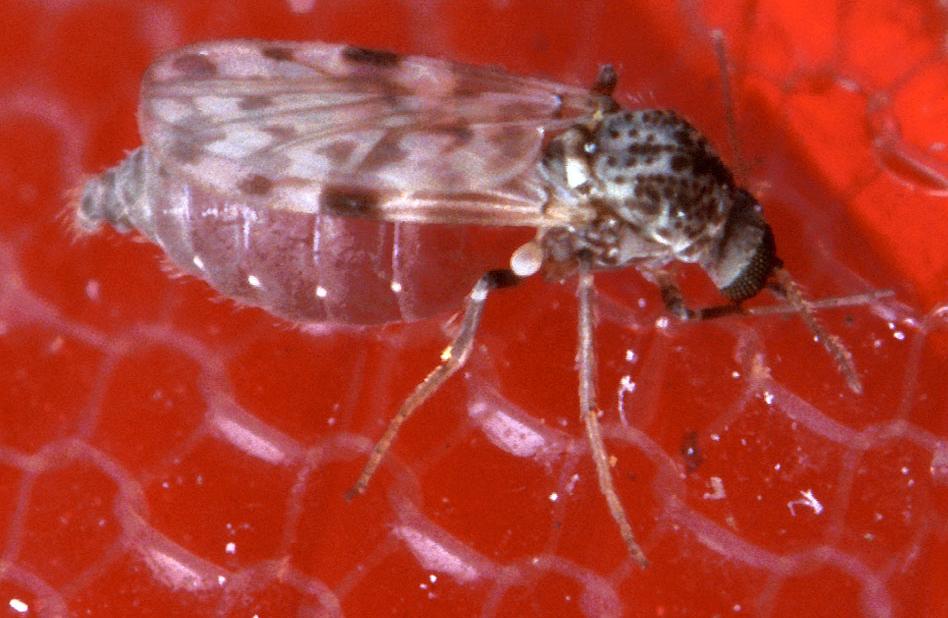
Photo: Scott Bauer, USDA ARS / Wikimedia Commons (Public domain)
Source: Agriland

Comments
(0)