
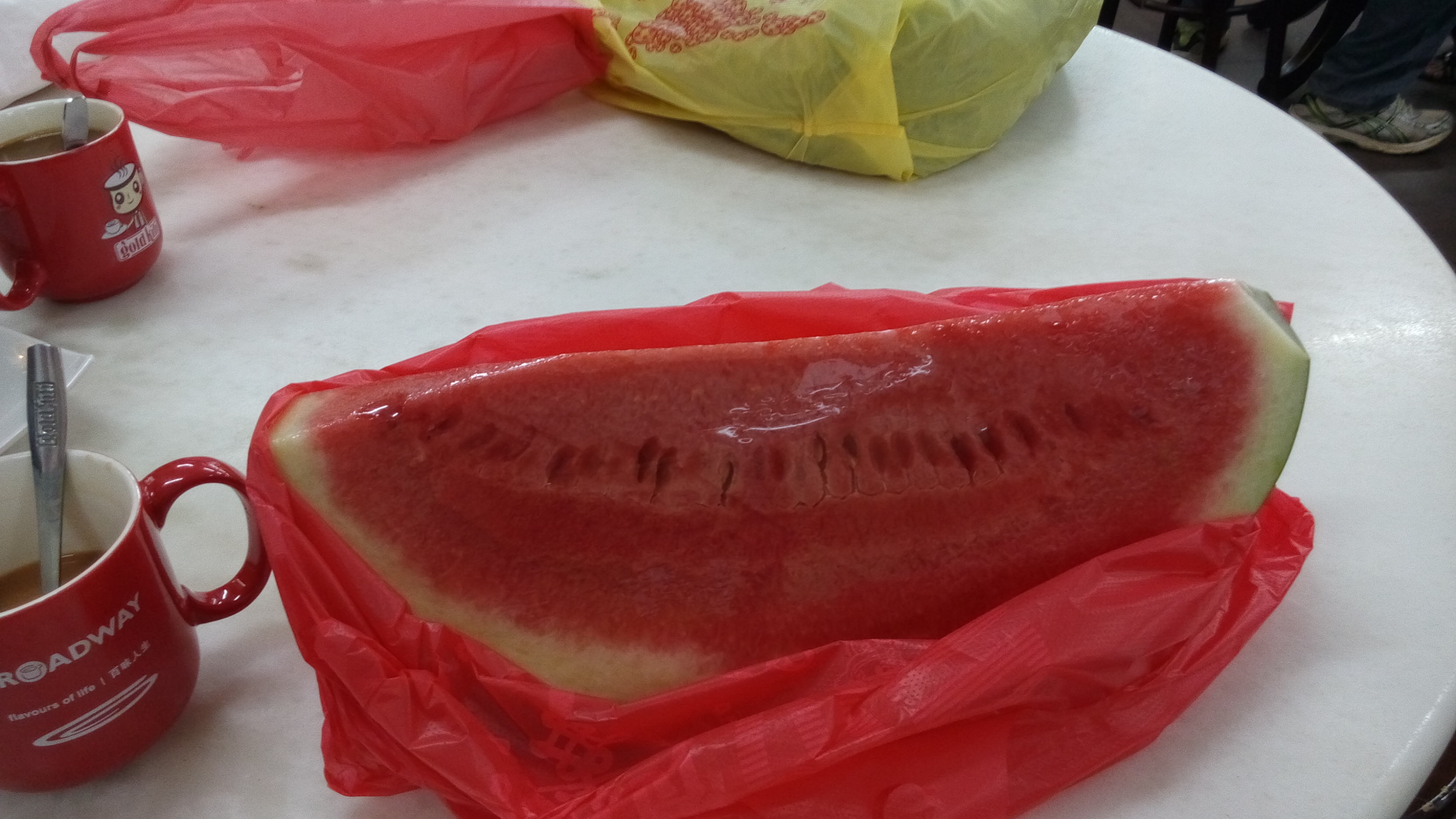
Watermelon was in season across Bangladesh in April 2026, and on 11 April the lifestyle section of Jagonews24 published a kitchen tip for a problem every family that buys a seeded watermelon knows: the black seeds. The report described a cutting method credited to Japan that had become popular on social media. Instead of picking seeds out of every bite, the cook follows faint lines in the red flesh, cuts the melon into triangular pieces along them, and then lifts each line of seeds away with a spoon or knife. The report named the cooking channel Kitchen Princess Bamboo and the food publication Good Food as its sources. This version keeps the method as Jagonews24 described it, checks it against other food writers who had described the same technique, explains from published research why a watermelon's seeds sit in rows at all, and adds the food-safety and storage advice of the US Food and Drug Administration (FDA) and a university extension service, together with the figures for the 2026 watermelon season in Bangladesh as they stood when the tip appeared.
A summer fruit with a seed problem
In hot weather many people reach for fruit that is full of water, and the watermelon is the obvious choice. The Jagonews24 report described a cold slice from the fridge as a moment of relief on a hot day, with a sweet taste and a juicy texture. The figures bear out the 'watery' part. According to the US Department of Agriculture's FoodData Central database, 100 grams of raw watermelon flesh contains 91.45 grams of water. The same 100 grams supplies 127 kilojoules (30 kilocalories) of food energy, 7.55 grams of carbohydrate of which 6.2 grams are sugars, 0.4 grams of fibre, 0.61 grams of protein and 0.15 grams of fat. It also carries 112 milligrams of potassium and 8.1 milligrams of vitamin C, and the red colour comes from carotenoids, chiefly lycopene, of which the database lists 4,532 micrograms per 100 grams. The University of Illinois Extension sums it up in one line: 'Ninety percent of watermelon is water.' Anyone with a medical condition that limits sugar or potassium should ask a doctor how much fruit suits them.
The seeds are the catch. In a seeded watermelon they are spread through the red flesh, and as the original report put it, getting seeds in the mouth with every bite annoys adults as much as children. Picking them out can take half the time spent eating, and some people eat less watermelon to avoid the bother. Jagonews24 presented the Japanese method as a way round this: cut the right way, the seeds come away together in a line as you cut, and there is no need to hunt for them piece by piece.
The method, step by step
The steps as Jagonews24 described them are short. They need a large, sharp knife, a firm cutting board and a spoon.
- Set the watermelon on a firm, flat surface and cut a thin slice off the top and the bottom. With flat ends the fruit sits still and does not roll while you cut, which makes the whole job safer and easier.
- Cut the watermelon in half through the middle.
- Look closely at the cut face of the red flesh. You will see some faint lines. According to the report they usually form a triangular pattern, and this is where most of the seeds lie. Everything else depends on finding these lines.
- Following those faint lines, cut the melon into triangular pieces. Cut this way, the seeds end up in a row along one edge of each piece instead of scattered through it.
- Along the edge of each triangle there is now a clear line of seeds. Lift that strip off gently with a spoon or the tip of a knife. The seeds come out in a few seconds, leaving a clean, seed-free piece of watermelon.
Other food writers had described close variants of the same idea well before April 2026. Writing on the food site Chowhound on 19 August 2024, Elias Nash advised trimming the top and bottom so the melon stands upright, then slicing it vertically, 'the opposite of what many people do', into sections about an inch thick. In a slice cut that way, he wrote, 'the seeds are concentrated in two lines running down either side', and the slice can be broken by hand 'along the seed veins' into three portions, after which the exposed seeds can be pushed out with a chopstick or toothpick or scraped away with a knife. He noted that the usual horizontal rounds, cut into triangles, go against the veins of seeds and leave them scattered through every piece.
Ten days later, on 29 August 2024, Kaleigh Brown described a similar version on The Takeout: flatten the ends, cut away the rind, halve the melon, slice it like bread and then tear each slice apart by hand, because 'the watermelon will naturally split along the seed lines'. She warned that the tearing may need to be repeated two or three times per slice, recommended a long, sharp knife instead of a small one, advised keeping a bowl ready for the seeds so they do not get mixed back in, and suggested a small spoon or a melon baller so that as little flesh as possible is lost with the seeds. She also cautioned against handling the fruit too much, since it can lose juice and turn mushy.
All three descriptions rest on the same observation: the seeds are not scattered at random but lie along lines, and a cut or a break that follows those lines exposes them all at once. The versions differ only in whether the cook uses a knife or the hands to open the melon along them.
Why the seeds sit in lines
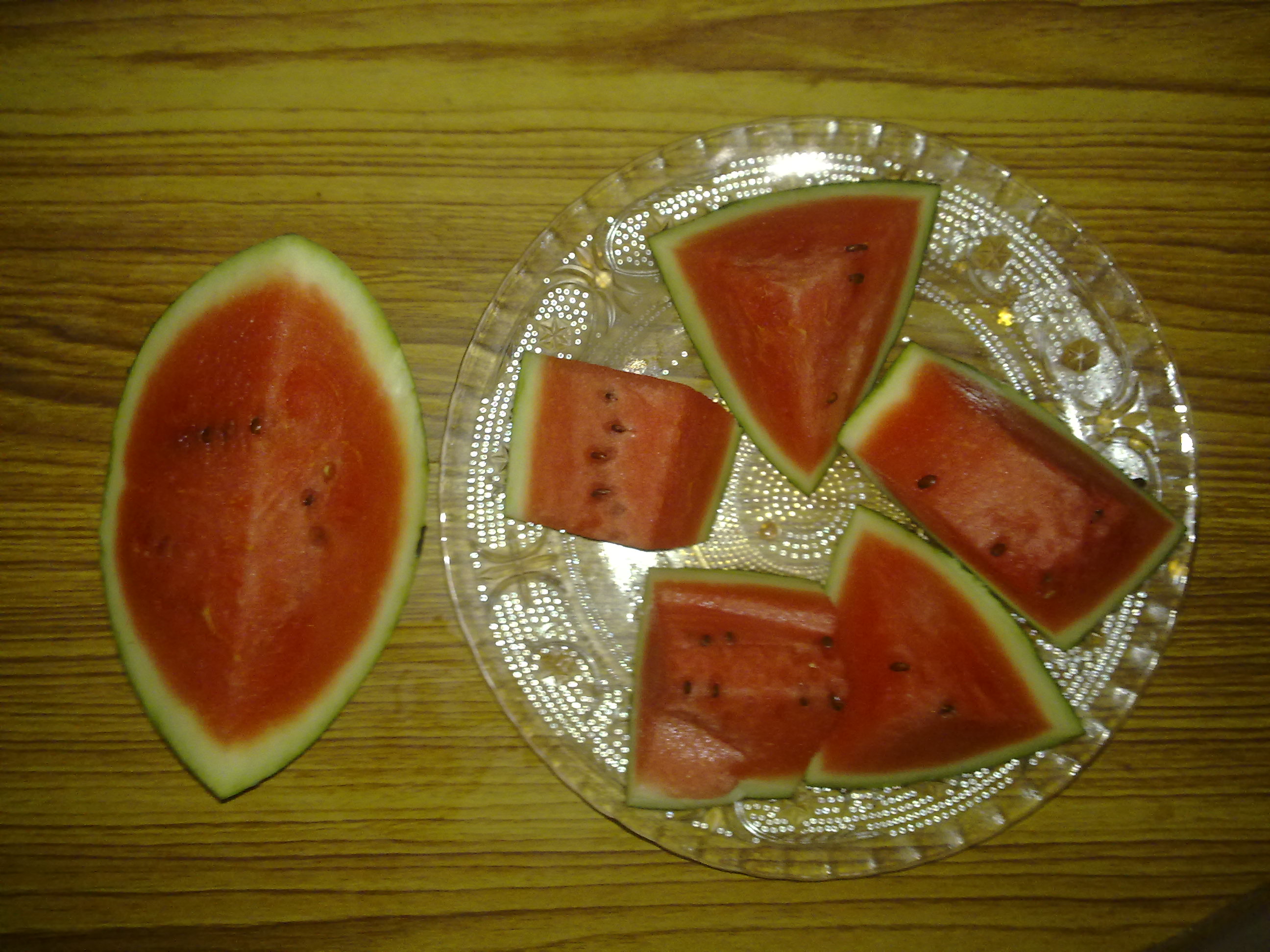
Botanically, the watermelon (Citrullus lanatus) is a member of the gourd family, Cucurbitaceae, and its fruit is a kind of berry with a hard rind that botanists call a pepo. The sweet, juicy flesh is usually deep red to pink, with many seeds that are black when mature and white when immature. The seeds look as if they are scattered evenly, but they develop inside a fruit that has an internal structure of its own.
Researchers studying watermelon fruit in the journal Frontiers in Plant Science in 2021 described that structure. A watermelon has three internal fruit compartments. The rind keeps expanding throughout the growth of the fruit, whereas cell division in the inner flesh stops seven to ten days after fruit set; after that the placental cells, the tissue that holds the seeds, grow by filling with water, sugars, proteins and nutrients. The seeds form in this placental tissue, within the three compartments, so on a cut face they appear in rows that follow the compartments rather than at random: the pattern the food writers call seed lines or seed veins.
The same research explains a defect that sometimes shows up when a melon is cut open. If the rind and the inner flesh grow at rates too far apart, the three internal compartments separate and leave a crack or cavity in the centre, a disorder known as hollow heart. The 2021 study, which worked on seedless watermelons, said hollow heart cannot be seen from outside and that poor pollination, from too few bee visits or from cold or wet weather, contributes to it. It also found that hollow heart did not compromise the eating quality of the fruit, and a hollow-hearted watermelon is safe to eat.
Clean hands, a clean melon and a clean board
Because the knife passes through the rind into the flesh, anything on the outside of the melon can be carried inside. The FDA's consumer guidance on selecting and serving produce safely, in the version current from 5 March 2024, advises washing all produce thoroughly under running water before preparing or eating it, and says specifically: 'Scrub firm produce, such as melons and cucumbers, with a clean produce brush.' It adds that washing can reduce the bacteria that may be present but will not eliminate them.
The same guidance sets out the other basic rules:
- After washing, dry the produce with a clean cloth towel or paper towel.
- Do not wash fruit with soap, detergent or a commercial produce wash. The FDA says soap and household detergents can be absorbed by fruits and vegetables despite thorough rinsing, and can make people sick.
- Cut away any damaged or bruised areas before preparing or eating, and throw away produce that looks rotten.
- If possible, use one cutting board for fresh produce and a separate one for raw meat, poultry and seafood, and wash boards, dishes, utensils and counters with soap and hot water.
- Keep cut or packaged produce in a clean refrigerator at 40 degrees Fahrenheit or below.
For storage, the University of Illinois Extension advises that an uncut watermelon can be kept for about two weeks at room temperature, especially if the room is around 45 to 50 degrees Fahrenheit, while cut pieces should be tightly covered in plastic wrap and kept in the refrigerator for two to three days. A melon cut with the seed-line method is no different: once it is open, the pieces belong in the fridge.
Seedless watermelons and the Japanese connection
A cook who buys a seedless watermelon does not need the trick at all, and the seedless watermelon itself began in Japan. Japanese scientists developed the first seedless watermelons in 1939 by creating triploid hybrids, plants with three sets of chromosomes, although those early lines lacked sufficient resistance to disease. Seedless watermelons became much more popular in the 21st century, and by 2014 they made up nearly 85 percent of watermelon sales in the United States.
Triploid plants are sterile. Their seed is produced by crossing a tetraploid parent with a normal diploid one, which makes it expensive, and the plants themselves do not produce viable pollen. Fruit still has to be set by pollination, so growers plant rows of an ordinary seeded variety among them to supply pollen. The University of Illinois Extension describes seedless types as self-sterile hybrids that develop normal-looking fruits but no fully developed seeds, and tells home gardeners who grow them to plant a standard seeded variety alongside. For commercial fields the US Department of Agriculture recommends at least one beehive per acre for seeded varieties and three hives per acre for seedless ones, because pollination is far more critical when viable pollen is scarce.
Japan has given the watermelon other footnotes too. The amino acid citrulline takes its name from Citrullus, the Latin word for watermelon, and was first isolated from watermelon in 1914 by the Japanese researchers Yataro Koga and Ryo Otake. Cube-shaped watermelons, grown inside boxes, were invented in Japan by the graphic designer Tomoyuki Ono in 1978 to fit more compactly into fridges and to stop the fruit rolling when cut. They are mainly ornamental and costly, since they must be harvested before they are ripe to keep their shape.
The seeds and the rind need not be wasted
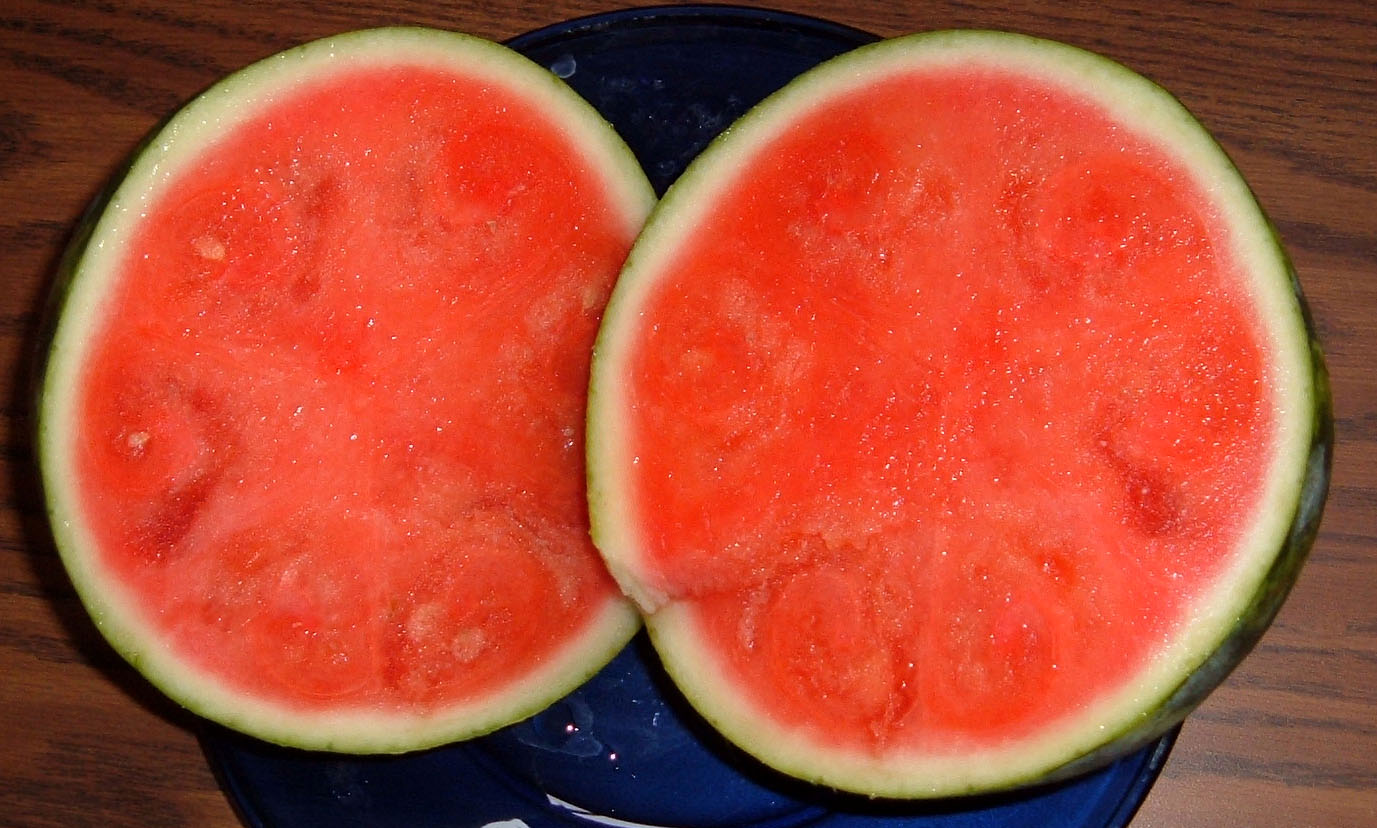
The seeds lifted out with the spoon are edible. Watermelon seeds have a nutty flavour and can be dried and roasted or ground into flour, and in Thailand roasted, salted watermelon seeds are sold in packets as a snack, as the picture below shows. The rind can be eaten too: it is pickled, stir-fried or stewed, and old thick-rinded cultivars such as 'Tom Watson', 'Georgia Rattlesnake' and 'Black Diamond' were favoured precisely for watermelon pickles. The rind is also where the plant produces citrulline.
Choosing a ripe watermelon before you cut it
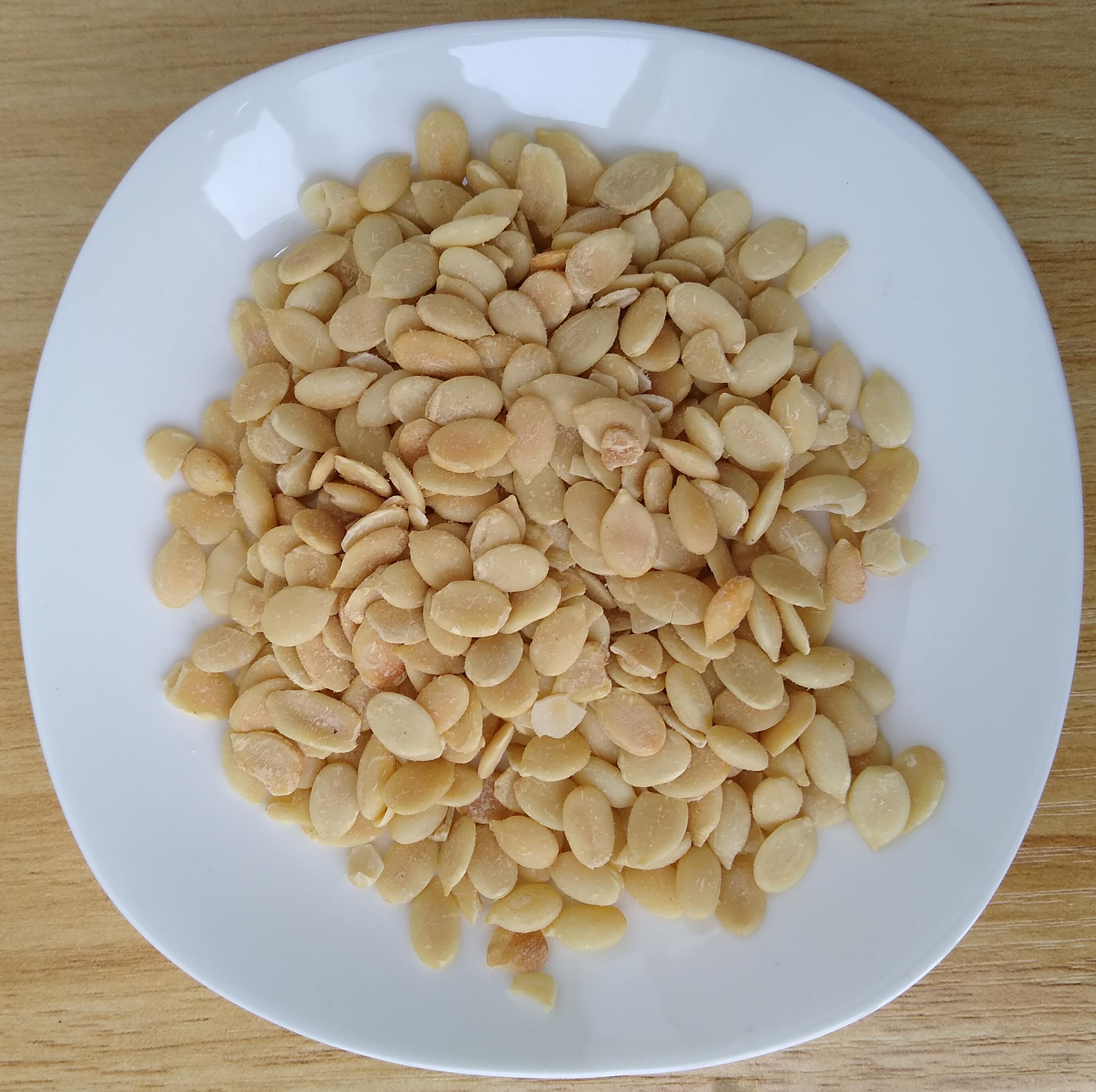
The cutting method works best on a ripe melon with firm, well-coloured flesh. The University of Illinois Extension gives four signs to use together. The light green, curly tendrils on the stem near the point where the melon is attached usually turn brown and dry. The underside, the spot where the melon rested on the ground, should be yellow or cream coloured; if it is white or pale green the melon is not ready, and the extension calls this probably the most important indicator. A ripe melon should be very heavy for its size with a hard rind, and its skin becomes rough to the touch and resistant to being pierced by a thumbnail.
The extension also dismisses the most familiar test. 'No amount of thumping, tapping, sniffing, or shaking can actually give a clue to ripeness,' it says, adding that many watermelons do not give the proverbial dull thud when ripe.
Watermelon in Bangladesh in the 2026 season
Banglapedia, the national encyclopedia, lists the watermelon among the most widely cultivated fruits in Bangladesh, alongside mango, jackfruit, banana and pineapple. Much of the crop now comes from the coastal south. Citing the Department of Agricultural Extension (DAE), The Business Standard reported on 29 February 2024 that Bangladesh had produced a record 25.47 lakh tonnes of watermelon in fiscal year 2021-22. Patuakhali grew 9.63 lakh tonnes of that, 37.8 percent of the national total, followed by Khulna with 5.59 lakh tonnes, Bhola with 5.13 lakh tonnes, Noakhali with 1.60 lakh tonnes and Barguna with 0.78 lakh tonnes. In fiscal year 2022-23, the paper reported, watermelon was grown on 64,183 hectares in Barishal division, producing 2.724 million tonnes.
The 2026 season was larger again. On 3 March 2026 the state news agency BSS reported from Patuakhali that the District Agricultural Extension Department put the district's watermelon area at 34,480 hectares that year, up from 27,350 hectares the year before, with cultivation spreading on the chars of the Tentulia River in Bauphal, Rangabali, Galachipa, Dashmina, Kalapara, Mirzaganj and Sadar upazilas. Trade of Tk 300 to 350 crore was expected in the district that season, and farmers were preparing their harvest for Ramadan demand.
By 2 April 2026, nine days before the Jagonews24 tip, Prothom Alo reported that watermelon had been grown on 70,362 hectares in Barishal division. DAE figures gave 35,057 hectares in Patuakhali, 19,753 in Bhola, 12,324 in Barguna, 2,705 in Barishal, 396 in Pirojpur and 127 in Jhalokathi. Agriculture officials expected a yield of 55 tonnes per hectare and a total of 3,821,729 tonnes for the division. The same report, however, described growers worried by a shortage of buyers. Ferdous Talukdar, a farmer in Kalapara, told the paper that he had been getting Tk 2,200 a maund in the market but was being forced to sell at Tk 1,200, and S M Mahbub Alam, assistant director of the Department of Agricultural Marketing in Barishal, explained the weaker demand in the south and said the season had only just begun.
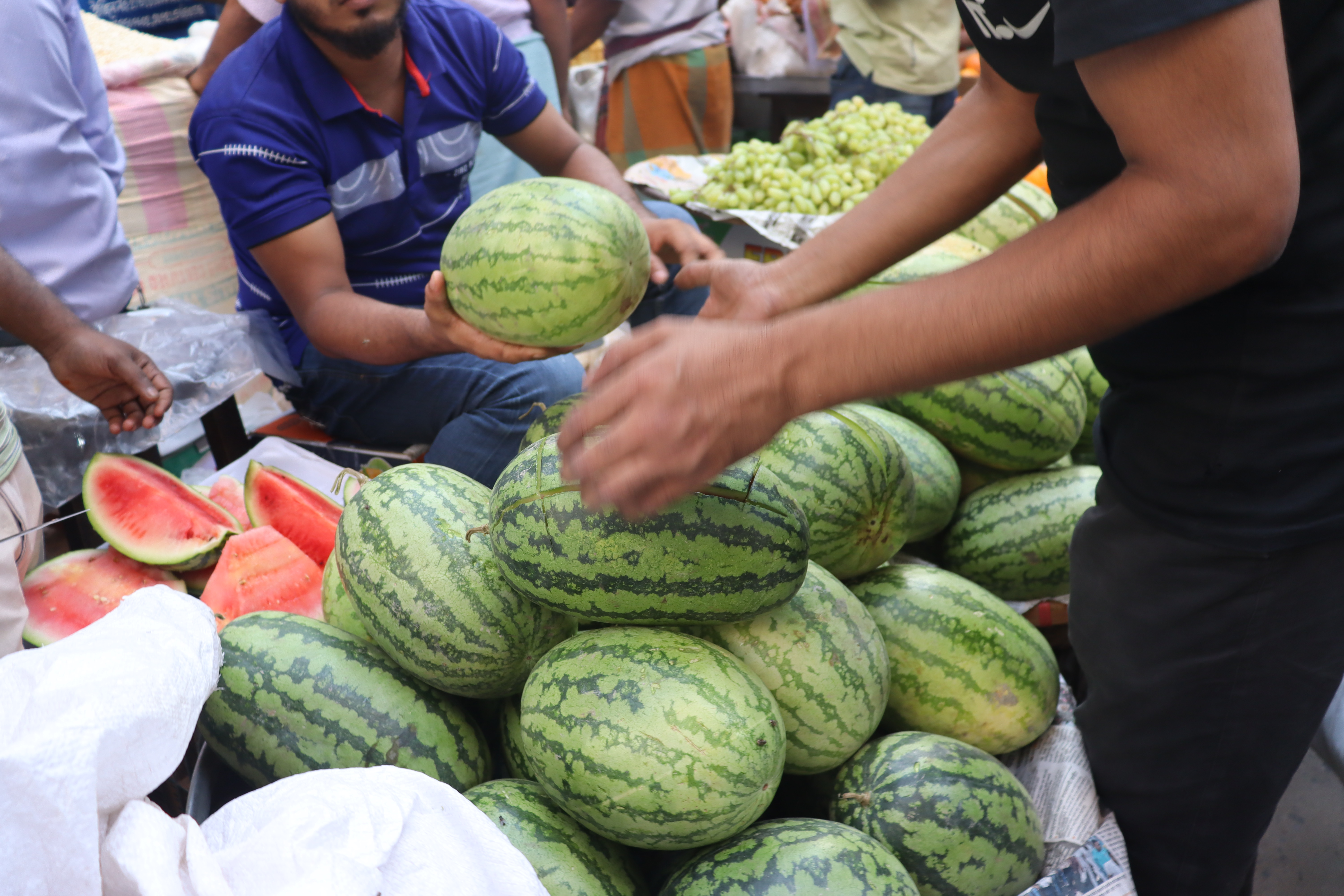
A fruit from Africa that the world now grows in China
The watermelon originated in Africa, where it was first cultivated; it was grown in Egypt by 2000 BC. It was being cultivated in India by the 7th century and had reached China by the 10th. Early watermelons were not sweet but bitter, with yellowish-white flesh, and were hard to open. The sweet modern fruit, easier to open, came from selective breeding over a long period, and there are now more than 1,000 varieties, many of which produce mature fruit within 100 days of planting.
The plant needs warmth, growing best at temperatures above 25 degrees Celsius in well-drained sandy loam with a pH between 5.7 and 7.2. Its main pests are aphids, fruit flies and root-knot nematodes, and in humid weather it is prone to powdery mildew and mosaic virus. According to FAOSTAT figures for 2023, the world produced about 105 million tonnes of watermelons that year, and mainland China grew 63.8 million tonnes of them, 64 percent of the total. India followed with 3.6 million tonnes, Türkiye with 3.1 million, Algeria with 2.5 million and Brazil with 1.8 million.
Photo: Ronggy / Wikimedia Commons (public domain)
Sources: Jagonews24, Chowhound, The Takeout, Frontiers in Plant Science (2021), US Food and Drug Administration, University of Illinois Extension, USDA FoodData Central, The Business Standard, BSS, Prothom Alo, Banglapedia, FAOSTAT, Wikipedia
Comments
(0)