
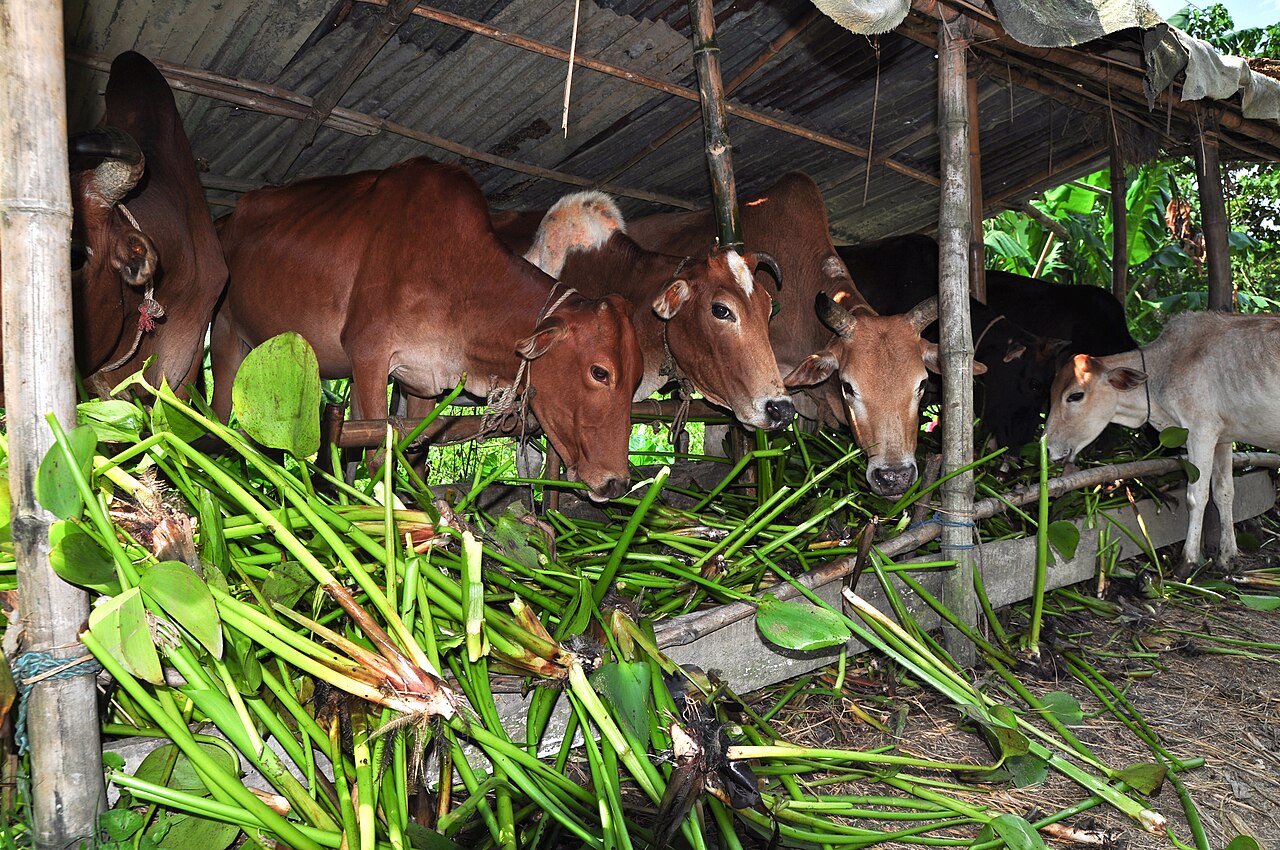
Water hyacinth carried into Chalan Beel by floodwater has stuck fast, putting cultivation at risk on about 27,000 hectares of farmland in Gurudaspur, Singra and Naldanga upazilas of Natore and neighbouring Tarash in Sirajganj. Farmers say that unless the weed is removed quickly they will not be able to farm the land in the coming rabi season, Krishi Shomoy's Natore correspondent reports.
According to the report, hyacinth now covers the water of at least 20 beels, including about 15,000 hectares in Singra, 5,000 in low-lying Naldanga, 4,000 in Tarash and 1,000 in Gurudaspur. After the monsoon about 100,000 hectares of these beels are normally sown with wheat, maize, mustard, boro rice and spices; on the hyacinth-covered land, mustard, wheat, maize and garlic usually follow the receding water.
Local people say unplanned embankments and roads, and rivers narrowed by encroachment and pollution, have left the beel water with no outflow, so the hyacinth stays and multiplies. Singra agriculture office figures show that hyacinth carried in by the 2025 flood never left, so no crop could be grown on about 100 hectares in the Jolarbata and Chaugram beels alone in the boro season, and the mustard target was missed.
Clearing the weed is costly. With labour scarce, day wages have risen to Tk 600; clearing one bigha takes 10 to 12 workers and costs Tk 5,000 to Tk 7,000. Many farmers are borrowing from moneylenders at high interest to prepare their land. Rafiqul Islam, a farmer in Berabari village, says he spent Tk 10,000 last year clearing one bigha and planting rice, but an early flood and heavy rain meant he could not harvest the ripe crop.
The damage goes beyond crops. The hyacinth is killing the beels' creepers and aquatic plants, water lilies and lotus have vanished, and boats struggle to move. Julhaj Hossain, a fisher in Dahia village, says the beel has become a single mat of hyacinth this monsoon and he cannot fish; thousands of fishers like him are in trouble.
Habibul Islam Khan, deputy director of the Department of Agricultural Extension in Natore, said he could not say how much cropland lies under the hyacinth, and that the agriculture department has taken no step to remove it.
Photo: Balaram Mahalder / Wikimedia Commons (CC BY-SA 3.0)
Source: Krishi Shomoy

Comments
(0)