
The popular target of 10,000 steps a day did not come from medical research. As an Ittefaq report explains, it spread in Japan before the 1964 Tokyo Olympics through the marketing of a step-counting device. Research now suggests that about 7,000 steps a day is significantly linked with a lower risk of early death and several diseases.
A study published in The Lancet Public Health in 2025 reviewed 57 walking studies published between 2014 and 2025. Compared with 2,000 steps a day, 7,000 steps was associated with a 47% lower risk of early death, a 25% lower risk of heart and blood vessel disease and a 14% lower risk of diabetes. Going from 2,000 to 4,000 steps was linked with a 36% lower risk of death.
Melody Ding, the University of Sydney epidemiologist who led the study, said that for most outcomes the extra benefit of walking more begins to level off after about 7,000 steps. More walking still helps, but the added reduction in the risk of death from 10,000 steps rather than 7,000 is relatively small. A walk that raises the heart rate or leaves you a little out of breath can be beneficial, she said.
Pace matters too. In a study published last September in the British Journal of Sports Medicine, Emmanuel Stamatakis of Monash University in Australia and colleagues followed 64,743 people from a large UK database for about eight years. The reduction in risk linked with up to 5,000 brisk steps a day was about the same as that linked with 5,000 to 7,500 slow steps.
The findings suggest aiming for 7,500 to 10,000 steps a day, with some of it at about 100 steps a minute. For people short of time, Stamatakis advises building walking into daily routines, for example parking a little further from a shop entrance and walking the rest of the way briskly. Experts agree that any walking is better than none.
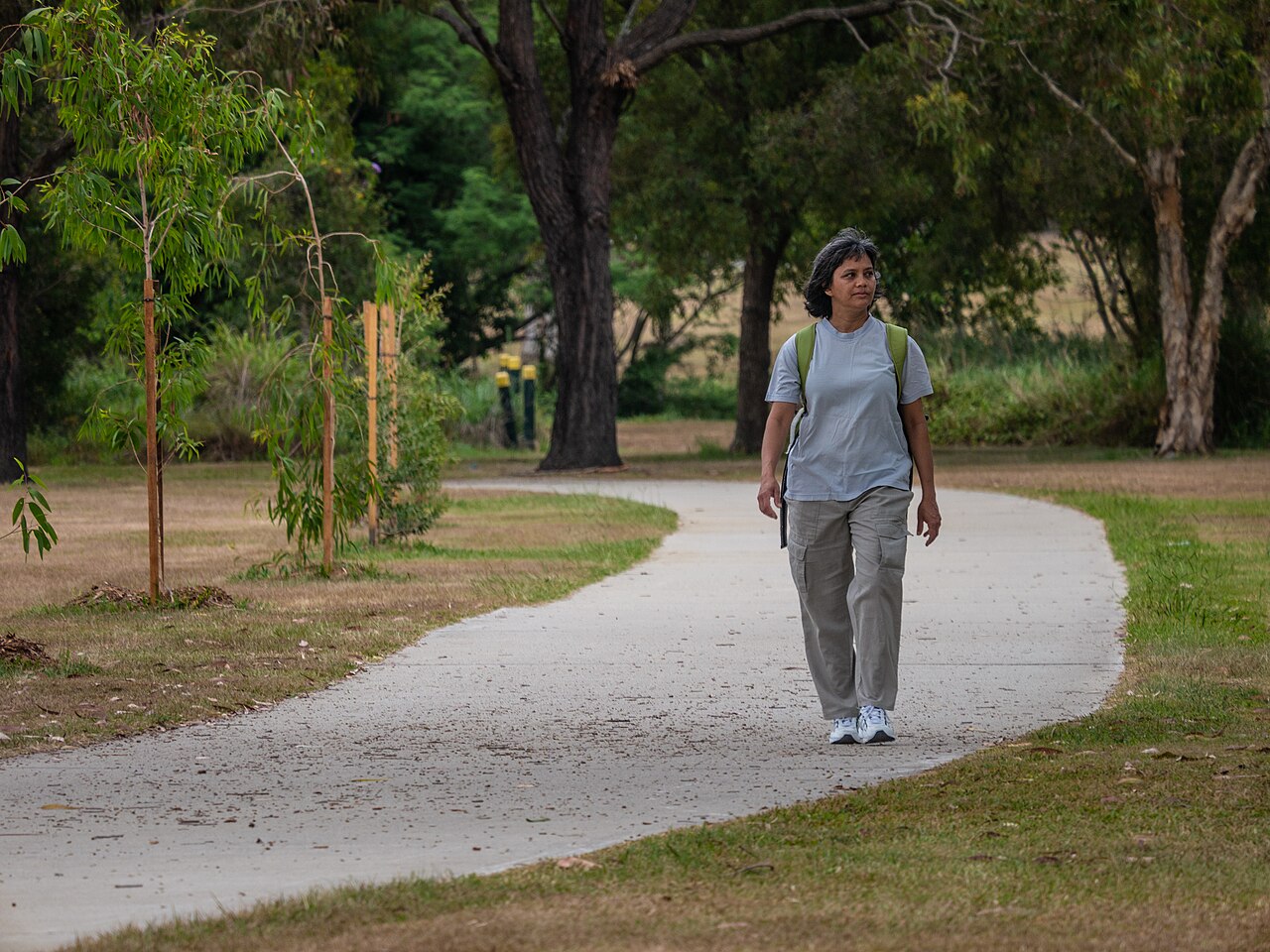
Photo (illustrative): walking in a park. Photo: John Robert McPherson / Wikimedia Commons (CC BY-SA 4.0)
Source: Ittefaq



Comments
(0)