
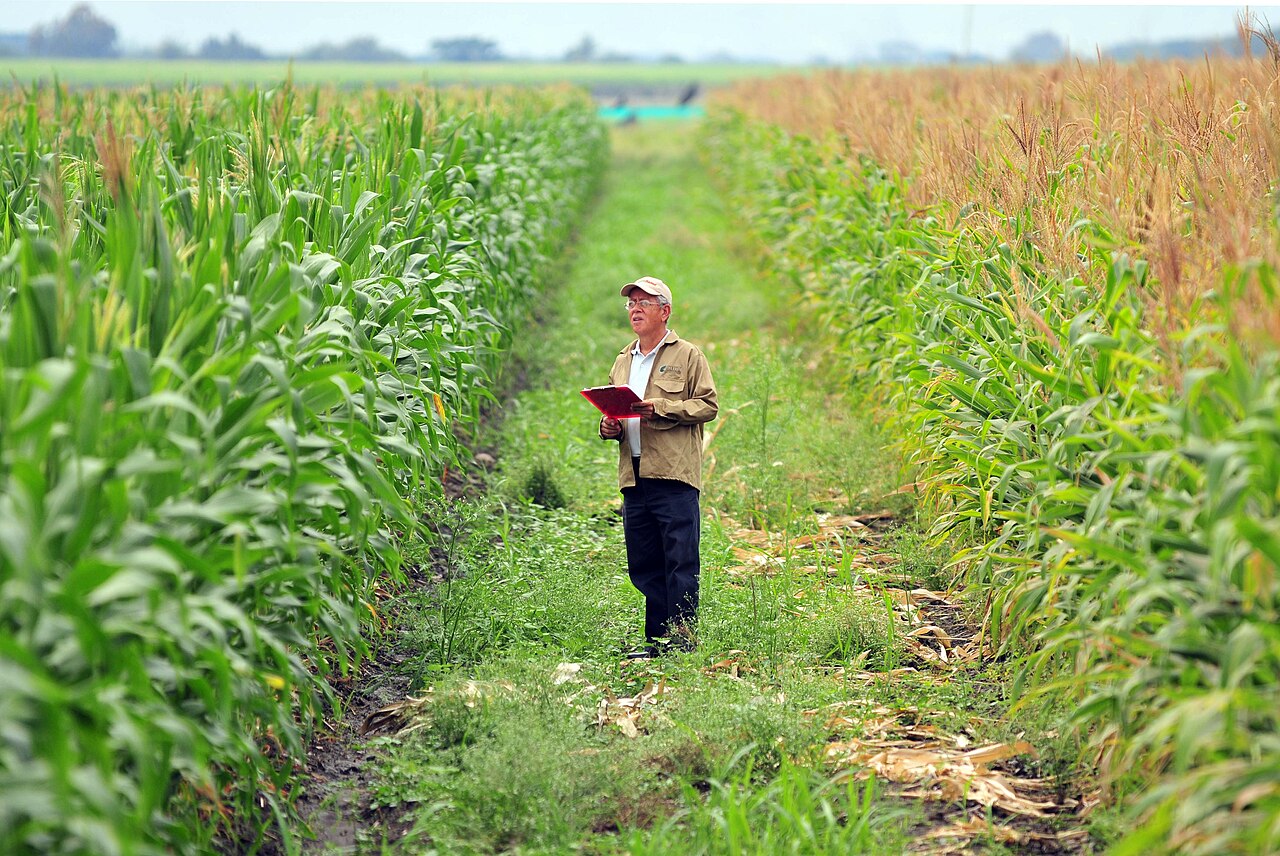
Researchers at the Vellore Institute of Technology in Tamil Nadu have set out a framework for combining artificial intelligence with "multi-omics" data, meaning genomics, transcriptomics, proteomics and metabolomics together, to speed up breeding of crops that stand up to climate stress and carry more nutrients, Global Agriculture reports.
The review, by Surasreeta Paul and corresponding author Sandeep Singh Rana of the School of Biosciences and Technology, appeared online on 27 August and was formally published on 16 September in the journal Frontiers in Sustainable Food Systems. It synthesises existing research rather than reporting new experiments.
The authors argue that machine learning models, particularly convolutional neural networks and transformer-based models like those behind large language models, can better predict which genetic traits will translate into real stress tolerance or nutritional gains in the field, a job that has traditionally taken years of trial breeding. They also describe AI helping CRISPR-Cas9 gene editing for biofortification by choosing better genetic targets and designing more precise guide RNA, reducing off-target effects.
The review cites examples already achieved through genome editing in studies around the world: wheat with more iron and zinc, soybean lines with less phytic acid (a compound that can block absorption of nutrients from grain-based diets), and vitamin-enriched cassava and maize. Beyond the lab, it points to satellite imagery, soil and weather sensors on the Internet of Things, and drone-based remote sensing that can measure plant height, canopy temperature and stress response across thousands of plots at once.
The authors frame the work as groundwork for food security targets tied to 2050, when the world's population is projected to approach 10 billion. Global Agriculture notes that the review does not dwell on the regulatory hurdles gene-edited crops still face in many countries, including India, so how quickly the roadmap reaches farmers will depend on national biosafety regulators.
Photo: Neil Palmer (CIAT) / Wikimedia Commons (CC BY-SA 2.0)
Source: Global Agriculture
Comments
(0)