
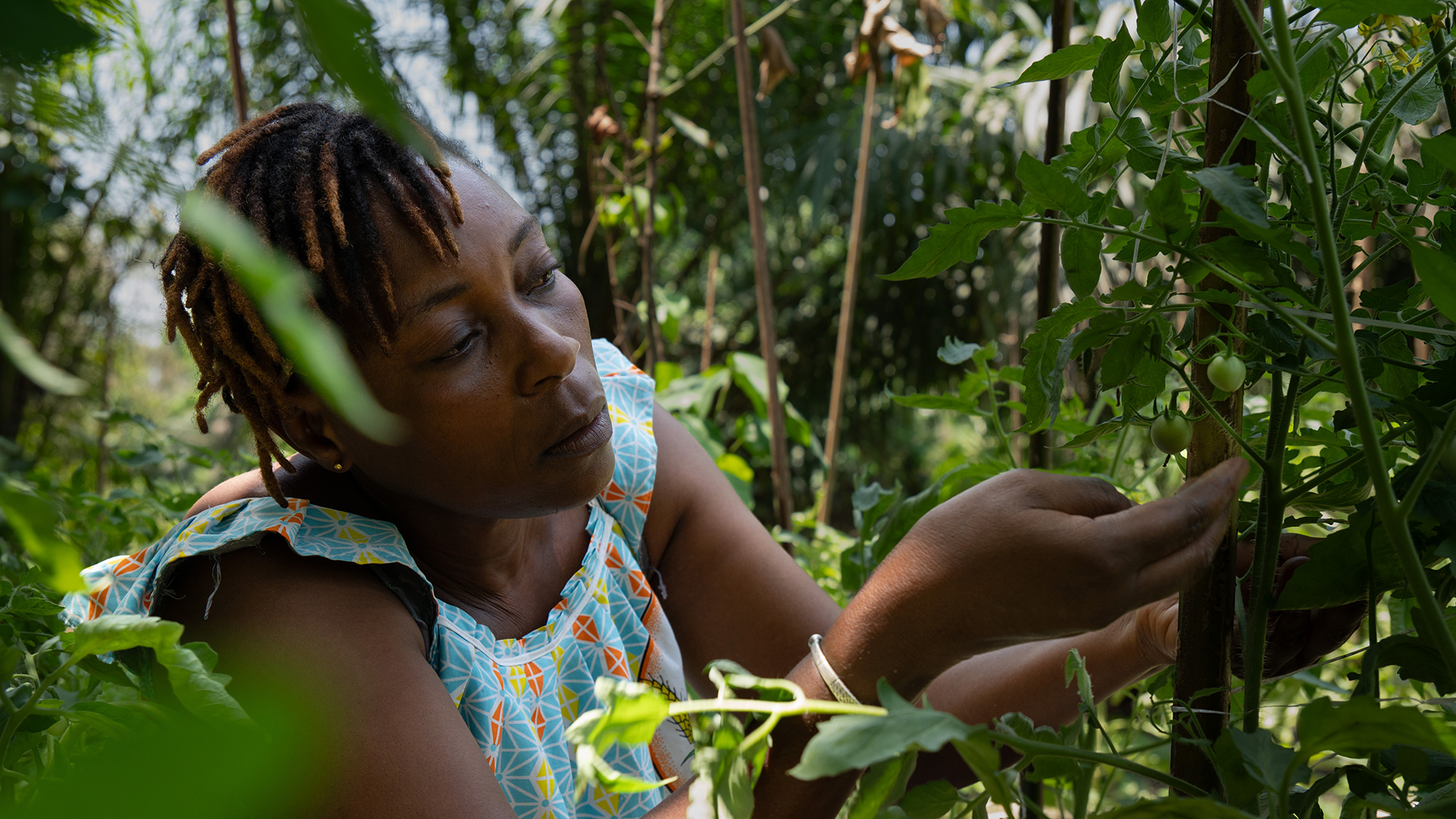
Victorine Akoua's parents read the sky to decide when to plant. She farms the same land in Aniassué, in eastern Côte d'Ivoire, but says the patterns she grew up with no longer hold: the seasons and the rains have changed. What had not changed, until recently, was the price of money. "If you borrowed 10 francs, you had to pay back 20," she recalls.
Women farmers in Côte d'Ivoire face those two problems together, according to a feature story published by the Food and Agriculture Organization of the United Nations (FAO) on 14 September: little access to affordable loans, and weather that can wipe out both an investment and a harvest when a loan is finally taken.
The answer came from within the villages, in the form of village savings and loan associations (VSLAs). FAO's Food Security and Agriculture: Accelerating Adaptation (SAGA 2) project, implemented with technical and financial support from the Government of Québec, promotes biodiversity-friendly farming that builds on traditional knowledge and puts women and rural youth at the centre of adaptation. In the Indénié-Djuablin region, FAO works with Carrefour International and Génération Femme du 3ème Millénaire to strengthen existing VSLAs so they can finance women-led climate solutions.
Members save into a common fund and borrow from it on terms the group agrees. "If we borrow among ourselves and the interest comes back to us, that is a good thing," Victorine says. She is now secretary of one VSLA and president of a federation of groups in Aniassué and nearby villages. She borrowed 100,000 CFA francs to grow okra, tomatoes and peppers without chemical inputs; local demand for sustainably grown produce let her sell above the price of conventional vegetables, and after repaying the loan she had made double its value while keeping part of the harvest for her family.
Finance is only half of it. The project also trains women in practices that keep production going as conditions change, and in diversifying so a household does not depend on one crop or one income. Groups have used loans to invest collectively in market gardening and poultry. Sonia France Boa and other women of the Aniassué VSLA borrowed to develop a shared field; when they sell, "we divide it into three: one part for the expenses of the field, one part to save in the VSLA fund, and one part for the group," she explains. The women learned to make compost and plant-based crop treatments, and Sonia points to the results on their tomatoes.
For Victorine, the training changed how she farms. Before it she knew no techniques to save water; with mulching and compost her vegetables do better, she sells more at market and feeds her family from the rest, which frees money for schooling and health. "We women want to be autonomous," she says.
The story is part of an FAO series for the International Year of the Woman Farmer 2026, which recognises women's contribution to food security and livelihoods despite heavier workloads, precarious conditions and unequal access to resources. What starts as savings in a common fund, FAO says, becomes investment in the community and the means for women to shape their own adaptation.
Source: FAO Newsroom. Photo: ©FAO/Candida Villa-Lobos
Comments
(0)