
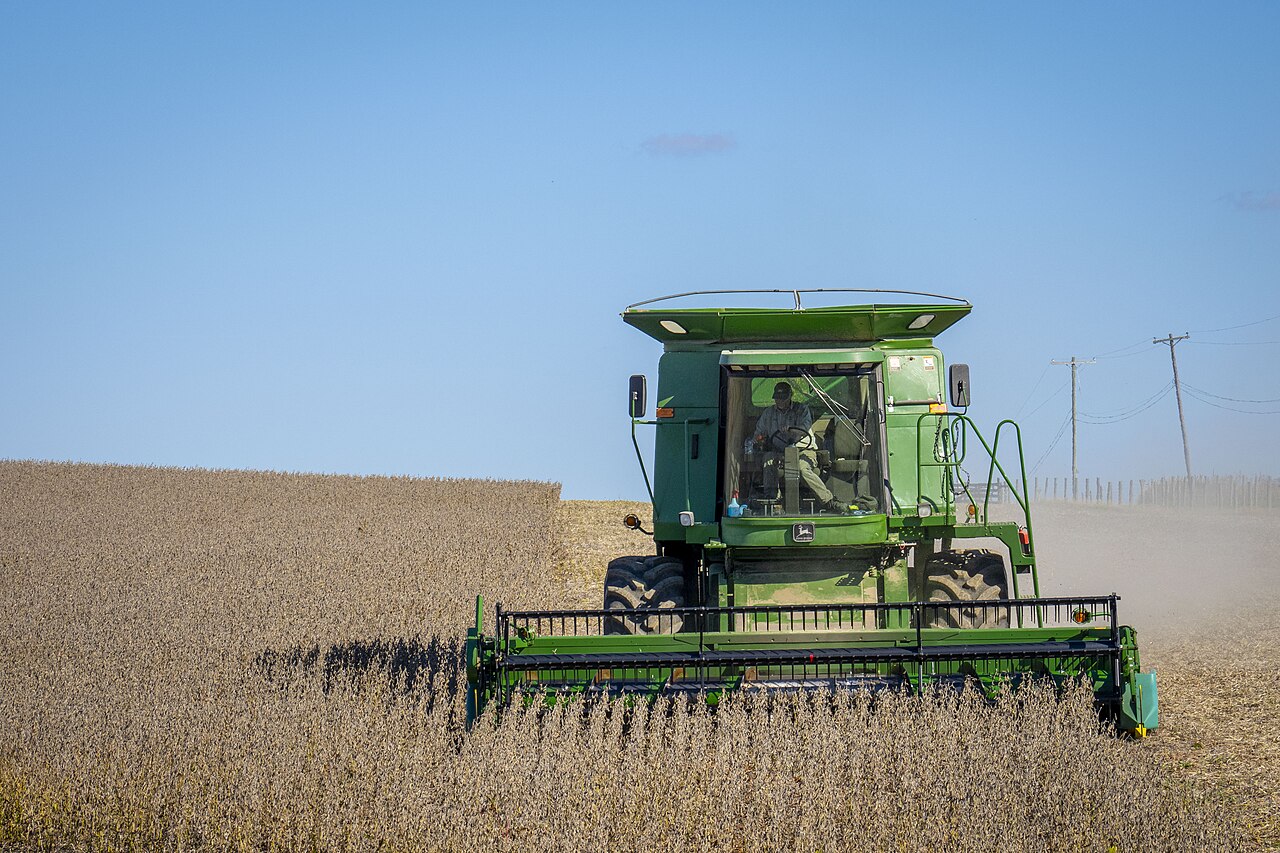
With a few hundred acres of grain still to combine, the two farmers who have reported on the 2026 season for DTN's View From the Cab series since May have reached much the same view: a lot of this year's nitrogen came from the soil itself, and Mother Nature still had the final say. The series, now in its 22nd year, ended its season this week.
Chris Weaver farms in Finksburg, Maryland, in the Chesapeake Bay watershed, no-till since 1986 and deep into cover crops. Using the pre-sidedress soil nitrate test to measure nitrogen released from decomposing organic matter, plus tissue sampling through the season, he found no extra nitrogen was needed. He said he produced corn with 0.46 to 0.5 units of nitrogen per bushel and again harvested some 350-bushel-per-acre yields. Check strips without biostimulants for heat and drought stress yielded 12 to 18 bushels per acre less than treated ground, but the heat still hurt, and he expects whole-farm yields to be slightly lower.
Not everything worked. Seeding a cover-crop mix of buckwheat, oats, sun hemp and radishes by drone into standing crops failed in dry conditions, and overseeding to get a stand was a cost he would rather avoid. On highly erodible fields he now broadcasts covers and runs a mechanical crimper over the residue, which he believes speeds microbial breakdown. Rye sown straight after soybeans on 100 acres will be sold to a distillery next summer. He wants to cut glyphosate and paraquat use further and is testing more biological products.
In Belgrade, Minnesota, Tyler Rath grows nearly a dozen conventional, organic and non-GMO crops under irrigation. After rain, hail, heat and drought, his irrigated corn is yielding nearly 100 bushels per acre more than in 2025, which he and his seed representative put down to strong nitrogen mineralisation. Plots given fungicide and an extra 60 lb of nitrogen per acre showed little or no gain, while organic corn fed only turkey manure yielded 220 to 240 bushels per acre.
Rath paid a record electricity bill of nearly $14,000 in July to run irrigators. On organic corn he flames weeds at spike and again around V8, with a cultivator following, and a new camera-guided cultivator proved its worth. His worry for edible beans is waterhemp, which fomesafen no longer controls as it did. After a difficult first try at navy beans he says "never again", and his biggest concern for 2027 is input costs staying where they are.
The report was written by Pamela Smith for DTN.
Photo: USDA / Preston Keres / Wikimedia Commons (public domain)
Source: DTN / Progressive Farmer
Comments
(0)