
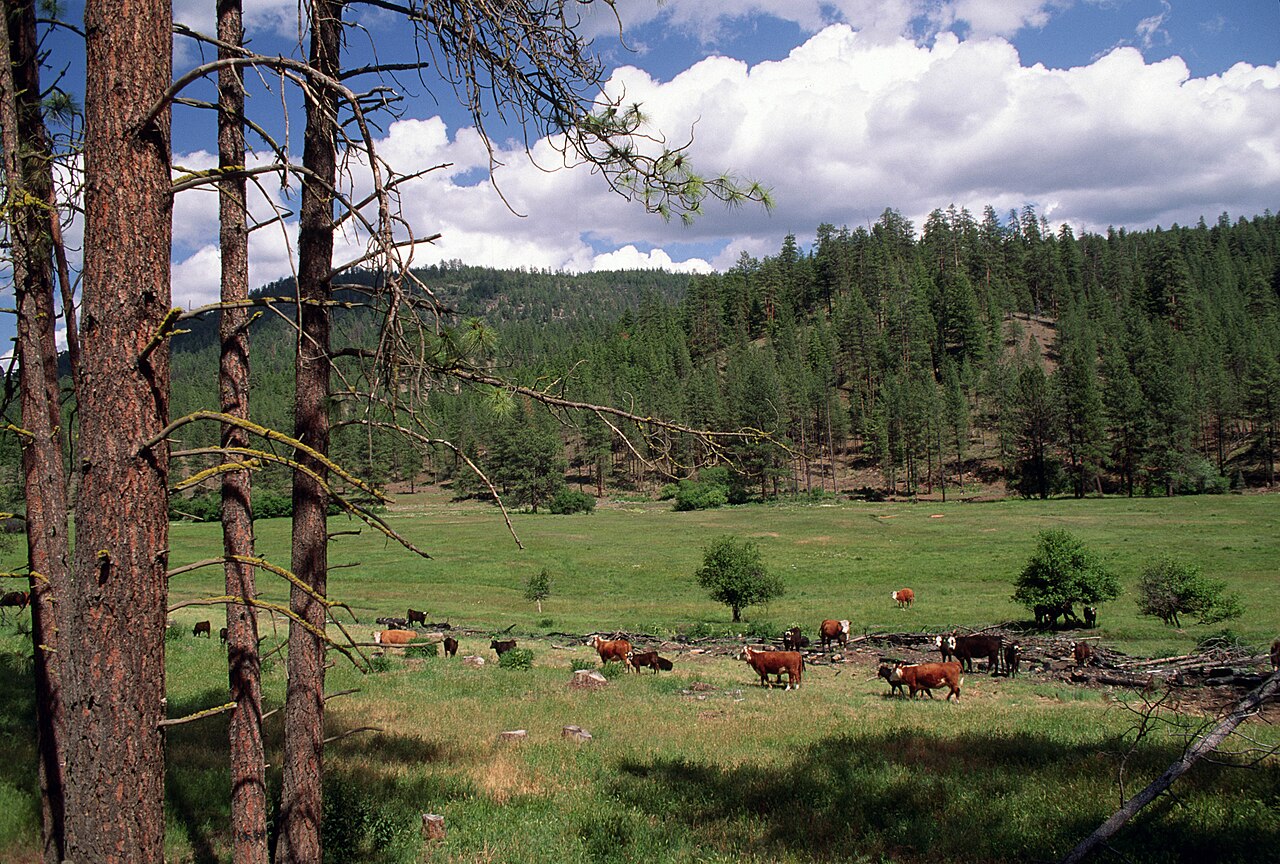
The US Department of Agriculture has proposed a rule that would change how grazing permits are issued on national forests and grasslands in 16 contiguous western states, who is eligible to hold them, and how grazing fees are set. Agriculture Secretary Brooke L. Rollins and Interior Secretary Doug Burgum announced the proposal on 10 November.
The rule will be published in the Federal Register on 12 November 2026, which opens a 30-day public comment period. USDA says many of the revisions are editorial or procedural, or clarify existing requirements. Other changes bring the Forest Service's rules into line with those of the Bureau of Land Management, so that ranchers whose cattle graze land run by both agencies face one set of conditions instead of two.
Grazing is a large part of what the Forest Service manages. The agency allows livestock on nearly 40 percent of the 193 million acres (about 78 million hectares) in its care, and USDA puts the contribution of that grazing at about 14,200 jobs and $645 million a year to the US economy. The department also argues that managed grazing reduces dry, overgrown vegetation and so lowers the risk of large, uncontrolled wildfires.
The proposal follows the department's October 2025 plan to strengthen the American beef industry, a memorandum of understanding between USDA and the Department of the Interior on grazing on Forest Service and Bureau of Land Management land, and grazing policy issued since then by Rollins and Michael Boren, the under secretary for natural resources and environment.
"America's ranchers are tough professionals who care for the land," Rollins said, adding that the administration wanted to cut red tape so ranchers could keep feeding the country. Burgum said that aligning the two agencies' grazing rules would give ranchers more certainty and help lower costs.
For ranching families in the West, many of whom rely on federal allotments for summer pasture, permit eligibility and fee rules decide how many animals they can carry and at what cost. The comment period is the point at which ranchers, conservation groups and others can ask for changes before the rule is made final.
Photo: U.S. Forest Service, Pacific Northwest Region / Wikimedia Commons (Public domain)
Source: usda
Comments
(0)