
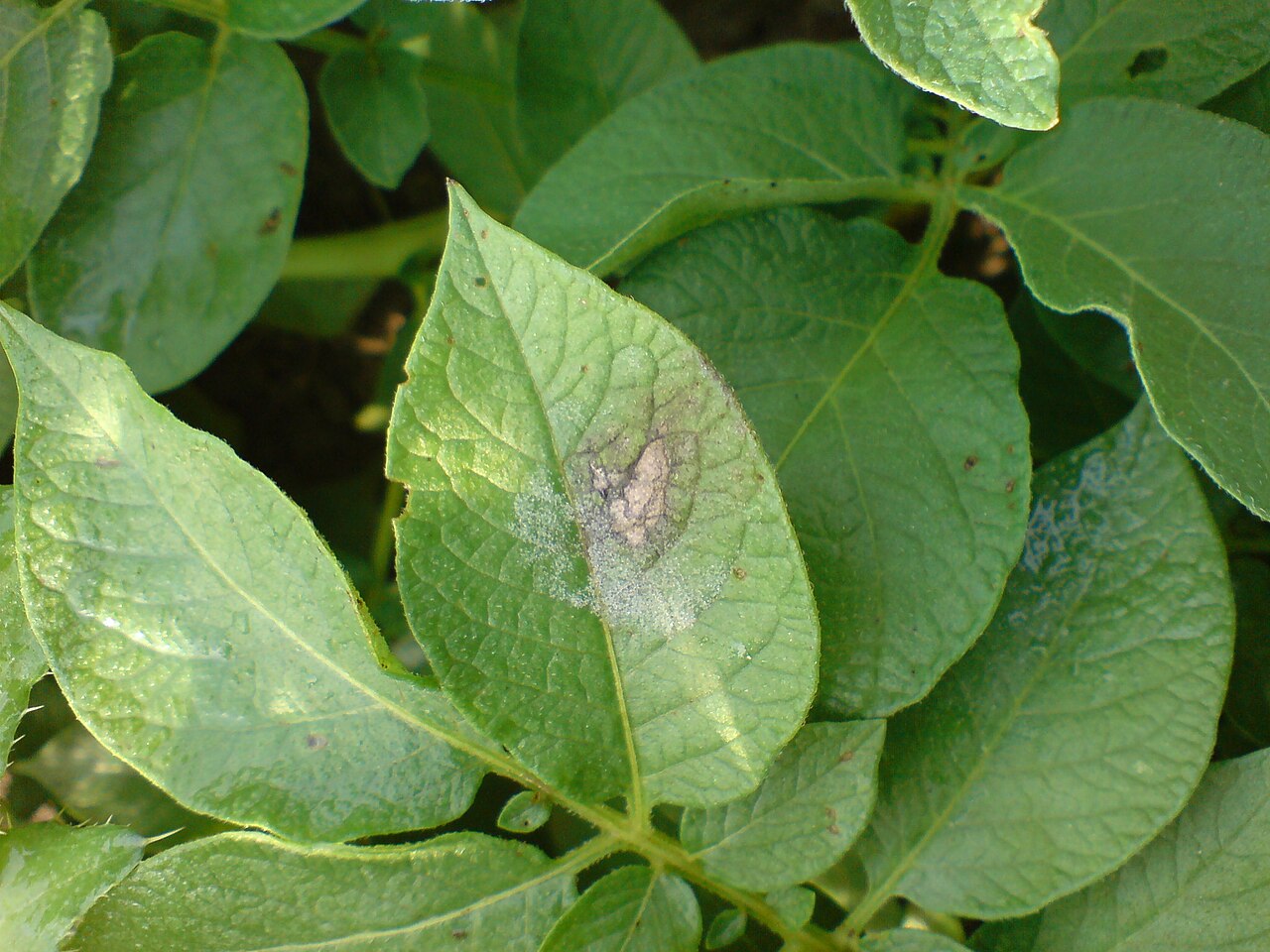
The 2026 potato late-blight season in the UK has shown a clear north–south divide, according to Syngenta potato technical manager Andy Cunningham, who reviewed the year in answers to questions from growers and agronomists. Prolonged dry weather across much of England and Wales kept late-blight pressure relatively low, while higher rainfall in Scotland produced considerably more disease: about half of all outbreaks recorded by the Fight Against Blight monitoring network, run by the James Hutton Institute, occurred in Scotland.
EU_36 remains the dominant genotype, accounting for around three-quarters of genotyped samples in England, more than half in Scotland and all of those in Wales and Northern Ireland. Scotland showed greater diversity, including EU_6 and EU_41. The strain EU_46, which has shown resistance to OSBPI chemistry, was identified in two outbreaks in England, but EU_43, the strain associated with resistance to both OSBPI and CAA chemistry, has not been detected this season, though it was found in England in 2025 and is present in the wider European population.
Cunningham cautioned that the results are a snapshot rather than a full picture of the UK clonal population, and urged growers and agronomists to keep monitoring crops, protect clean growth and hold programme intervals according to local risk, crop development and current guidance. Across Europe, where there is no in-season monitoring programme, pressure has also been low; EuroBlight's final 2025 results confirmed EU_36 as the dominant genotype on the continent.
It is too early to attribute individual disease outcomes to the withdrawal of mancozeb, he said, since the dry season reduced pressure anyway. But its loss removes an important multi-site protectant and resistance-management partner from the potato toolbox, placing more responsibility on the remaining chemistry and making programme design more important, and it raises the risk of Alternaria, for which the available chemistry works best applied preventively.
His advice for 2027 is programme stewardship rather than product choice: plan the whole spray sequence for resistance management, use robust mixtures and alternate effective modes of action, still including OSBPI and CAA, follow labels, FRAC guidance and local recommendations, and do not stretch intervals simply because symptoms are not visible, especially when the canopy is growing fast. Volunteers, groundkeepers and outgrade piles should be controlled as sources of early infection, and samples should keep going to Fight Against Blight.
Syngenta said it will launch an enhanced formulation of its mandipropamid product Revus in 2027, and pointed to Evagio Forte, combining mandipropamid with amisulbrom for late-season tuber protection, and Amphore Plus, pairing mandipropamid with difenoconazole where late blight and Alternaria overlap. Andy Cunningham is Syngenta's potato technical manager in the UK.
Photo: Björn Andersson (SLU) / Wikimedia Commons (CC BY-SA 4.0)
Source: Global Agriculture

Comments
(0)