
One year after it was unveiled at the COP30 climate summit in Belém, Brazil, the Tropical Forest Forever Facility (TFFF), a fund meant to pay tropical countries for keeping their forests standing, is still billions of dollars short of its targets, Dialogue Earth reported. More than 65 countries have endorsed it, but only eight have pledged money: Brazil, Indonesia, Norway, Germany, France, Luxembourg, the United Kingdom and the Netherlands, whose US$500 million is the latest. Together the pledges come to US$7.8 billion.
The fund aims for US$10 billion by the end of this year, and Norway's US$3 billion pledge depends on reaching it. Its governance is in place, with an interim charter, a board and the World Bank as trustee and host. It is expected to start operating in 2027, but the first payments are not expected before 2028.
The design is a US$125 billion investment fund. Governments and philanthropies would lend US$25 billion over decades and private investors would add US$100 billion by buying the fund's fixed-return bonds. The money would be invested in other fixed-income assets, such as emerging-market bonds, and any surplus over what the fund owes would go each year to tropical forest countries. A Luxembourg-based Tropical Forest Investment Fund would manage the investments.
Eligible countries would receive up to US$4 a year for every hectare of standing forest, measured by satellite, with at least 20 percent going to Indigenous peoples and local communities. Every hectare lost cancels the payment for 100 standing hectares, in effect a US$400 penalty, and the penalty doubles above an annual deforestation rate of 0.3 percent. "No one will stop deforestation for getting four dollars, but others will because of the penalty deduction," said Felix Finkbeiner, founder of the NGO Plant-for-the-Planet.
For farming, the question is whether the money can compete with land use. Mauricio Voivodic, executive director of WWF-Brazil, acknowledged that the payment cannot match profits from cattle ranching or soy, but said the total a country could receive would be hard to ignore. By WWF's estimate, Suriname could get US$42 million to US$46 million a year if the fund reaches its full size, against about US$2 million a year it now receives in bilateral biodiversity aid. "It was launched without being bulletproof," Voivodic said, arguing that the rules should be adjusted as the fund goes.
Some of those rules are still under negotiation, including how degradation is monitored, what the fund may invest in and how Indigenous communities receive their share. As designed, only fire-based degradation is penalised; Finkbeiner said fire is behind only about a third of forest loss. The UN Environment Programme estimates that tropical forest countries will need US$67 billion a year by 2030, including US$18 billion for agroforestry, US$33 billion for reforestation and US$16 billion for conservation. The analysis was written by Fermín Koop.
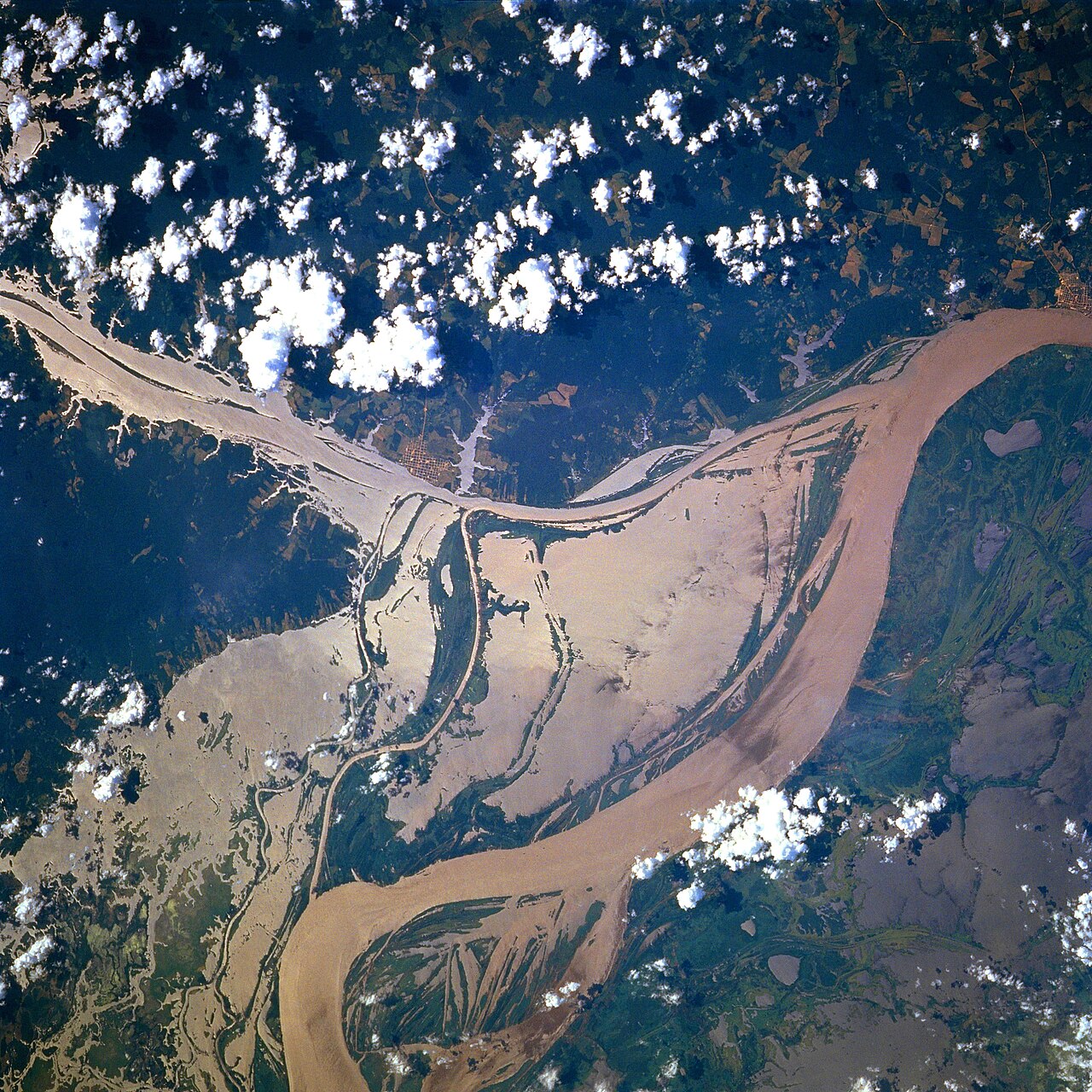
Photo: The Amazon River in western Pará, Brazil, seen from the Space Shuttle, NASA / Wikimedia Commons (public domain)
Source: Dialogue Earth

Comments
(0)