
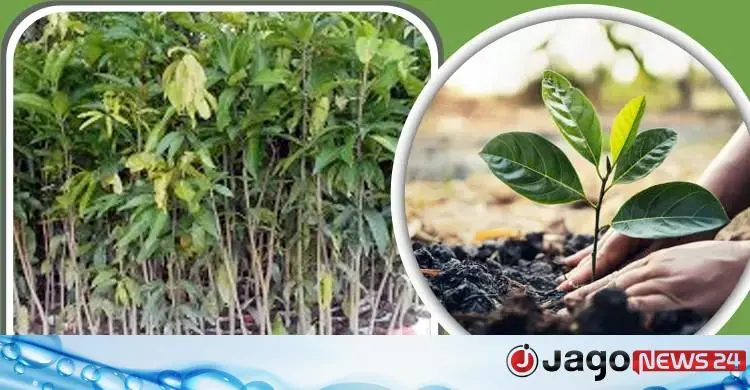
By Syed Mazarul Islam Rubel
For some people, tree planting means only planting trees beside highways. I disagree. Tree planting does not simply mean planting on highways or highway dividers. Which kind of tree goes where should be one of the main questions in any planting plan.
Planting large trees with long spreading branches on highways or in the middle of dividers can often do more harm than good. During storms, cyclones or other disasters, branches can break and fall on vehicles and pedestrians, and uprooted trees can block roads or cause accidents. So on dividers and narrow roads it makes more sense to plant small, prunable, ornamental flowering trees instead of large, wide-spreading ones.
Where there is enough space beside a highway, suitable medium or large trees can be planted at a safe distance from the road. But the roots, future size, branches and potential risk during storms must be considered.
Different trees for different places
Parks, open spaces or designated green areas can be created in villages, market towns, cities and settlements and planted with trees. Attractive, suitable trees such as bakul, jarul, sonalu and kathgolap can be used in urban settings. Fruit and shade trees suit villages and homesteads best: mango, jackfruit, jam, guava, lychee, amra, coconut and other fruit trees provide food, shade and environmental benefits at once.
Choosing trees for pond and canal banks needs extra care. Instead of large, densely branched trees, suitable species such as palmyra, betel nut, date palm and coconut can be planted in a planned way. Their leaves and branches spread relatively little over the water, which can help reduce the risk of excess leaves and organic waste polluting the water or adding silt. Regular desilting, keeping canals free of encroachment and ensuring water flow are also essential to maintain their natural flow and navigability.
Around schools and playgrounds, shade-giving, safe trees that grow well in the local environment can be planted, but risky or overly spreading trees are best kept away from the edges of play areas.
In forests or protected plantation areas, rather than a single-species plantation, forests should be created with a mix of native species in harmony with the local ecosystem. This will create habitat for birds, insects and other animals and help protect biodiversity.
Planting with safety in mind
We must remember that planting trees is not the end of the matter; where, why and which class of tree is planted matters just as much. One kind of tree is needed for roads, another for pond banks, another for city beautification, and native species for protected forests.
Bangladesh is a disaster-prone country, exposed to storms, cyclones and heavy rain. So instead of competing to plant more trees, planting should consider site selection, species, root spread, height, branches, soil type and public safety.
Every city, village, market town, union or settlement needs planned designated forest or protected plantation areas. Alongside scattered roadside planting, creating such permanent green zones can bring long-term benefits for the environment, biodiversity and future generations.
Above all, planting trees anywhere without understanding their types can sometimes become harmful to people. Tree planting must therefore be tied to scientific planning, the local environment and public safety, not treated as a mere formal programme. Its success lies not in the number of trees but in planting the right species in the right place to create a safe, beautiful, biodiverse and sustainable green environment.
The writer is an environment and media worker.
Source: Jagonews24. First published in Bengali on The Agro News.
Comments
(0)