
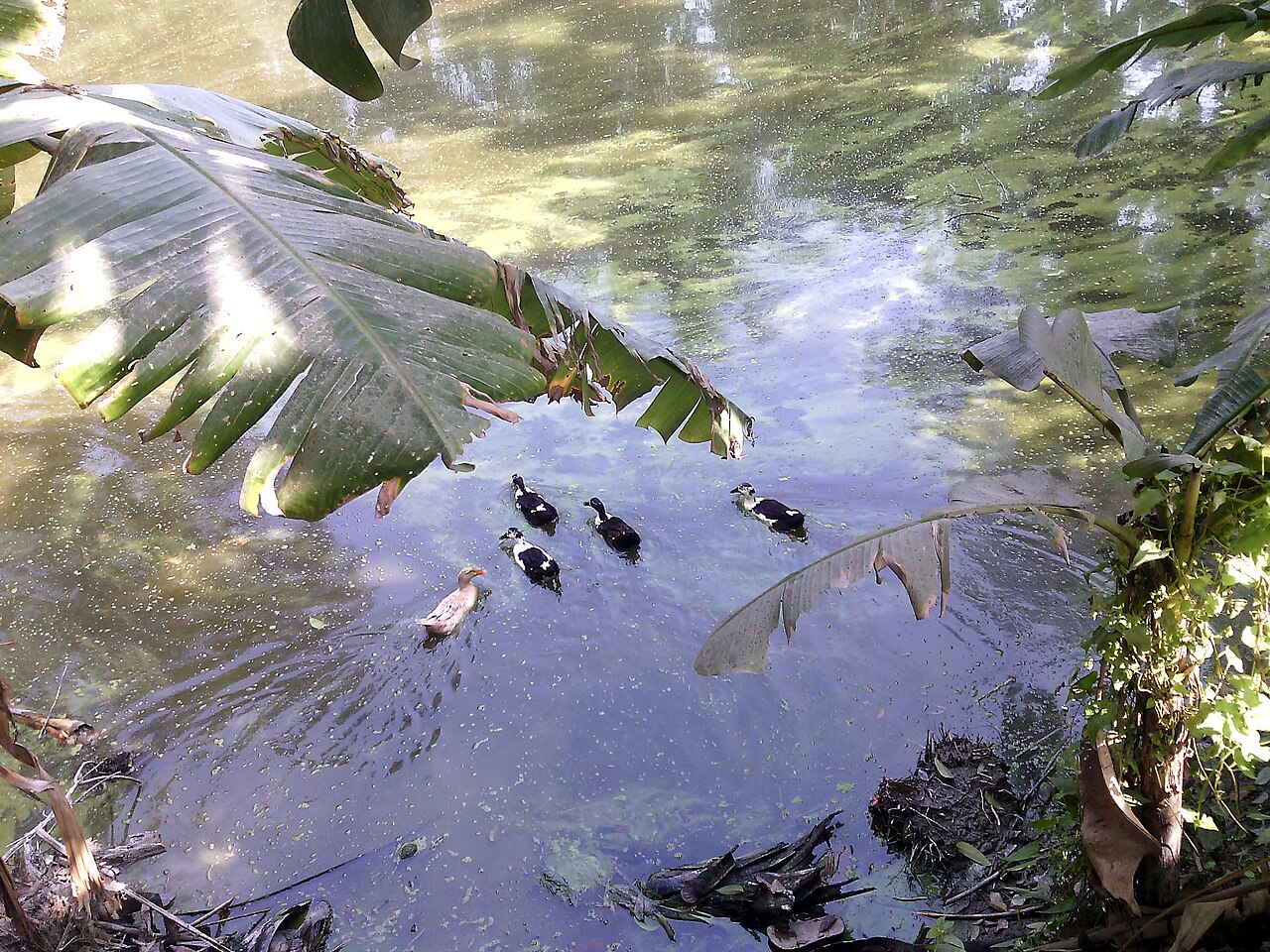
Bibi Rahima of Darbeshpur village, Kadirhanif union, Noakhali Sadar, started with 10 duck eggs from a neighbour. About 23 years ago she set them under her own country hen; all ten hatched and eight were female. From there she has built an integrated farm of about 16 acres on land leased from several owners.
The farm sits by a canal about five kilometres from the district town of Maijdee. Ducks swim across the fish enclosure, papaya, jujube and other native fruit trees line its banks, and beside them are bottle gourd and pumpkin plots and the cattle and goat sheds. Her husband and children help, and four or five labourers work there regularly.
With money from selling duck eggs she bought a nanny goat, then sold goats to buy a calf. The herd grew until at one point she had 21 milking cows. Today the farm has 8 cattle, 13 or 14 goats, more than 500 ducks and 350 country chickens, and the enclosure is stocked with rui, catla, tilapia and pangas.
Rahima says she does not buy seedlings or chicks from the market: she hatches ducklings and chicks on the farm and raises seedlings from seed, because bought ones often bring problems. The farm's income has paid for the schooling of her two sons and four daughters and the household's costs.
Two shocks hit her. In the Covid lockdown she could not buy feed, had to sell about 2,000 laying hens cheaply and pour away milk for want of buyers; she puts the loss at over Tk 50 lakh. Then the 2024 flood kept the farm under water for more than two months, washing away six cattle, about 2,000 ducks and some 350,000 pangas, and killing about 1,000 chickens.
Rahima says the flood cost her nearly Tk 1.75 crore, yet apart from some seed she received no government help and could not get a low-interest bank loan; she now owes more than Tk 1 crore. She is rebuilding the farm with loans from government and private lenders.
The report was filed by Mahbubur Rahman of Prothom Alo.
Photo: Ducks in a pond, Belayet2014 / Wikimedia Commons (CC BY-SA 3.0)
Source: Prothom Alo

Comments
(0)