
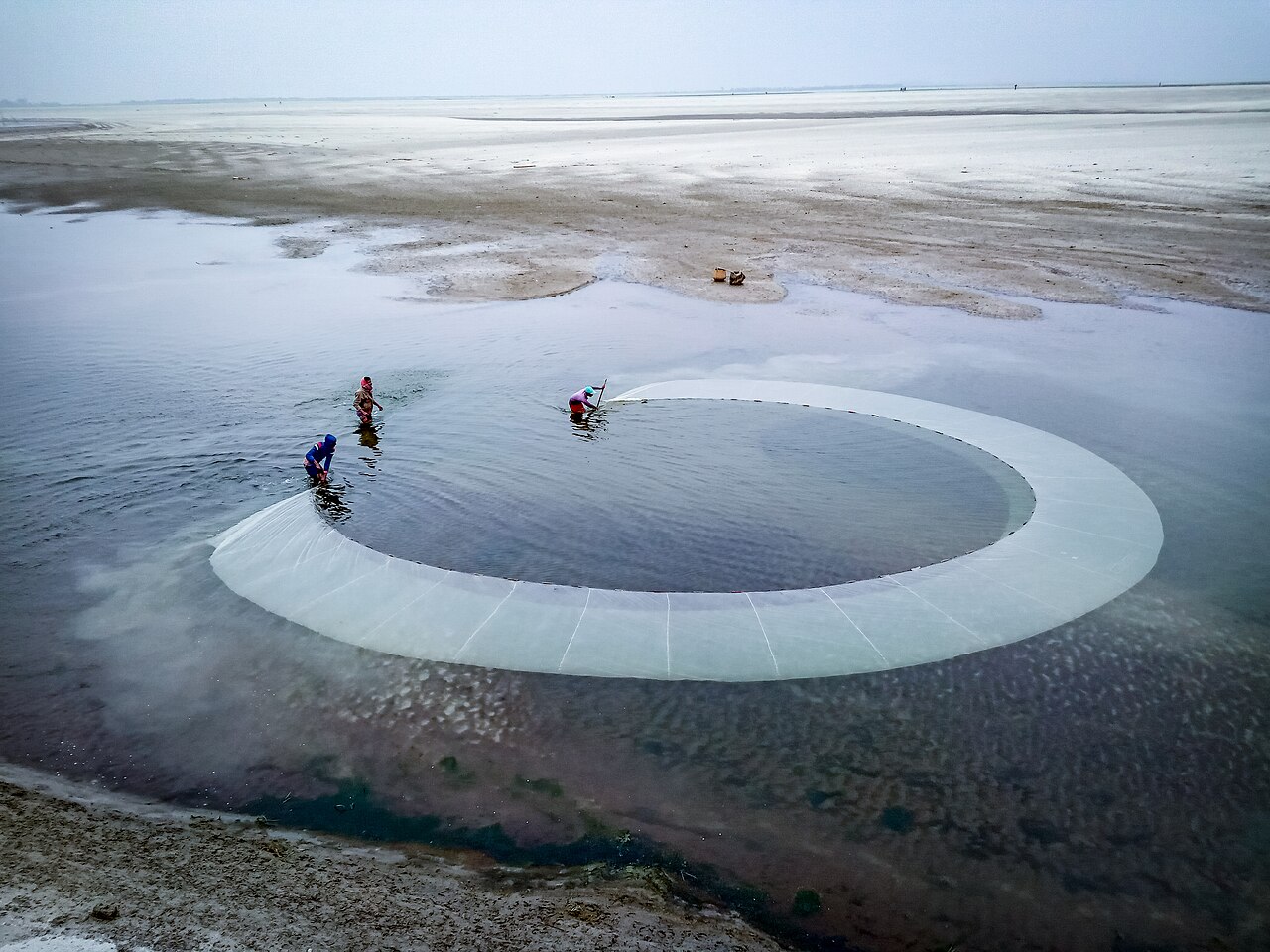
Hilsa, long associated with the rivers of southern Bangladesh, are also being caught in the Teesta and Brahmaputra in the north. Fish are now found in 11 upazilas of Kurigram, Gaibandha and Lalmonirhat in Rangpur division, though in small numbers. According to the Department of Fisheries, the three districts land 50 to 60 tonnes of hilsa a year on average; last season the catch was 48 tonnes.
The upazilas are Sadar, Nageshwari, Ulipur, Chilmari, Roumari and Rajibpur in Kurigram; Sadar, Sundarganj, Saghata and Fulchhari in Gaibandha; and Hatibandha in Lalmonirhat. During the 8 to 29 October ban, 1,600 fishers in the three districts received 25 kg of rice each. Fishing resumed when the ban ended, but many fishers cannot go out for want of boats.
Officials say the biggest obstacle is siltation. Kurigram district fisheries officer Zahirul Islam Akand said that alongside the loss of river depth, fishers lack technical support, and the ministry has been told in writing. Five to seven years ago hilsa were found at Mohipur in Gangachara on the Teesta; now they are rarely seen there. Retired fisheries survey officer Zubair Ali said that when the Teesta flowed strongly, hilsa came up from the sea to spawn, and restoring the river's depth is the only way to bring them back.
The numbers are hard for fishers too. Kurigram fisher Kanchan Kumar said a single fishing trip costs at least Tk 2,000, plus boat hire, and the catch rarely covers it. He said hilsa under half a kilo sell for Tk 500 to 600 a kilo on the Brahmaputra and larger fish for Tk 1,200 to 1,400. Abdul Gani, a Teesta fisher in Hatibandha, said his group has caught only 15 kg of hilsa from the Teesta this year.
Monjurul Islam, additional director of the Department of Fisheries in Rangpur, said siltation is reducing hilsa and other native fish, and the government is trying to start dredging the Teesta and Brahmaputra, which is expected to help hilsa and other native species return.
For riverside fishing families in the north, restored river flows and access to boats and nets could make hilsa a new source of income. The story is based on Banglanews24's report.
Photo: Ahamed Rafid / Wikimedia Commons (CC BY-SA 4.0)
Source: Banglanews24

Comments
(0)