
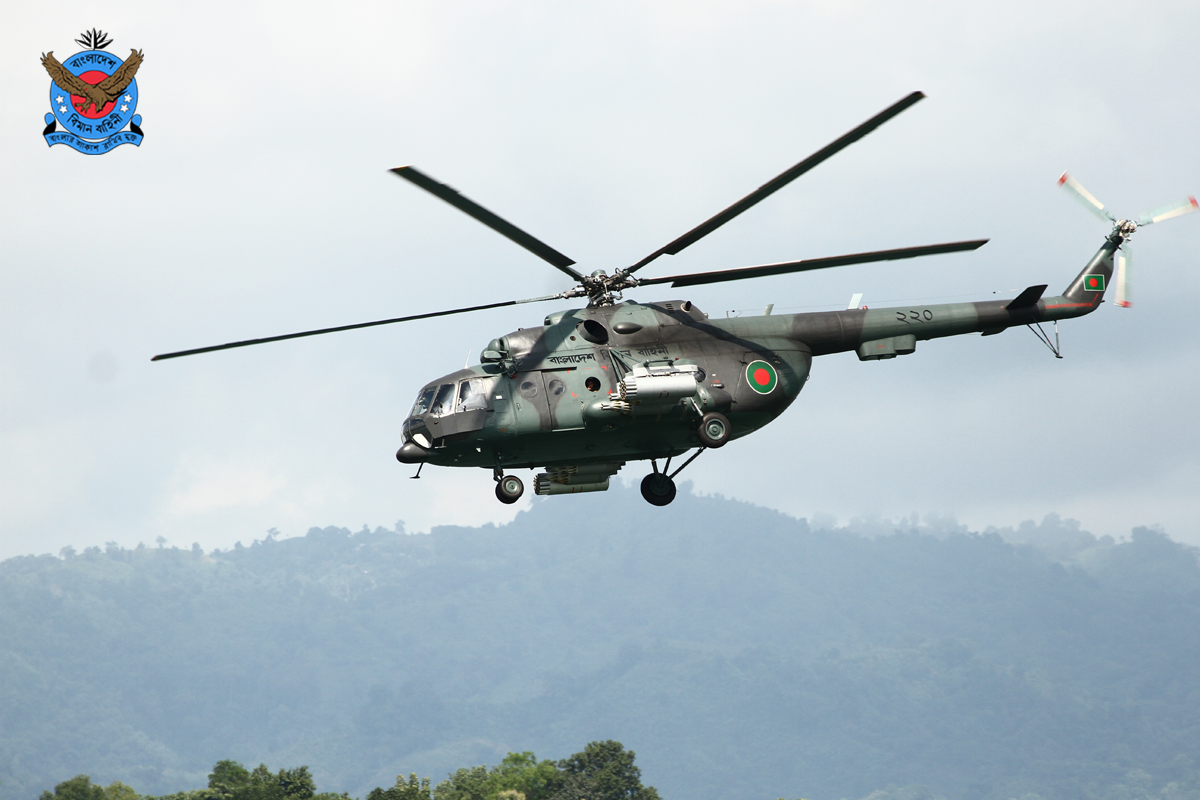
The Bangladesh Air Force flew helicopter surveillance over rivers and coastal waters during the Mother Hilsa Conservation Campaign 2026, which ran from 8 to 29 October to let breeding hilsa spawn undisturbed. The Inter Services Public Relations Directorate (ISPR) gave the details in a press release on Monday (2 November).
The missions flew from Dhaka, Jashore and Chattogram. Helicopters from Dhaka covered the rivers of Munshiganj, Madaripur, Shariatpur, Barishal and Bhola; those from Jashore covered Khulna, Bagerhat and Satkhira; and those from Chattogram covered the Kutubdia area.
According to ISPR, when crews saw fishing boats in the Madaripur and Shariatpur areas they warned them with a high-powered helicopter searchlight known as a "Night Sun", which helps spot boats on the river after dusk. Aircrews also wore night vision goggles, which let them detect banned fishing in low light.
The missions were coordinated over air-to-ground radio with law enforcement agencies on the ground and officials of the Fisheries Ministry. Beyond these areas, the Air Force has also been flying low-level surveillance along the coast as part of training sorties from its bases.
The work was carried out under "In Aid to Civil Power", and the release said it would continue in future to protect natural resources.
Keeping fishers off roe-laden hilsa in the breeding season means more juvenile and full-grown hilsa in the following months, which benefits coastal and riverside fishing families; night patrols during the ban are an important part of that protection. Source of the information: ISPR.
Photo: Bangladesh Air Force / Wikimedia Commons (CC BY-SA 4.0)
Source: Agricare24



Comments
(0)