
Prime Minister Tarique Rahman opened a tree-planting programme on the morning of Monday, 13 July 2026, on the bank of the newly excavated Sharikal-Batajor canal in Batajor union of Gournadi upazila, Barishal district. Jagonews24 reported that he planted neem and hog plum (amra) saplings to open the programme; the state news agency BSS, in its report filed that morning, described the two saplings as coconut and neem. Both reports said that 2,500 saplings were to be planted at the site that day.
A canal-bank planting in Batajor
The prime minister reached the canal bank at about 10am. The canal, which runs beside Batajor bazaar, is known locally as the Batajor canal. East of the bazaar it meets the Sharikal river and flows on into the Miarchar river, according to both Jagonews24 and BSS.
Housewives and farmers greeted the prime minister from one bank of the canal, Jagonews24 reported, and he waved back to the villagers. Information and Broadcasting Minister Zahir Uddin Swapan was with him, and BSS reported that the minister also planted a sapling. Prayers, a doa and munajat, were offered once the planting was over, BSS added.
Dhaka Times, in a report published at 10:37 that morning, described the event as the opening of the national tree-planting programme and said the prime minister took part in planting 2,500 trees through the Gournadi programme.
A call to care for every sapling
Opening the programme, the prime minister said the work would not end with planting a tree. Two and a half thousand saplings would be planted that day, he said, and everyone would have to look after them. BSS carried his words as a direct quotation: "Just as you care for a child after it is born, you must care for the young sapling every day in the same way."
Dhaka Times reported further remarks from the same event. The prime minister said the country had fewer trees than it needed, which was why a large-scale tree-planting initiative had been taken, and that 250 million (25 crore) saplings would be planted in different parts of the country over the next five years. He said climate change had altered the pattern of rainfall, with more rain than normal falling at times, and that there was no alternative to tree planting for keeping the environment in balance. Planting alone would not end the responsibility, he said: the trees had to be properly looked after and protected, and he urged every citizen to care for trees as well as plant them.
After the planting, the prime minister went to a family card distribution event in Batajor, where he was to hand family cards to the women who head households. He was then to travel by road to Barishal city, where another tree-planting programme was scheduled on the bank of the Sagardi canal beside the Trish Godown killing field. Dhaka Times noted that it was his first visit to Barishal since taking office as prime minister.
The five-year national campaign behind the event
The Gournadi planting belonged to a national plan announced the week before. At a press briefing at the Secretariat on Wednesday, 8 July 2026, the Ministry of Environment, Forest and Climate Change said the government planned to plant 250 million trees across Bangladesh over five years to restore the country's shrinking forest cover and biodiversity, Dhaka Tribune and The Financial Express reported. The ministry said the actual target was to plant 320 million saplings, because around 70 million might not survive; the aim was that at least 250 million trees would still be standing at the end of the five years. The Forest Department was preparing a policy to carry out the plan.
Bangladesh held its national observance of World Environment Day on 9 July that year, together with the annual tree-planting campaign, instead of on the global date of 5 June. The Environment Fair 2026, the National Tree Plantation Campaign and the National Tree Fair were to open that day at the Bangladesh-China Friendship Conference Center in Dhaka. Alongside the month-long fairs in Dhaka, tree fairs were planned for 15 days in all seven divisional headquarters, seven days in 56 district headquarters and three days in 29 upazilas.
The ministry said the planted saplings would be tracked through satellite-based geographic information systems (GIS), remote sensing and drones, with drones used for remote char areas, coastal regions and forests. A National Tree Database and Tree Monitoring System with a mobile application would record the location, survival and growth of each planted tree, and a special cell under the Prime Minister's Office had been formed to oversee the programme. The plan was expected to create around 350,000 green jobs over five years and to help establish 10,000 new nursery entrepreneurs, engaging rural women and young people in nursery work and in the care of trees after planting.
For that year, the ministry said the Forest Department was planting 15 million native saplings in treeless areas and along roads, canals, embankments and coastal belts, and was carrying out new afforestation on 4,800 hectares of recovered forest land. By 8 July the department had planted 8.33 million saplings, nearly 17 per cent of the year's target. The five-year programme itself had been inaugurated earlier at Dulahazara in Cox's Bazar.
Officials told Dhaka Tribune that the plan was divided into six components suited to the country's geographical, environmental and socio-economic conditions: coastal afforestation, forest restoration, urban forestry, community forestry, homestead and agroforestry, and production forestry, to be carried out in short, medium and long-term phases. The government would not give cash, saplings or land to planters; it would support individuals and organisations who planted trees voluntarily, while government agencies would pay for planting from their own budgets. Nearly 900 organisations had already applied for support.
Experts welcomed the plan but stressed care after planting. A former chairman of the Department of Botany at Dhaka University told Dhaka Tribune that trees must be cared for like children and planted so that at least three of every five survive, and that species should be chosen according to the land available, their root systems, canopy spread and local ecological conditions.
Why neem is on the priority list
The government said it would favour fast-growing indigenous species over exotic trees. The Forest Department's priority list, as Dhaka Tribune reported it on 9 July, included mahogany, gamar, jarul, kadam, agar, bamboo, shilkoroi, black plum, mahua, bohera, arjun, neem, haritaki, jackfruit and elephant apple. The government also planned to plant 100,000 neem saplings within 180 days. Casuarina was to be planted in coastal areas, and sundari, gewa, bain and goran were to be favoured in the Sundarbans.
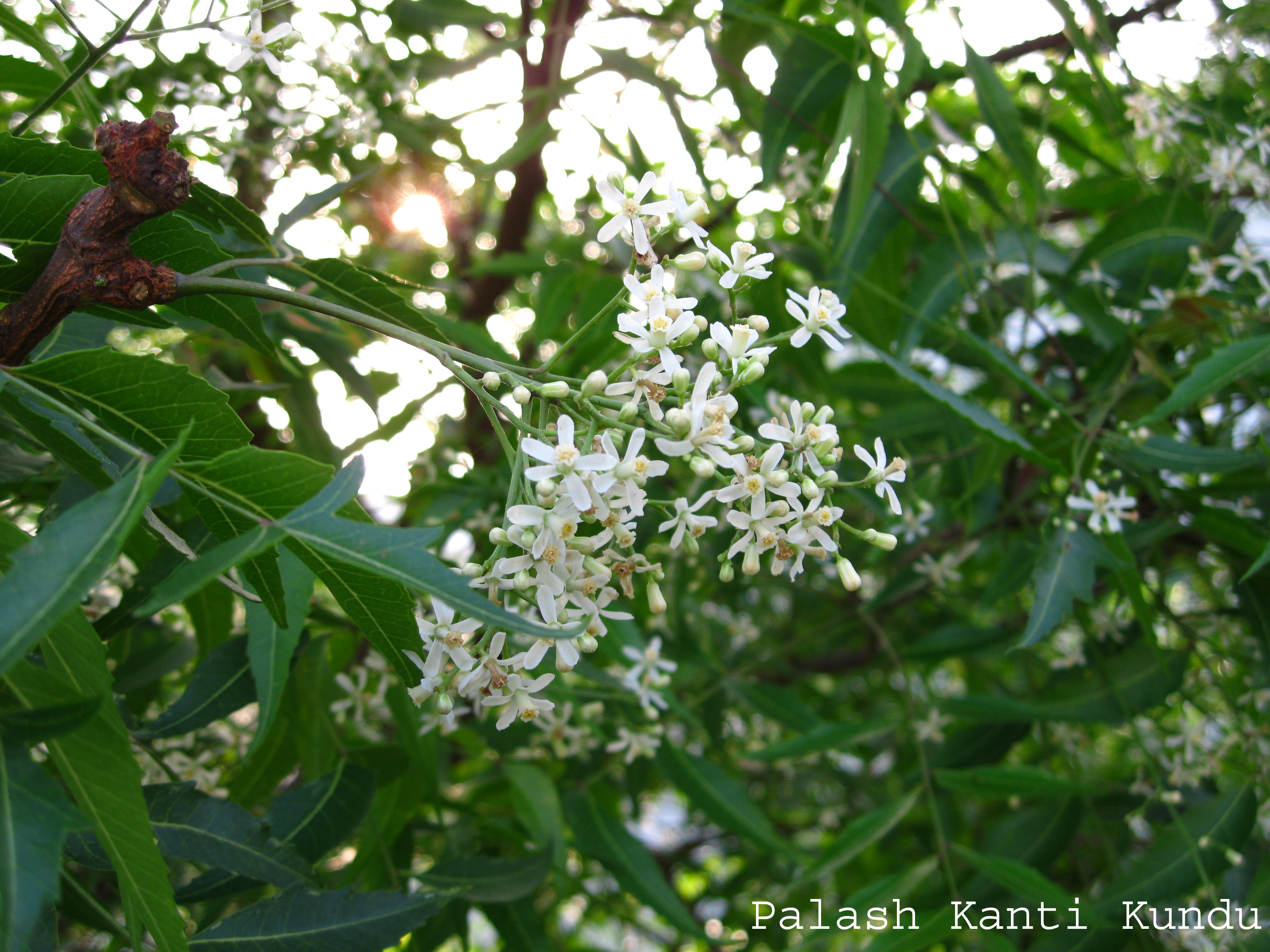
Banglapedia describes neem, Azadirachta indica of the mahogany family Meliaceae, as a deep-rooted, medium-sized and usually evergreen tree that normally grows 15 to 20 metres tall with a trunk 60 to 80 centimetres across. It branches early into a large, dense, rounded crown of bright green foliage, and it can shed its leaves in drier regions. Its flowers are small and sweet-scented; its fruits are small and one-seeded, sweet when ripe and a favourite food of birds; and its heartwood red, hard and durable. Neem is indigenous to Bangladesh, grows in abundance in the Barind Tract and is planted all over the country, especially in the drier parts. The encyclopedia calls it one of the most valuable multipurpose trees: its wood goes into house building and furniture and into carts, axles, yokes, oars, boxes, farm tools and drums, while its bark, gum, leaves and flowers are used in herbal medicine and its leaves against insect pests.
A 1992 report by the US National Research Council, Neem: A Tree for Solving Global Problems, describes the tree as native to India and Burma and prized for the shade it gives all year. The report notes that neem became a leading source of firewood on Ghana's Accra Plains and that extracts from its seeds and leaves affected more than 200 insect species in tests. One component, azadirachtin, disrupts the moulting of insect larvae, and another, salannin, acts as a strong repellent; neem compounds usually leave pests alive for a while but unable to feed, breed or develop. The same report records that neem products appeared to have little toxicity to warm-blooded animals, but it also records the deaths of a few young children in Malaysia in the 1980s that were linked to neem-seed oil given to them by their parents as a remedy. Neem is therefore not a home medicine: anyone considering it for a health problem should see a doctor, and farmers who want to use neem-based products on crops should ask the upazila agriculture officer for guidance.
Amra, the fruit Barishal is known for
The second sapling in the Jagonews24 report was amra, the hog plum. Banglapedia's entry on fruit lists the hog plum, bilati amra, as Spondias dulcis, among the fruits grown in Bangladesh. It notes that hog plum is one of the fruits that ripen outside the Madhu Mash season of Baishakh to Srabon, when mango, jackfruit, litchi and pineapple dominate, and it names hog plum among the seasonal fruits Bangladesh exports.
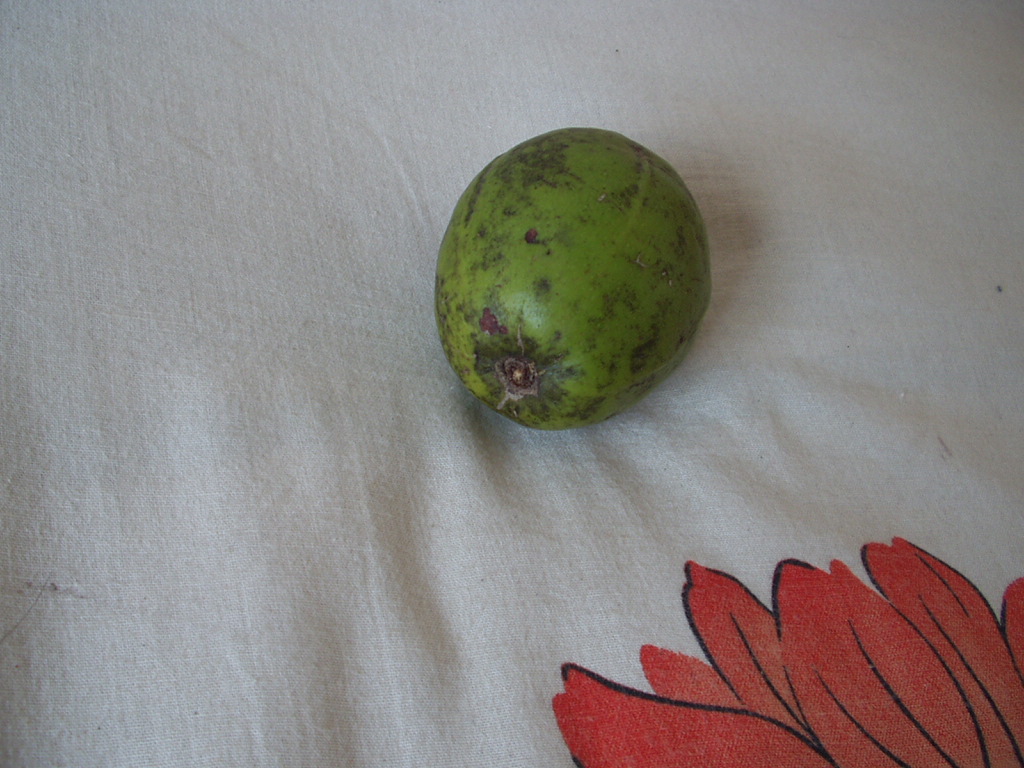
The horticulturist Julia F. Morton, in Fruits of Warm Climates (1987), describes Spondias dulcis, the ambarella of the cashew family Anacardiaceae, as a rapid-growing tree that usually reaches 9 to 12 metres outside its Pacific homeland. Its pinnate leaves, 20 to 60 centimetres long, turn yellow and fall at the start of the dry, cool season. The fruits hang in bunches, 6.25 to 9 centimetres long, and turn golden-yellow as they ripen; while still firm the flesh is crisp, juicy and slightly acid with a pineapple-like flavour, and if left to soften it becomes fibrous around a woody core. The tree is propagated easily from seed, which germinates in about four weeks, from large hardwood cuttings or by air-layering, and in India it is usually grafted onto the native Spondias pinnata. Seedlings may bear fruit at four years old. Because mature trees are brittle and apt to be damaged by strong winds, sheltered sites are preferred. Morton cites a vitamin C content of 42 milligrams per 100 grams of raw pulp measured in Hawaii, calls the fruit a good source of iron, and notes that unripe fruits are made into jelly, pickles and relishes.
Morton treats the amra, Spondias pinnata, as a close relative that some botanists consider a wild form of S. dulcis. It grows wild and in cultivation from the Himalayas of northern India to the Andaman Islands; its leaves are not toothed and its fruit is smaller, but it has the same uses, and its sour leaves and flowers are eaten as flavouring, especially in curries.
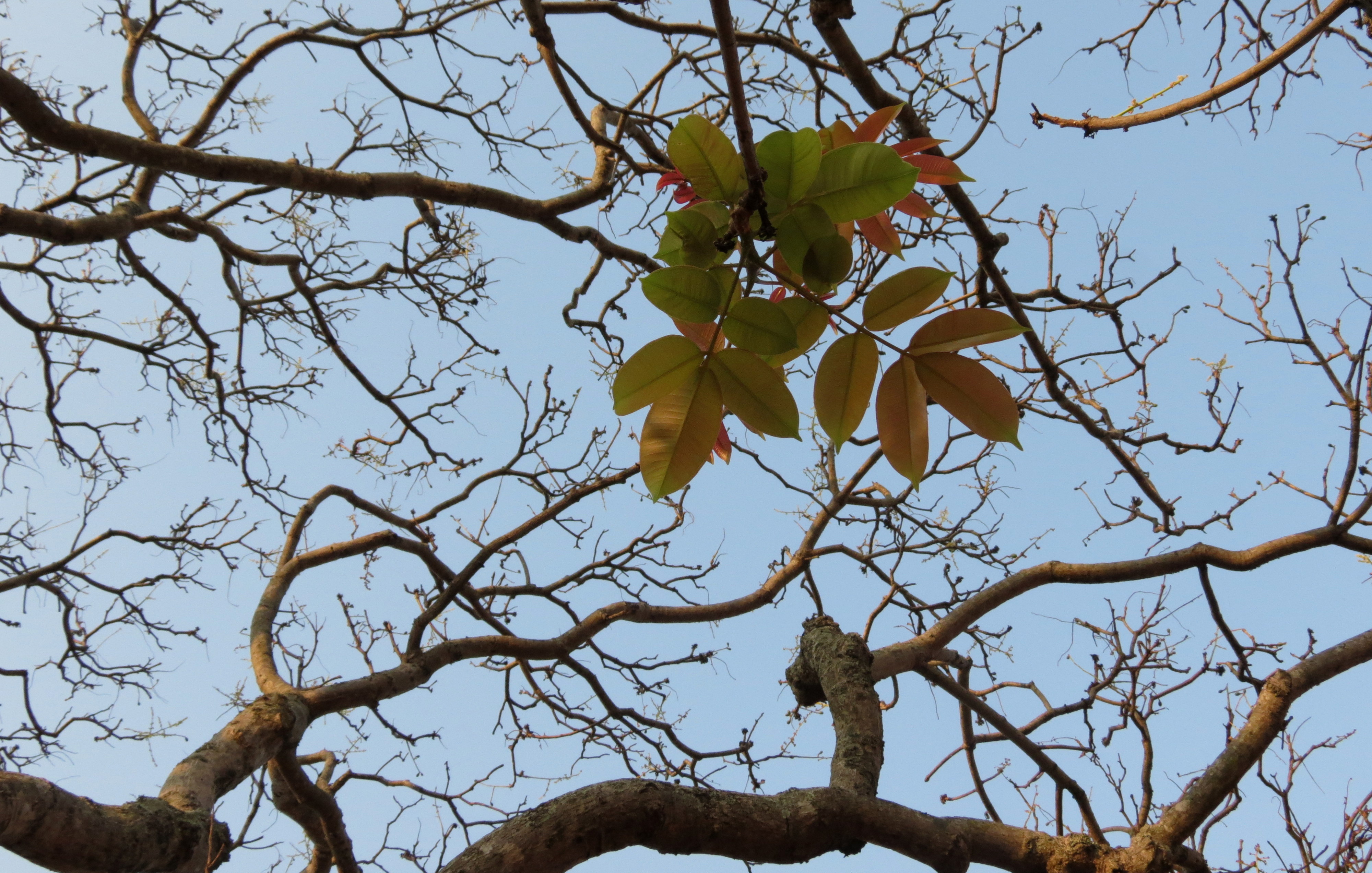
Amra has a particular place in Barishal. Prothom Alo reported on 8 May 2025 that the Ministry of Industries had given Barishal's amra geographical indication (GI) recognition at an event marking World Intellectual Property Day on 30 April 2025. Amra is grown in all six districts of Barishal division, the paper said, with the largest output in Jhalakathi Sadar and in Nesarabad upazila of Pirojpur, where there are hundreds of orchards and farmers have grown the fruit commercially for generations.
Citing the Department of Agricultural Extension (DAE), the same report put the area under amra in the division at 1,855 hectares and the average annual production at 24,684 tonnes. Pirojpur produced the most, 8,677 tonnes, followed by Jhalakathi with 4,578 tonnes and Barishal with 3,384 tonnes; Jhalakathi led in area, with 602 hectares. Farmers said the amra season begins once the guava season ends, usually from the Bengali month of Bhadra, and lasts about two months. That year drought and unusual heat had made flowers drop, and a DAE official in the division advised growers to water the base of the trees regularly to keep the soil moist.
Coconut, the sapling BSS named
BSS named coconut alongside neem. Banglapedia describes the coconut as a tall, unbranched palm of the tropics that grows best on low land near the sea and on small islands; in Bangladesh it grows everywhere, though it yields best on the saline soils of the coast. The varieties grown in the country are Typica green, Typica brown and Dudhe. Banglapedia's entry on fruit adds that coconut grows abundantly in the southern and central parts of the country, that a tree bears 70 to 80 nuts on average, and that it can be harvested throughout the year. The palm is widely planted as a homestead tree in central and southern Bangladesh, for its fruit and for its many other uses: the kernel goes into pitha, sweets and cooking, the oil into cooking and cosmetics, the fibre into rope, brushes and mats, and the trunk into posts and beams.
Gournadi and its farms
Gournadi, where the programme opened, is an upazila of Barishal district covering 150.54 square kilometres. Banglapedia records that it is bounded by Kalkini upazila to the north, Wazirpur to the south, Babuganj, Muladi and Kalkini to the east, and Agailjhara and Kotalipara to the west. Its main rivers are the Arial Khan, the Nunda and the Agarpul, and it has 215 kilometres of waterways. Gournadi police station was established in 1806 and became an upazila in 1982. The 2011 census counted 188,586 people.
Agriculture is the main source of income for 51.59 per cent of Gournadi's people, according to Banglapedia. The main crops are rice, wheat, potato, betel leaf and vegetables, and the main fruits are mango, jackfruit, banana, litchi, jamun, palm, coconut and papaya. Batajor, the union where the canal runs, is home to the Batajor Ashwini Kumar Institution and holds a Paus Sankranti fair that the encyclopedia lists among the upazila's noted fairs.
Barishal district itself covers 2,784.52 square kilometres. Banglapedia records that Bakerganj district was established in 1797 and later renamed Barishal, and that Barishal became a division on 1 January 1993.
Planting drives since the 1960s
Planting trees along canals and roads is an old practice in Bangladesh's forestry. Banglapedia's account of social forestry traces the national campaign to 1962-63, when two forest extension divisions were set up at Rajshahi and Dhaka and a tree-planting day on 1 June was introduced. The campaign was later stretched from a day to a week, then to a month and finally to a three-month period, though at first its activities were confined to nurseries and ceremonial planting at district headquarters.
Social forestry in the full sense began with a community forestry project financed by the Asian Development Bank, which ran from 1982 to 1987 in seven districts: Dinajpur, Rangpur, Pabna, Rajshahi, Bogra, Kushtia and Jessore. Its main components included about 4,800 kilometres of strip plantations along road, railway and canal embankments, and it brought women into community forestry for the first time. A follow-up Upazila Afforestation and Nursery Development project set targets that included 17,760 kilometres of strip plantation along road, railway and canal embankments and 345 nurseries at upazila complexes. A Coastal Green Belt project, started in 1994-95 in ten coastal districts, aimed to reduce loss of life and property in cyclones by increasing tree cover.
In June 2024 the environment ministry gave the more recent record to the news agency UNB, as Dhaka Tribune reported: from 2009-10 to 2022-23 about 217,402 hectares of block plantations and 30,252 kilometres of strip plantations had been established, and more than 112 million seedlings distributed and planted. From 2009 to 2023, 160,699 social forestry beneficiaries had received dividends totalling Tk 32.695 billion. The plan for that monsoon season was to plant 83.33 million seedlings across the country.
How much of Bangladesh is under trees
The most recent national figures available at the time came from the Forest Department's survey of the country's forest and tree resources. In March 2021 the environment ministry announced, on the basis of the department's report on Bangladesh's forest and tree resources for 2019, that tree-covered land had increased to 22.37 per cent of the country's total land area, The Financial Express reported. The ministry said at the time that steps had been taken to raise the share of land under trees to more than 24 per cent by 2025.
In June 2024 the ministry set targets of expanding tree cover from 22.37 per cent to 25 per cent of the total land area by 2030, and forest coverage from 14.1 per cent to 16 per cent, in line with the aim of land degradation neutrality by 2030 under the UN Convention to Combat Desertification. A national forest survey was then under way to measure tree cover and carbon. When it announced the five-year plan in July 2026, the ministry again described the purpose as restoring the country's shrinking forest cover and biodiversity, the goal the saplings on the Batajor canal bank were meant to serve.
Photo: Palash90 / Wikimedia Commons (CC BY-SA 3.0)
Sources: Jagonews24, BSS, Dhaka Times, Dhaka Tribune, The Financial Express, Prothom Alo, Banglapedia, US National Research Council (Neem: A Tree for Solving Global Problems, 1992), Julia F. Morton: Fruits of Warm Climates (Purdue University)

Comments
(0)