
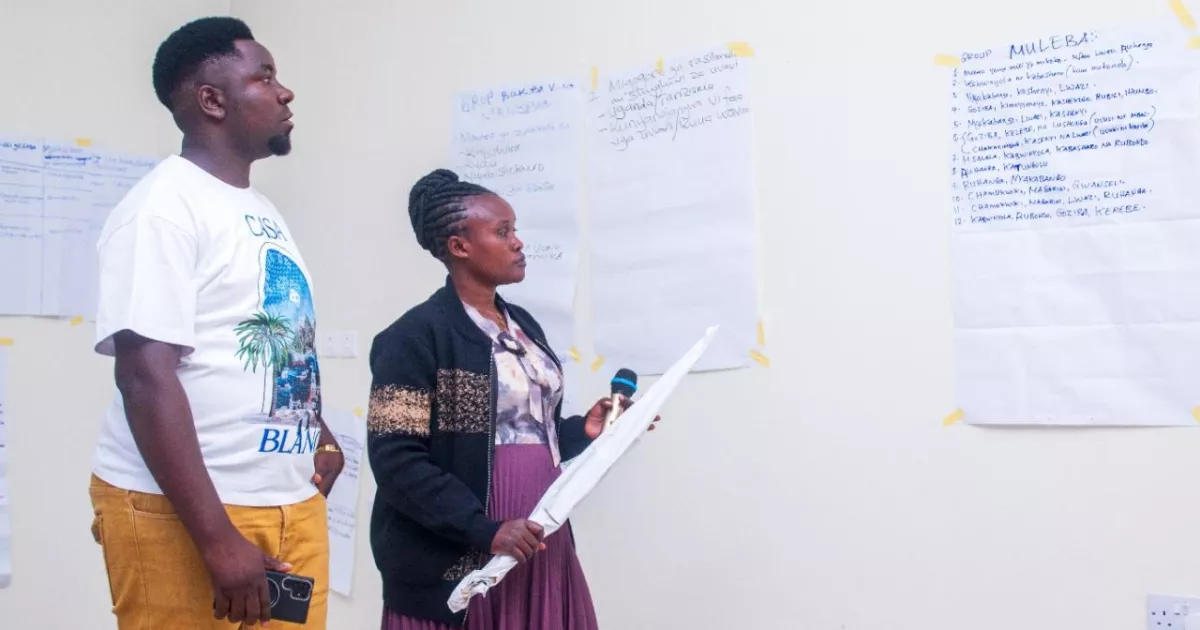
Fishing communities on the Tanzanian shore of Lake Victoria have drawn up a locally led plan to adapt to a changing climate, after a scenario-planning exercise convened by WorldFish with the Environmental Management and Economic Development Organization (EMEDO) and Tanzania's Department of Fisheries. Twenty-five stakeholders, 11 women and 14 men, from Muleba and Bukoba districts took part in May 2026.
Across the Lake Victoria Basin more than 40 million people in Burundi, Kenya, Rwanda, Tanzania and Uganda face growing risks from heavy rain, flooding, storms, drought, shoreline erosion and fluctuating lake levels. Communities that depend on fisheries and aquaculture for food, income and jobs are among the most exposed.
Participants described rain that no longer keeps to its season. Erratic weather disrupts both fishing and fish processing, especially from March to May and sometimes through to September. "We are experiencing heavy rainfall even during months when, in the past, we would not expect any rain," one processor said, adding that it is hard to source fish during long wet spells.
Rising water temperatures are pushing species such as Nile perch away from their usual grounds, so fishers travel further and work harder for the same catch. Fluctuating lake levels are affecting breeding grounds and making fishing more dangerous, with rising water bringing hazardous conditions and putting some fishing grounds out of reach.
Using climate scenario analysis, the group set four objectives: to strengthen ecosystem resilience by protecting habitats; to reduce livelihood losses through better post-harvest technology, such as solar dryers and smoking kilns, and diversification of income; to improve preparedness through climate information services and early warning; and to strengthen local governance with real participation by women, youth and vulnerable groups.
The plan provides for regular review meetings and periodic updates as new evidence emerges. The WorldFish authors, Keagan Kakwasha, Lucy Kilanga, Netsayi Mudege, Thomas Kitinya Kirina and Thijs Schut, present it as a model of adaptation designed by the people who fish, process and sell on the lake rather than for them.
Source: CGIAR
Comments
(0)