
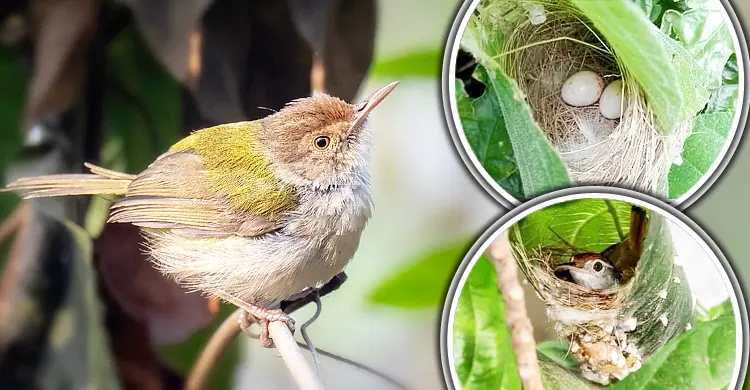
"Whatever treasure the king has, the Tuni has too" - many will remember this rhyme of rural Bengal. The story is well known: the gold coins from the king's chest were put out to dry in the sun, and at dusk the king's men forgot to take one in. The Tuni found the coin, kept it, and in her joy kept repeating that line.
Even those who have never seen one know the tuntuni bird through the story. Once this charming little bird was found everywhere in rural Bengal, and its chirping filled the countryside. Now, perhaps, it is not seen so often.
Tailor of the bushes
The tuntuni's scientific name is given as Orthotomus atrogularis and its English name as dark-necked tailorbird. It rolls leaves into a cone and stitches them with its beak to build its nest, which is why it is also called the "tailor bird". It is about 13 cm long, with a whitish breast and belly, reddish olive upper wings and head, and an upright tail with dark marks.
There are 15 species of tuntuni in the world. Bangladesh has the black-throated, hill and common species. They mostly nest in bean, bottle gourd, jackfruit, sunflower, lemon, custard apple, fig and almond plants. Male and female build the nest together, and their workmanship is so fine that it stands apart from other birds'.
The tuntuni usually eats insects. It also eats earthworms, bees and nectar, and its diet includes leaf insects of paddy, jute and wheat, caterpillars and their eggs. It breeds all year round, but its main breeding season is the monsoon.
The tuntuni is a very clever bird. It likes to live in the bushes around homes, sheltered by people. Restless and lively, it never sits in one place; here one moment, gone the next.
Under threat
With trees, bushes, canals, beels, rivers and streams being destroyed and the effects of climate change, this native bird is slowly heading towards disappearance. To save it from extinction, the natural balance must be kept and its habitats protected. Habitat loss is making it hard for the tuntuni to lay eggs and breed, so we must come forward to protect it.
Source: Jagonews24. First published in Bengali on The Agro News.

Comments
(0)