
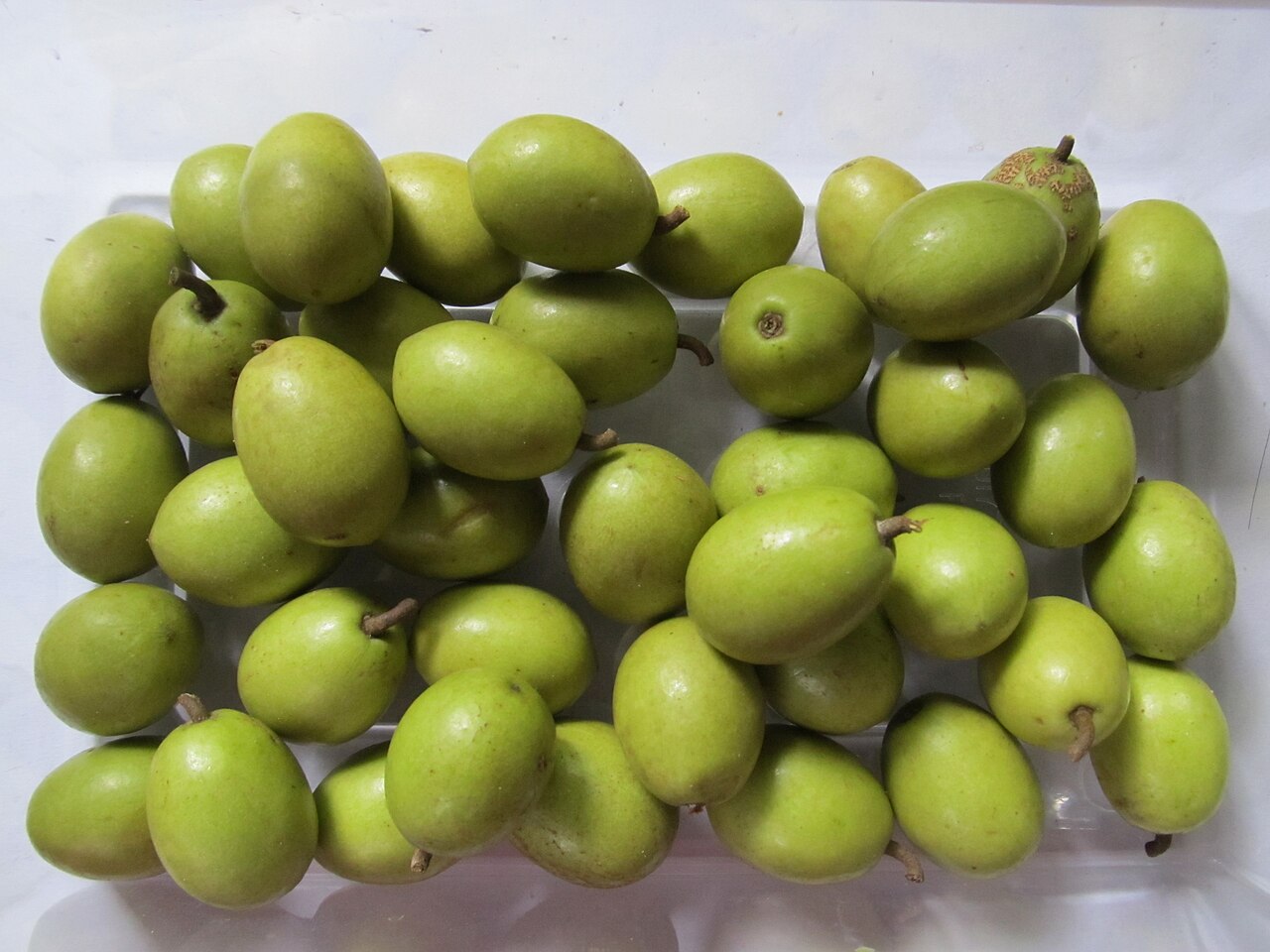
Satkora prices have risen in the markets of Nabiganj in Habiganj. At Debpara and Aushkandi bazars beside the highway, sellers are asking Tk 80 to Tk 200 for a hali (four fruit), depending on size. Kajal Mia of Aushkandi said satkora that sold for Tk 80 a hali a week ago cost him Tk 180 after bargaining.
Expatriates living in London are big buyers of this fragrant sour fruit of the Sylhet region. Sabina Yasmin, a London-based homemaker buying satkora at Debpara bazar, said a hali of the best fruit costs Tk 150-200 at home but GBP 20-25 - Tk 3,000-4,000 - in London, so she would buy extra and dry it to take back.
Round like an orange but larger, satkora has a thick rind and very little flesh; its aroma is what sets it apart. The thorny tree, like a lemon tree, grows 20 to 25 feet tall, flowering in Falgun (February-March) and fruiting in Jyoishtho-Asharh (May-July).
The fruit originates in the hills of Assam in India. It was once grown on the hillocks of Nabiganj, Chunarughat, Jaintiapur, Jaflong, Beanibazar, Golapganj, Chhatak, Barlekha, Companiganj, Sreemangal, Kulaura and Kamalganj; today it is grown mostly in Meghalaya and Assam. According to import figures from the Sylhet border points, 216 tonnes of satkora enter Bangladesh a year, and more crosses the border illegally.
Nabiganj upazila agriculture officer Fazlul Haque Moni said demand for satkora was very high across Sylhet, and the hilly Dinarpur area of Nabiganj was suitable for growing it; the agriculture department was encouraging farmers to cultivate it there.
Reported by the Nabiganj (Habiganj) correspondent of Samakal.
Source: Samakal

Comments
(0)