
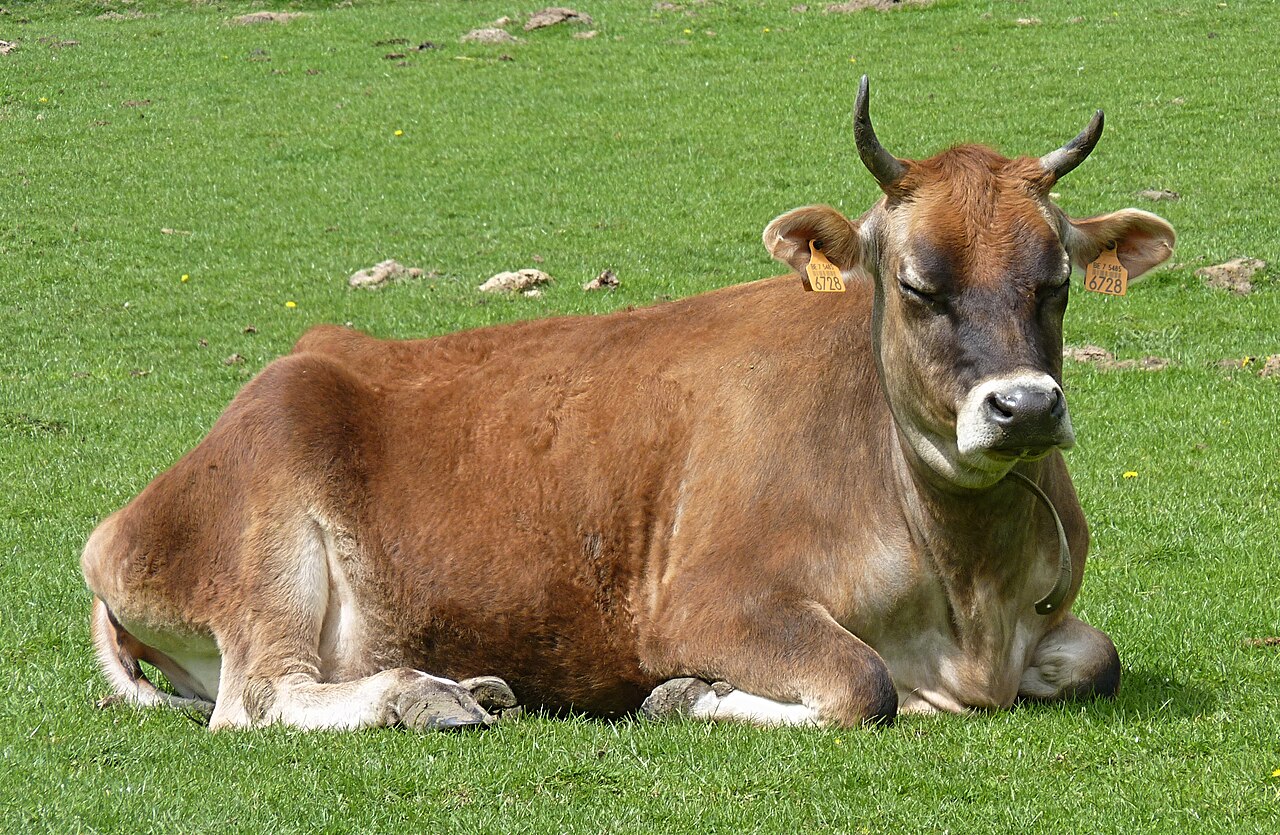
When the price of raw milk stopped covering the cost of producing it, Matthew Fraser-Jones turned his family's small dairy near Stanford in South Africa's Western Cape into a cheese business. "If I sell the milk, it does feel to me like I'm giving gold away," he told Henning Naude of Farmer's Weekly.
The family bought Stonehouse Cheese Estate in 2013 and began making cheese around 2016. Roughly half of each day's milk now goes into cheese and the rest is sold to neighbouring Klein River Cheese. Output has grown from about 250 litres a day when the cheesery opened to 2,000 to 3,000 litres a day, depending on the season.
The herd is almost all Jersey, kept for the butterfat and protein that cheesemaking needs. He milks about 150 cows, down from a peak of about 350, to match what the grazing can carry. Breeding is mostly by artificial insemination with easy calving as the first priority; about 30% of the herd is bred to Angus and 70% to Jersey, with a conception rate of around 92%.
The farm covers about 240 hectares, of which some 130 are usable and about 25 are irrigated. Pasture is the backbone of the feed, with oats, black oats, barley, ryegrass, chicory and lucerne, and babala, lucerne and teff in summer. Cheese has changed the feeding: he no longer uses silage, because bacteria from silage can survive into the milk and cause "late blowing", gas that makes maturing hard cheese swell and crack.
Cows give 18 to 24 litres a day in the growing season and 13 to 17 litres in the dry season. In the cheesery the milk is filtered again and pasteurised; the range centres on Camembert and Brie, with harder cheeses such as Bergkaas and Boerenkaas. Whey goes to pigs on the farm, an extra income, and offcuts become grating cheese.
Stonehouse sells mostly to restaurants and wine farms and through a few distributors, and took two third places at this year's South African Dairy Championships. Fraser-Jones now plans a butchery for the whey-fed pigs. For a small dairy, he says, cheese has provided a living that a milk cheque alone could not.
Photo: Jamain / Wikimedia Commons (CC BY-SA 3.0)
Source: Farmers Weekly South Africa

Comments
(0)