
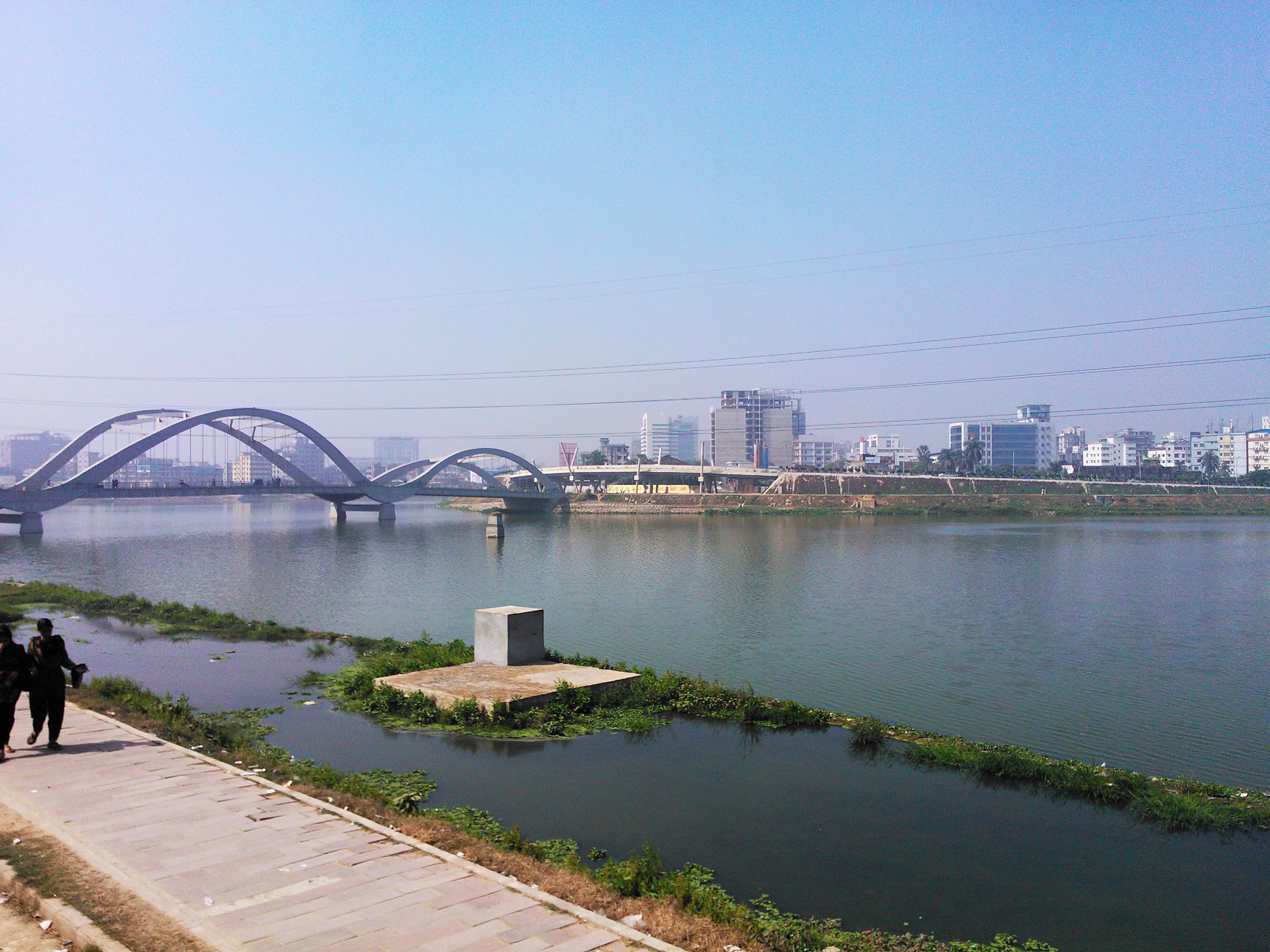
On 5 February 2026, the 23rd day of the Bengali month of Magh in the year 1432, the Dhaka news site Jagonews24 published a seasonal feature on the turn from winter to spring in the capital. Written by the site's sub-editor Jannat Srabony and illustrated with photographs by Mahbub Alam, it described dry leaves dropping from the trees, young green leaves breaking from the branches and the scent of mango blossom on the air, and it found the clearest signs of the change at Hatirjheel, the lake and road network in the middle of Dhaka. The feature appeared in the last weeks of the Bengali winter, before the spring months on the Bengali calendar had begun.
What the feature described
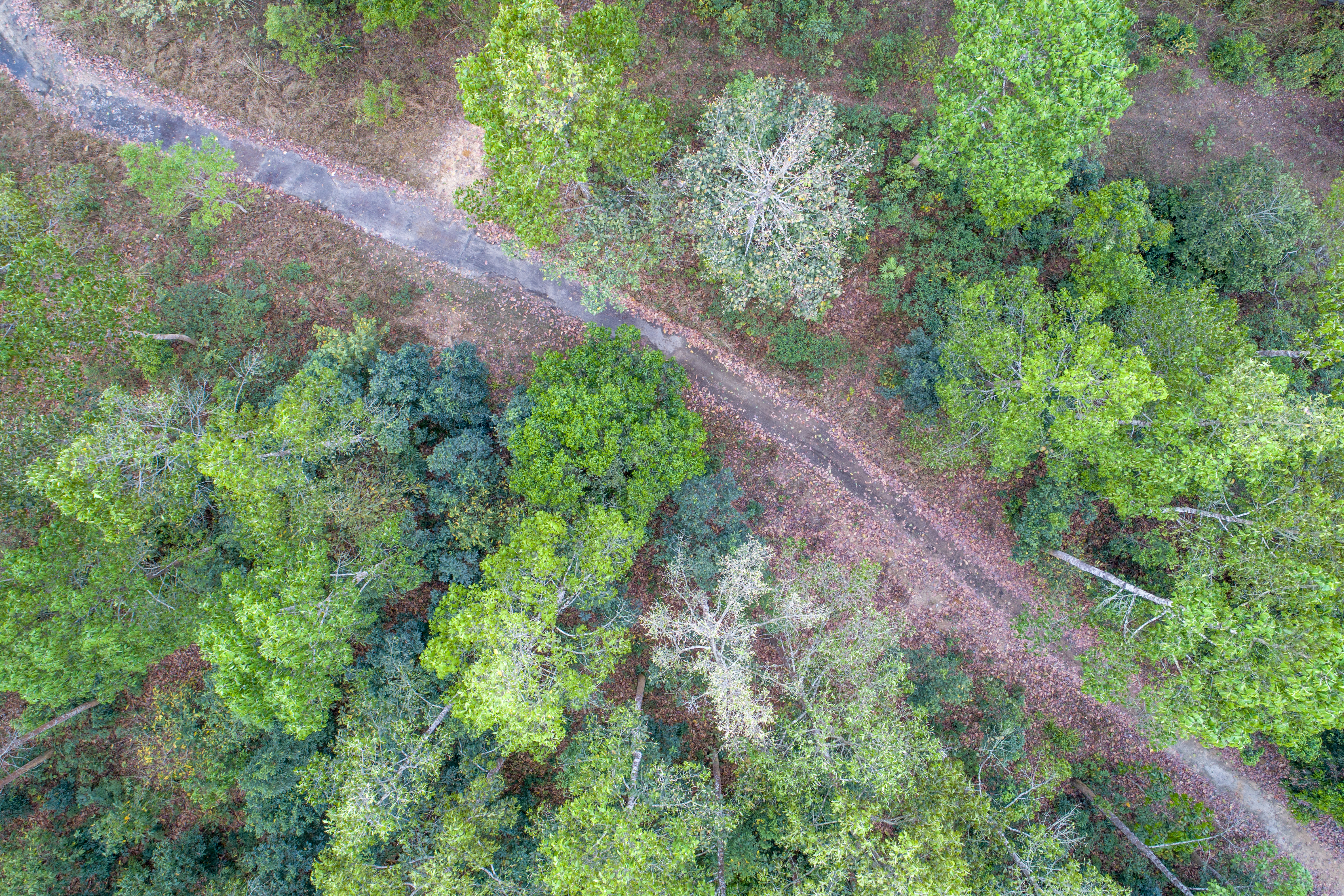
The feature opened with the end of winter. As the cold season's fog and chill wind lifted, it said, a softer warmth was spreading and nature was opening a new chapter, shedding the old to take on the colours of new life. Its central picture was the leaf fall itself: dry leaves coming down one by one from the branches, and, in the heaps of fallen leaves on the ground, the first preparation for new growth. Tender leaves were pushing out of the twigs and branch joints, and the writer read the scene as a reminder that an ending is not a stop but another name for a beginning.
The second sign was a smell rather than a sight. The sweet scent of mango blossom, the feature said, was mixing with the breeze, and even in the bustle of the city it announced that spring had come, so that a passer-by could sense the season's message without seeing a single tree. Trees were coming into flower in yellow in one place, in pale purple in another and in still white elsewhere, and the writer described this quiet show of colour as something that lightens the mind without our noticing.
The third part of the feature took the reader to Hatirjheel. Even there, it said, the trees standing between concrete and traffic jams had not ignored the season's call. Rows of trees beside the water were glinting with new leaves and the scent of flowers drifted on the air, so that Hatirjheel felt like a piece of village spring in the heart of the city. The feature ended on the human side of the change: spring, it said, does not only change nature's colours but brings a quiet joy, helping people shake off fatigue, gloom and inertia and think afresh, just as trees come back to life at the end of winter. The scene at Hatirjheel, the writer concluded, showed that nature speaks even in the city to anyone who has time to stop and listen. Mahbub Alam's lead photograph carried the caption "Nature has dressed in new colours".
Still Magh: where 5 February falls in the Bengali year
Bangladesh is known as the land of six seasons, and the Bengali calendar gives each season two months. According to Banglapedia, the national encyclopaedia published by the Asiatic Society of Bangladesh, winter (shit) covers Paus and Magh, from mid-December to mid-February, and spring (basanta), the last of the six, covers Falgun and Chaitra, from mid-February to mid-April. A feature dated the 23rd of Magh therefore stood near the end of the calendar winter, with Falgun, the first month of spring, still ahead.
The Bengali calendar itself, the Bangla San or Bangabda, is a solar calendar. Banglapedia records that it grew out of the Tarikh-e-Elahi promulgated by the Mughal emperor Akbar in 1584 to collect land revenue in step with the harvest, since the lunar Hijri year drifted away from the farming seasons. Baishakh was made the first month of the new era, and the month names were taken from stars: Magh from Magha (Regulus) and Falgun from Falguni (Leonis). To make the calendar more exact, a committee set up under the Bangla Academy on 17 February 1966, under the guidance of Muhammad Shahidullah, recommended that the months from Baishakh to Bhadra have 31 days each and the months from Ashvin to Chaitra 30 days, with Chaitra taking 31 days every fourth year.
Meteorologists divide the year differently. Banglapedia's climate entry, written by Rafique Ahmed, recognises three distinct seasons in Bangladesh: a cool dry season from November through February, a pre-monsoon hot season from March through May and a rainy monsoon season from June through October. In that scheme March "may also be considered as the spring season", and the encyclopaedia's season entry notes that the spring is very brief in Bangladesh and "practically prevails during March only". Early February, in other words, is still winter both on the Bengali calendar and in the weather records, which is why the feature spoke of the first signs of spring rather than of spring itself.
A cool, dry season, not a damp one
The original feature spoke of winter's "damp" lifting. The climate records describe the season the other way round: winter in Bangladesh is the driest part of the year. Banglapedia states that the cool dry season accounts for only 2 to 4 per cent of the year's rainfall, from less than 2 cm in the west and south to slightly over 4 cm in the north-east, where the Meghalaya Plateau lifts the moist air. What little rain does fall comes with winds from the Mediterranean region that enter through north-western India along the Ganges basin, and these spells bring the temperature down.
In winter a centre of high pressure lies over north-western India, and a stream of cold air flows from it into Bangladesh, so that winds inside the country generally blow from the north or north-west. Winds are light, about 3 to 6 km an hour against 8 to 16 km an hour in summer. Cloud cover is at its lowest, about 10 per cent over almost the whole country. January is the coldest month, and in late December and early January the minimum temperature in the extreme north-west can fall to 3 or 4 degrees Celsius. Nights are longer than days and mornings are often foggy, which is the "fog and cold wind" the feature described as lifting. In the eastern part of the country, which includes Dhaka, January to March are the least humid months of the year.
The same entry sets out what spring brings. Winds turn variable in direction as the northerly winds of winter give way to the southerly and south-westerly winds of summer, and the weather is normally pleasant, with cloud cover of 20 to 25 per cent, average March temperatures of 22 to 25 degrees Celsius across the country and relative humidity of 50 to 70 per cent. Temperature, cloud and humidity in the early part of the season are lower than those averages, and isolated afternoon thunderstorms may come, especially in the second half of March. Banglapedia calls spring "the king of seasons" (ritu-raj in Bengali): a time of clear skies, balmy southern breezes and plants sprouting new leaves.
Why trees drop their leaves at the end of winter
The leaf fall at the centre of the feature has a plain botanical explanation. Banglapedia's entry on the seasons says directly that winter "is the time when deciduous trees shed their leaves". A deciduous forest, in the encyclopaedia's definition, is one whose main trees shed their leaves during winter or the dry season to reduce the loss of water through transpiration, the evaporation of water through the leaves.
Botanists call the shedding of a leaf abscission, from the Latin word for cutting away. A review in the journal Advanced Biotechnology, published in September 2024, describes it as the natural separation of leaves, branches, flowers or fruits from the parent plant, set off by ageing or by outside signals such as drought, darkness, extreme temperature, nutrient shortage, disease or pests. The separation happens at a narrow band of cells called the abscission zone, which forms early in a leaf's life at the base of its stalk. The review describes the process in overlapping steps: the zone is formed, it is activated, the tissue detaches, and a protective layer forms over the scar left on the branch.
The same review explains why shedding helps the tree. A leaf fall triggered by drought reduces the leaf area through which water is lost and prepares the plant for further dry spells. Before an old leaf drops, mobile nutrients, including nitrogen, phosphorus and potassium, are drawn out of it and moved to the young tissues that continue to grow. The fallen leaves then have a job of their own: in forests the leaf litter takes part in nutrient and carbon cycling and forms a protective layer on the soil surface that regulates the soil's microclimate. That is the scientific basis for the feature's image of new life being prepared in the heaps of dry leaves on the ground.
Even trees that never stand bare follow a cycle of loss and renewal. A study in the journal The Innovation, published in 2021 and covering 68 evergreen broadleaved tropical and subtropical forests, notes that although these forests keep a canopy all year, their leaves are continuously shed and replaced. As moisture declines, it found, trees shed leaves to reduce transpiration and the risk of hydraulic failure, while more light promotes the replacement of old leaves with efficient young ones. A sunny late-winter month after a dry season brings both conditions together, which helps explain why old leaves drop and new ones break out on the same trees within weeks.
The deciduous trees of Bangladesh
The country's own deciduous forest is the sal forest. Banglapedia says sal, Shorea robusta, makes up about 90 per cent of the main trees in Bangladesh's tropical moist deciduous forests. The tree grows 10 to 25 metres tall and most of its leaves drop off during winter, and these forest areas receive about 2,000 mm of rain a year. The sal forests now lie in the Dhaka, Mymensingh, Nawabganj, Rangpur, Dinajpur and Comilla regions, in two main belts covering about 107,000 hectares. The larger, known as the Madhupur Garh, lies between the Brahmaputra and the Jamuna rivers and is about 80 km long and 7 to 20 km wide; the smaller runs for about 60 km along the foothills of the Garo hills in Sherpur district. Smaller remnant patches survive in Rangpur, Dinajpur, Thakurgaon and Naogaon, covering about 14,000 hectares, and at Shalban Vihara, Mainamati and Rajeshpur in Comilla.
Until the late 19th century, the encyclopaedia records, these forests ran as a continuous belt from Comilla to Darjeeling in India. Besides sal they hold palash (Butea monosperma), haldu, jarul, sonalu, kurchi, haritaki, bahera and amlaki among other trees, together with woody climbers and about 250 species of undergrowth. Banglapedia also notes that the deciduous forests show clear signs of degradation from human interference and illegal felling, and that much of the notified forest area is now honeycombed with rice fields and other cultivated land.
Mango blossom: what the scent on the air was
The scent the feature described came from the mango, Mangifera indica, one of the trees most closely tied to Bengal's seasons. Banglapedia's mango entry says the cultivated forms are considered indigenous to the eastern part of the Indian subcontinent, including Bangladesh, Assam and Myanmar. Unlike the sal, the mango is evergreen: a large tree with a thick, rough trunk and a dense crown that, when planted with wide spacing, can grow more than 20 metres tall and 30 metres wide.
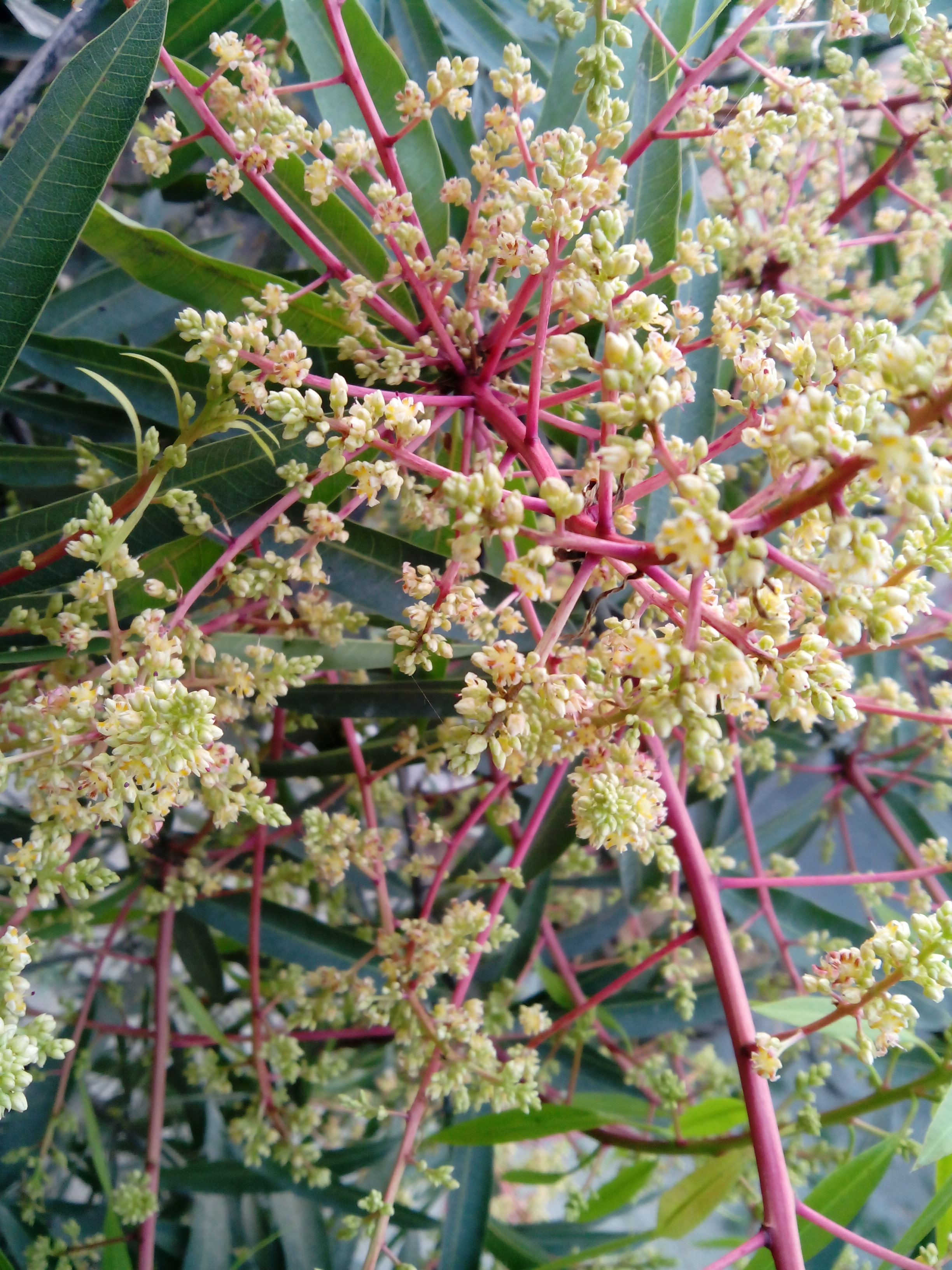
The blossom the feature smelled is the mango's flowering season, which the encyclopaedia places in January to March. The flowers are small, whitish yellow or violet and fragrant, and they are borne in large clusters, called panicles, at the ends of the branches; in Bengali the cluster is the mukul. One panicle may carry 100 to 250 flower buds, not all of which open. The flowers may be unisexual or bisexual, female flowers are rare, and only about one or two flowers in a thousand go on to become a mature fruit, so that two or three fruits on a panicle are often enough for a good crop.
Weather at blossom time matters. Banglapedia states that fruit setting is adversely affected by fog, rain or cloudy weather in January to March, when the trees flower, while mild showers later, as the fruit develops, are beneficial and storms, especially hailstorms, cause immature fruit to drop. The tree does best where there is enough rain to wet the soil deeply and a well-defined dry season with no rain at all, which is the pattern of a Bangladeshi winter.
The country has nearly 100 mango cultivars, according to the encyclopaedia. The elite varieties, propagated by grafting, are grown mostly in Rajshahi, Nawabganj and Dinajpur and include Fazli, Langra, Gopalbhog, Himsagar, Khirsapat, Ashwina and Kohitoor, while seedling trees of no recognised variety are known as deshi or guti am. A grafted tree first bears fruit in about its fourth year after planting and stays productive to about its 45th. The Department of Agricultural Extension produces and distributes grafts of elite cultivars, and the horticulture division of the Bangladesh Agricultural Research Institute (BARI) runs research stations at Rajshahi, Nawabganj and Joydebpur. About three dozen insect pests attack mango in Bangladesh, the mango hoppers among the most important, along with fungal diseases such as anthracnose and powdery mildew.
Caring for mango trees as the blossom comes
A week before the feature, on 27 January 2026, the daily Prothom Alo reported that mango trees had begun to blossom and published advice from a horticulturist at the Falbithi Horticulture Centre at Asad Gate in Dhaka on care before, during and after flowering. Its main points, given here without chemical doses, were these:
- Water, fertiliser and all other feeding are withheld for 30 to 45 days before the blossom is expected, because a tree that gets them at this time puts out new leaves instead of blossom; a rooftop tree is given only enough water to keep it alive.
- Once the flowers have opened, no insecticide or fungicide should be sprayed, because spraying can damage the flowers and harm the beneficial insects that visit the orchard at this time and help pollinate the flowers. Normal feeding with fertiliser and water can resume from flowering.
- After the fruit has set, the soil must not be allowed to run short of water, or blossoms and young fruit may wilt and drop.
- Branches are pruned soon after harvest, never just before or just after the blossom appears.
- Extra nitrogen fertiliser at blossom time can make the blossom drop and gives a tree more leaves but fewer blossoms.
- Weeds, dry leaves and fallen blossoms are cleared from around the base of the tree to reduce the risk of disease and pests, and trees need particular care in dense fog, heavy rain or long dry spells.
The report named aphids, thrips, mealybugs and hoppers among the pests, and anthracnose and powdery mildew among the diseases, that growers try to keep off a tree before it flowers. Because the right product and dose depend on the pest and the brand, a grower should follow the label and ask the upazila agriculture officer before using any pesticide.
The flowers of the coming spring
The feature saw trees flowering in yellow, pale purple and white without naming them. Banglapedia's account of the season lists the flowers Bengalis associate with spring: flame-coloured shimul, palash and krishnachura, golden radhachura and mauve jarul. Fruit trees such as mango and jackfruit also flower at this time, the encyclopaedia says; it is the season of the cuckoo singing hidden in the foliage and of bees busy gathering nectar, while wheat, oats and mustard dominate the fields.
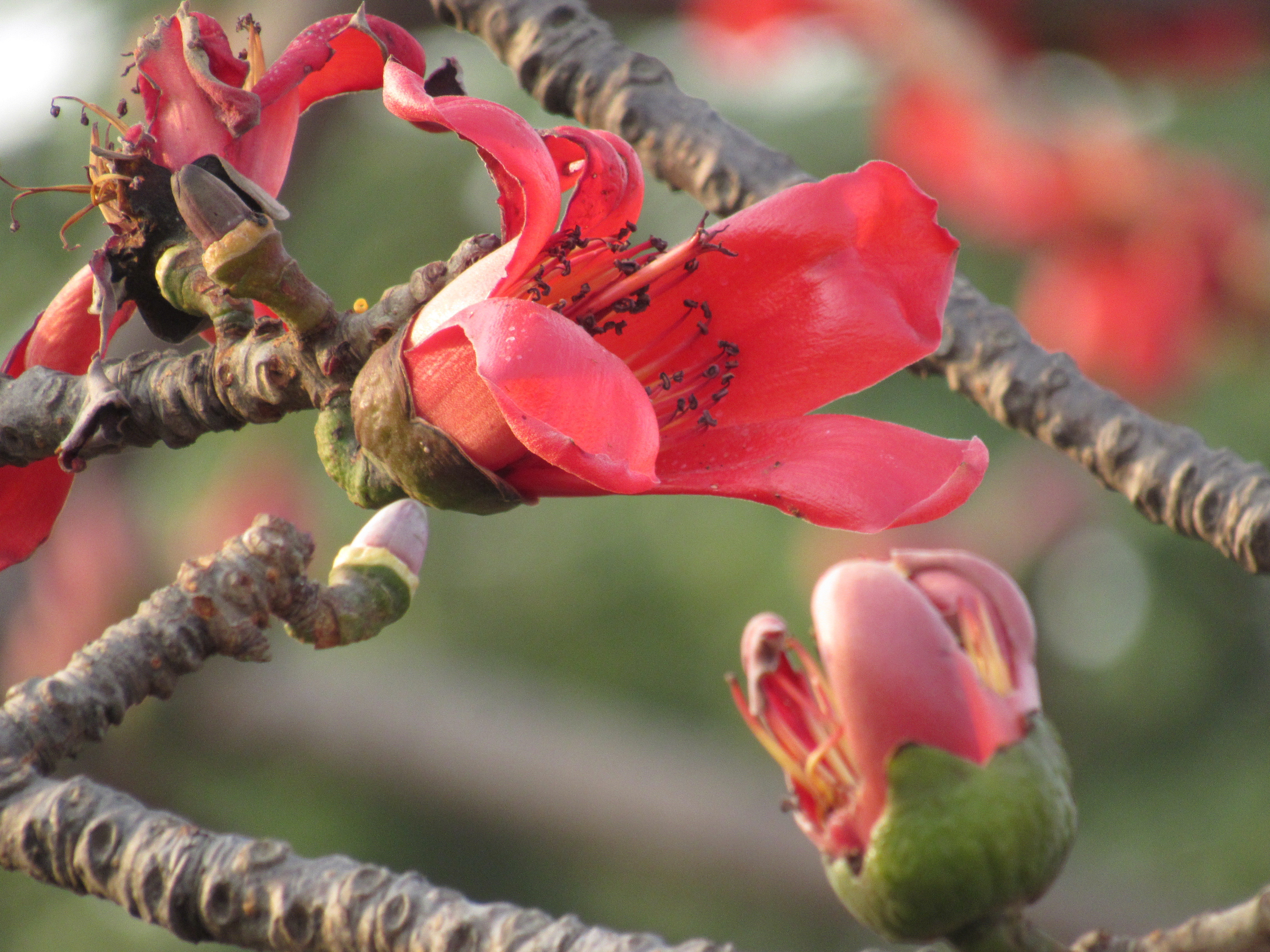
The shimul, or red silk-cotton tree (Bombax ceiba), is the best known of these. Banglapedia describes it as a tall deciduous tree of 30 to 40 metres with a straight trunk covered in angular spines and grey, very rough bark. Its large reddish flowers are showy, and its oblong fruits hold silky hairs, the cotton used for pillows, beds and mattresses. It occurs naturally in the forests of Chittagong, the Chittagong Hill Tracts and Sylhet and is grown all over Bangladesh; its soft, light wood is used mainly for matchboxes and match splints and also for packing cases, toys and planking. The palash, Butea monosperma, is one of the trees Banglapedia lists among the companions of sal in the deciduous forests.
Hatirjheel: a lake in the middle of Dhaka
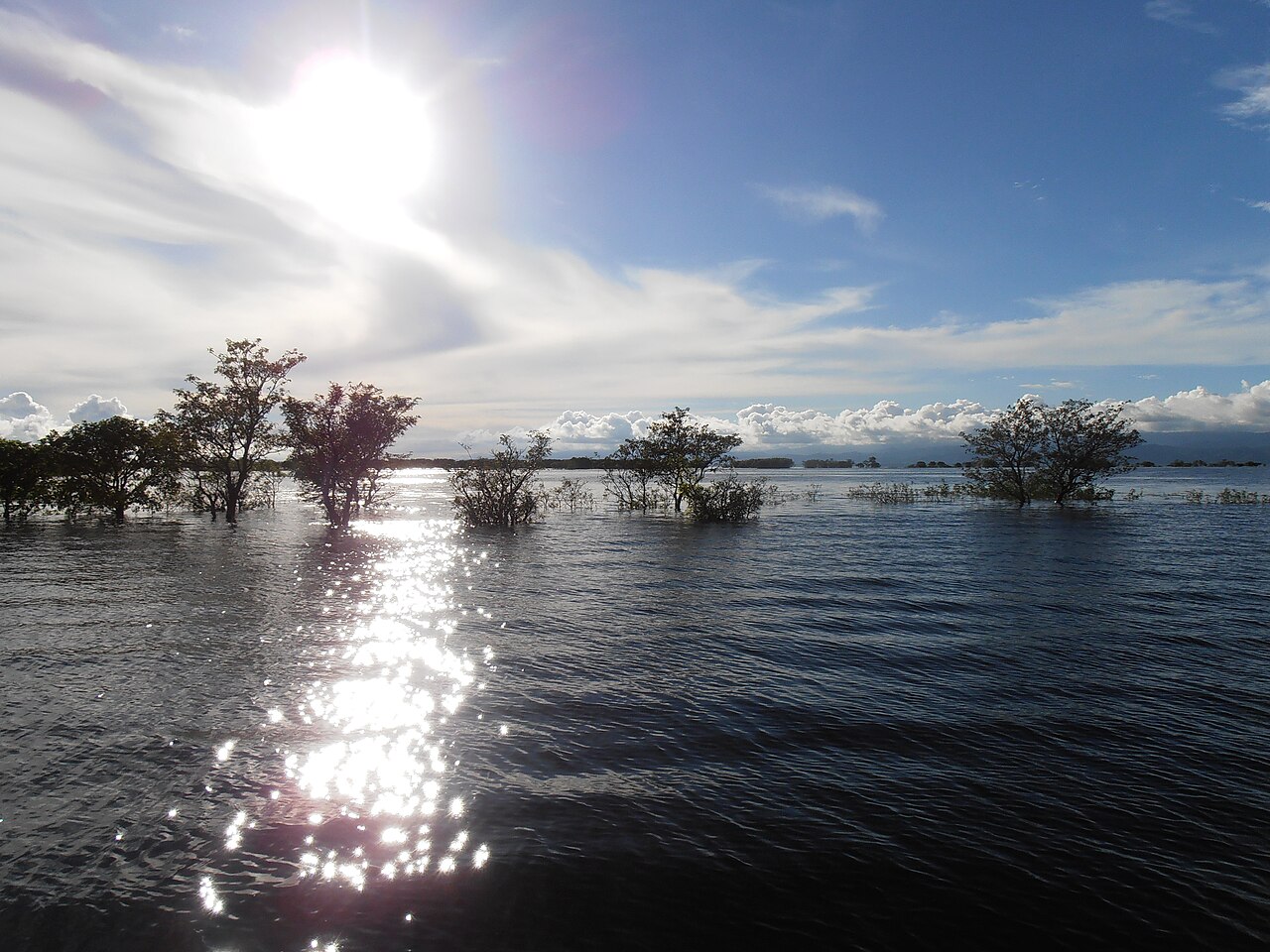
Hatirjheel, where the feature found its city spring, is a lakefront in central Dhaka with roads, bridges and walkways around a large body of water. Its name means "elephant lake". By local tradition it comes from the elephants of Dhaka's Pilkhana that were brought to bathe in the wetland in the 19th century, along the routes still called Elephant Road and Hatirpool. The lake was once joined to the Narai River, also known as the Rampura canal, which flowed east past Banasree and Meradia into the Balu River; traders from Rupganj are reported to have carried vegetables and goods by boat along it to Karwan Bazar before it was gradually filled in during the 1980s. Over the following decades the wetland was encroached on by some 1,200 unauthorised structures and became a dumping ground for household and industrial waste.
The idea of developing the area emerged in 1995, to ease traffic and to keep one of the city's main rainwater retention basins and drainage channels between old and new Dhaka. A study by the Bangladesh University of Engineering and Technology (BUET) in 2004 and 2005 led to an integrated Hatirjheel and Begunbari canal project, approved by the Executive Committee of the National Economic Council in 2007. The Capital Development Authority (RAJUK) acquired the land, covering 302 acres, and construction began in February 2008 under the Special Works Organisation of the Bangladesh Army. Hatirjheel opened to the public on 2 January 2013.
Today the site lies between Tejgaon, Gulshan, Badda, Rampura, Banasree, Niketan and Maghbazar, stretching from the Sonargaon Hotel in the south to Banasree in the north, and it is the largest body of water inside the capital. Built for traffic, drainage and flood protection, it has become one of Dhaka's best known places for recreation, with footpaths and walkways along the water, which is where the feature published on 5 February 2026 found new leaves on the waterside trees.
Photo: Nahid Sultan / Wikimedia Commons (CC BY-SA 3.0)
Sources: Jagonews24, Banglapedia (Asiatic Society of Bangladesh), Prothom Alo, Advanced Biotechnology (2024 review on plant abscission), The Innovation (2021 study on leaf abscission in tropical forests), Wikipedia (Hatirjheel)
Comments
(0)