
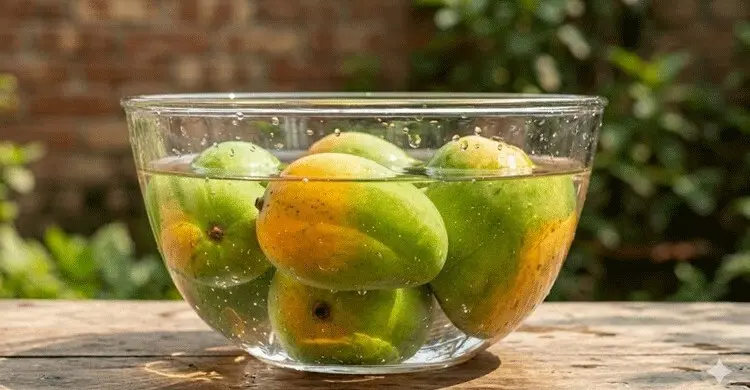
The ripe-mango season fills markets with colourful, juicy fruit, and in summer mango is many people's favourite. Some wash mangoes well before eating, others cut and eat them straight away. But according to experts, many skip an important step before eating mangoes, which is soaking them in water, and this small mistake can hide a health risk.
Removing chemicals
Various pesticides and chemicals are used on mango trees to raise yields and protect them from insects, and some of these can remain on the skin. Rinsing with water alone does not always remove them completely. Soaking mangoes in water for a while loosens dust, dirt and some harmful chemicals on the skin, making the fruit comparatively safer to eat.
Phytic acid and digestion
Mango skin contains some natural compounds, among them phytic acid, an anti-nutrient that can hinder the absorption of some nutrients. According to experts, soaking mangoes reduces the effect of phytic acid somewhat, so the body can take in the fruit's vitamins and minerals more easily.
In some people, eating a lot of mangoes can cause a feeling of heat in the body, mild discomfort or stomach problems. Soaking cools the mango a little and reduces this heating effect, easing digestive discomfort after eating to some extent.
Sticky sap
A sticky sap comes out near the mango's stalk and does not come off easily with washing. If it touches the skin it can sometimes cause itching or a rash, and it can even cause discomfort in the throat or mouth while eating. Soaking removes much of this sap, making the fruit more comfortable and safer to eat.
How long to soak
According to experts, it is best to soak mangoes in water for at least one to two hours before eating. If time is short, soaking for at least 30 minutes still helps.
Mangoes should always be soaked in clean water at room temperature. Eating mangoes is not only about taste but also about health awareness, so follow this small rule before you next cut a mango: you will stay well and get more of the fruit's real nutrition.
The report draws on HealthShots, the Times of India and other sources.
Source: Jagonews24. First published in Bengali on The Agro News.


Comments
(0)